
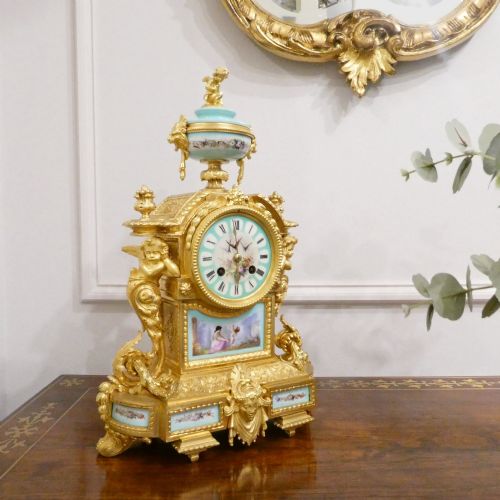
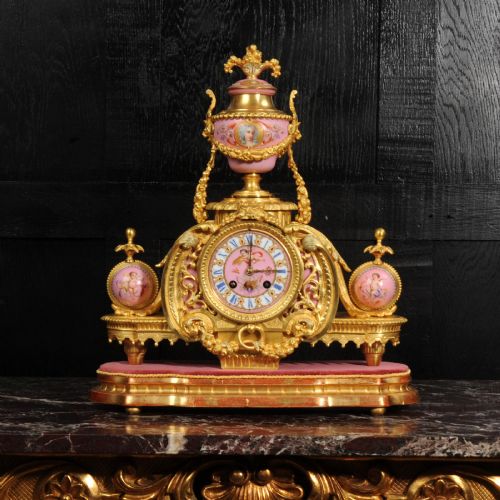
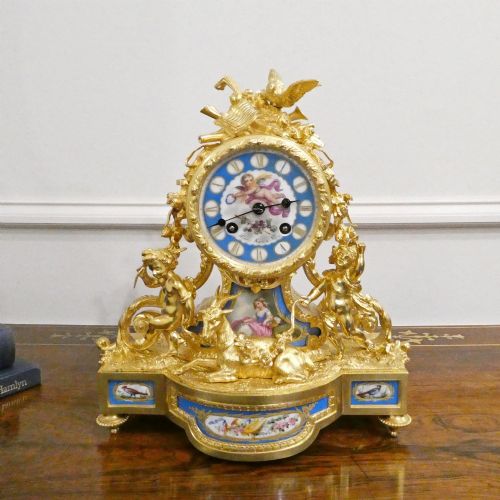
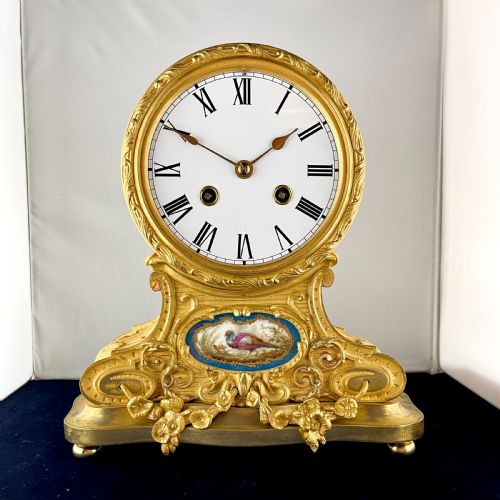



Rococo Porcelain Mantel Clock
A rococo porcelain mantel clock brings flamboyant 19th-century French design into a room, combining sculpted ceramic bodies with elaborate gilt mounts.
Rococo Porcelain Mantel Clock
When searching for a rococo porcelain mantel clock, buyers encounter pieces primarily originating from nineteenth-century France during the Victorian era. These objects combine timekeeping with sculptural ceramic arts, often appearing as part of larger garniture sets flanked by matching vases or candelabra.
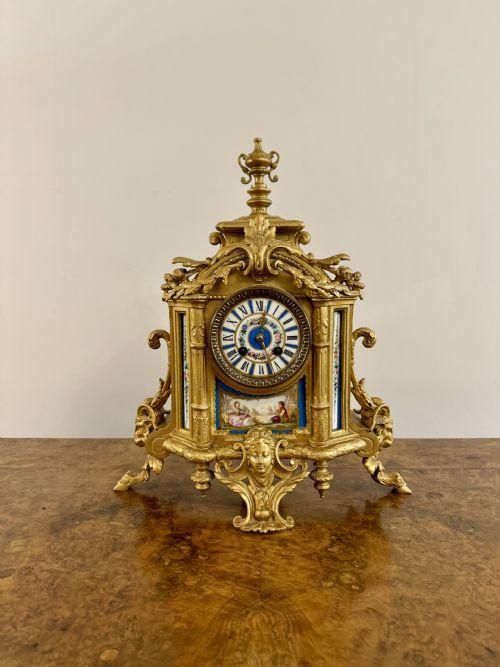
The prevailing aesthetic draws heavily upon French Rococo Revival, Louis XV, and Second Empire styles, characterised by asymmetrical scrollwork, naturalistic floral motifs, and curvaceous silhouettes. Makers frequently utilised painted porcelain panels alongside metal casings to achieve a theatrical visual effect.
Most examples found on the market stem from this nineteenth-century production boom, though variations range from boudoir-scale clocks to massive decorative bracket pieces. Ceramic bodies may feature Sevres-style painting, Meissen figures, or Imari patterns mounted in gilt bronze.
Collectors select these pieces to anchor a mantelpiece or tabletop display with period character. The integration of hand-painted ceramic plaques with gilded metal housing defines the standard form of these works.
Materials and construction
Makers constructed these clocks using a combination of cast bronze, ormolu, or gilt metal frames fitted with ceramic elements. The metal components were typically cast, chased, and gilded, providing a sturdy architectural structure that complemented the fragile porcelain body.
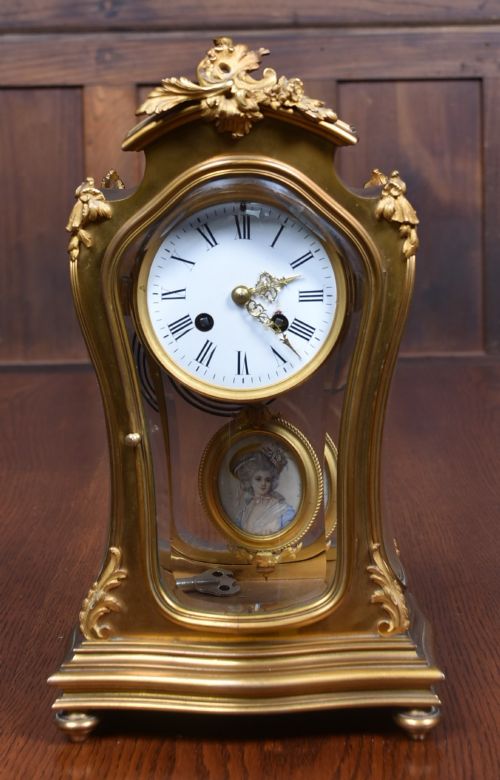
Porcelain sections served as both structural cases and decorative canvases, featuring hand-painted scenes, floral motifs, or portrait plaques beneath a glossy glaze. Enamel dial faces with Arabic or Roman numerals were fitted separately into the ceramic or metal housing.
Movements were sourced from specialised horological workshops and integrated into the cast metal and porcelain chassis, often paired with silk-suspension or pendulum escapements.
One portrait plaque immortalizes the playwright Molière, watching timelessly over the ticking gears.
Assessing craftsmanship and execution
Quality separates through the crispness of the bronze chasing and the depth of the gilding on the metal mounts. Finer examples display sharp, hand-finished details in the scrollwork and foliage rather than soft, mass-produced casting textures.
The artistry of the porcelain painting dictates the upper tier of pieces, where delicate brushwork on panels and portrait plaques shows superior skill. Lesser examples rely on transfer-printed decoration rather than individual hand painting.
The integration between the ceramic body and the metal mountings reveals the maker's competence, with high-quality pieces showing precise alignment and secure, custom-fitted hardware throughout the assembly.
Achille Brocot·Henry Marc·Japy Freres·PH Mourey·Le Roy et Fils·Vincenti of Paris
The Rococo Porcelain Mantel Clock Glossary
- Ormolu
- Gilded bronze produced by applying a mercury-gilding amalgam to cast bronze. This technique creates a rich, durable golden finish characteristic of luxury nineteenth-century metalwork.
- Garniture
- A set of matching decorative objects, typically comprising a central clock flanked by two matching vases, urns, or candelabra. These sets were designed to create a balanced display on a mantelpiece.
- Sevres Style
- A descriptor for porcelain decorated with rich coloured grounds, jewel-like enamel dots, and hand-painted pastoral scenes or floral reserves. Genuine pieces originate from the French state manufactory, while style pieces emulate this aesthetic.
- Chasing
- The manual technique of refining cast metal surfaces using hammers and punches to add texture, depth, and detail. High-end bronze work relies heavily on skilled chasing before gilding.
- Drumhead
- A clock case shaped like a circular drum, often mounted atop a pedestal or integrated into a larger architectural base. This form frequently appears in nineteenth-century French designs.
Rococo Porcelain Mantel Clock: Frequently Asked Questions
How do I wind the clock?
Use the appropriate winding key to turn the arbors located on the enamel dial face. Take care not to over-wind the mainspring.
Most nineteenth-century movements require a gentle touch and regular setting to maintain accurate timekeeping.
What is a clock garniture?
A clock garniture consists of a central mantel clock accompanied by matching side pieces such as vases or candelabra. These sets were created to provide a symmetrical decorative arrangement on a fireplace mantel.
They share identical materials, styles, and decorative motifs to unify the display.
How do I clean the ormolu?
Dust the gilt bronze and ormolu gently with a soft, dry brush to remove surface particles. Avoid liquid cleaners or abrasive cloths which can strip the thin gold layer from the metal.
Preserving the original gilding is essential for maintaining the visual integrity of the piece.
Where were these clocks made?
The majority of these clocks originated in France, particularly in Paris workshops during the nineteenth century. Makers combined locally cast bronze mounts with imported or domestic porcelain panels.
Some examples also stem from German factories such as Meissen or Berlin.