


Sevres Porcelain Urn Clock
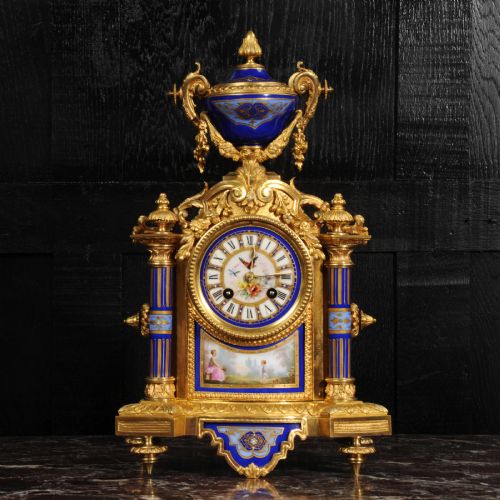
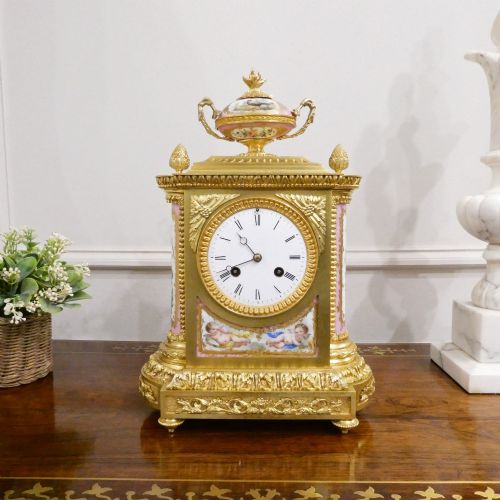
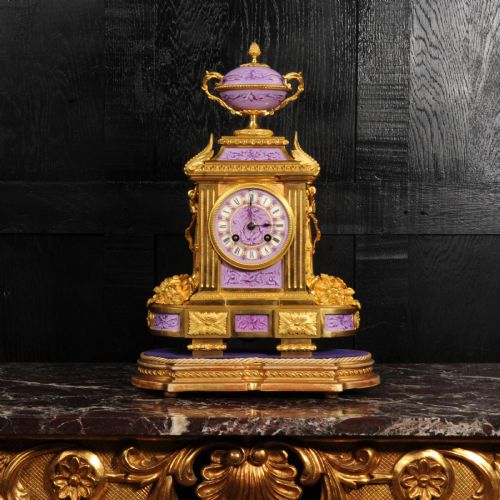
A sevres porcelain urn clock brings opulent French design into a room, combining hand-painted ceramic bodies with rich metallic mountings.
Sevres Porcelain Urn Clock
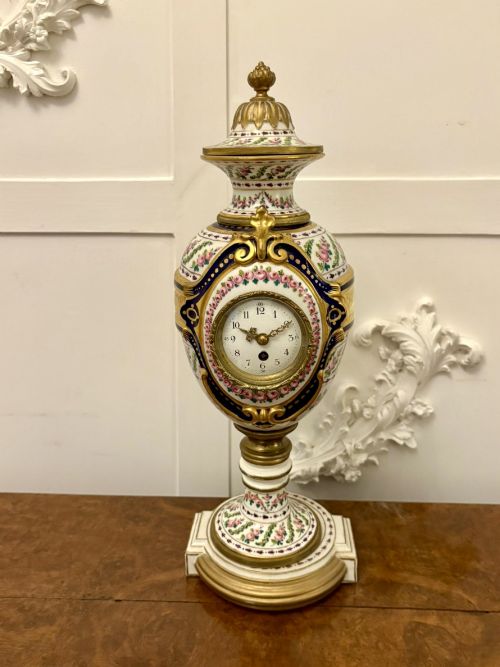
A sevres porcelain urn clock takes the classical form of a covered vase and houses a mechanical timepiece movement within its ceramic body. Buyers searching for a sevres porcelain urn clock typically encounter elaborate nineteenth-century mantel clocks and garniture sets originating from France.
The objects span periods from the mid-nineteenth century to the eighteen-nineties, encompassing French Rococo Revival, Louis XVI Style, and Napoleon III aesthetics. These pieces often arrive accompanied by matching side vases under glass domes.
Most examples combine porcelain urn bodies with gilded bronze, ormolu, or brass mounts, resting on decorative feet. The dials frequently feature enamel cartouches displaying Roman or Arabic numerals.
Materials and construction
Maker workshops built these mantel clocks using ceramic porcelain bodies combined with cast bronze or ormolu mounts. Artisans applied hand-painted decoration to the porcelain surfaces, often depicting figures or floral scenes.
Gilt bronze and brass components were cast, chased, and gilded to frame the ceramic urns. Clockmakers integrated mechanical movements inside the urn bodies, pairing them with enamel dials.
Several clocks wear glass domes like protective party hats to keep the nineteenth-century dust off their gilt.
Distinctions in quality
Quality rests upon the crispness of the bronze casting and the precision of the hand-painted porcelain decoration. Finer examples display detailed figural or landscape scenes on the ceramic body alongside deeply chased ormolu mounts.
The reputation of the horological maker contributes significantly to the standing of the piece. Clocks bearing signatures from recognised French makers and movement manufacturers command greater attention than unsigned pieces.
Japy Freres·Jean-Baptiste Delettrez·Achille Brocot·Vincenti of Paris·Japy Frers
The Sevres Porcelain Urn Clock Glossary
- Ormolu
- Gilded bronze mounts applied to furniture, clocks, and porcelain objects to provide decorative metallic contrast. This technique involves coating bronze objects with a mercury-gold amalgam and heating them.
- Garniture set
- A matched grouping of decorative objects, typically consisting of a central clock flanked by two matching vases or candelabra. These sets were designed to sit together on a mantelpiece.
- Cartouche
- A framed panel on a clock dial that houses individual hour numerals. These are usually executed in enamel on copper plates.
- Chasing
- The manual metalworking technique used to refine and detail cast bronze or ormolu mounts after removal from the mould. Artisans use hammers and small punches to sharpen textures and lines.
- Movement
- The internal mechanical gear train that drives the timekeeping and striking functions of the clock. These mechanisms rely on springs or weights.
Sevres Porcelain Urn Clock: Frequently Asked Questions
What is a sevres porcelain urn clock?
A sevres porcelain urn clock is a nineteenth-century French mantel timepiece built into the shape of a ceramic vase. These pieces combine hand-painted porcelain bodies with gilded bronze mounts.
They function both as accurate timekeepers and as decorative centerpieces. Many survive today as part of larger three-piece garniture sets.
How do I care for my clock?
Keep the clock away from direct sunlight and dramatic temperature fluctuations to protect the porcelain and gilding. Dust the metal mounts and ceramic surfaces gently with a dry, soft cloth.
Professional mechanical service every few years ensures the movement remains running smoothly. Avoid using liquid cleaners on the gilded bronze or painted porcelain.
How were these clocks used originally?
These clocks served as prominent decorative and functional items in nineteenth-century French drawing rooms and parlours. Placed centrally on mantelpieces, they often sat flanked by matching vases.
Beyond telling time, they demonstrated the wealth and artistic taste of the household. The matching garniture pieces created a balanced focal point in formal interiors.
How can I identify the period?
Period identification relies on stylistic cues, materials, and maker signatures recorded on the movement or dial. Nineteenth-century pieces frequently display Louis XVI Revival, Napoleon III, or Rococo Revival design elements.
The presence of specific foundry marks or movement stamps helps narrow down the decade of manufacture. Ormolu casting styles also shift between the eighteen-fifties and eighteen-nineties.