

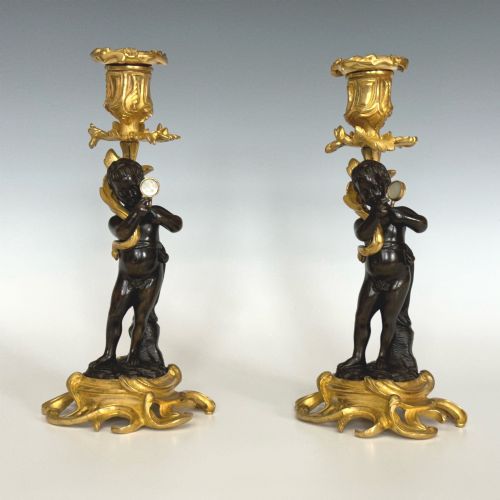


Rococo Ormolu Candlesticks
Rococo ormolu candlesticks bring exuberant asymmetrical curves and gleaming gilded bronze to an interior, catching candlelight with flamboyant eighteenth-century flair.
Rococo Ormolu Candlesticks
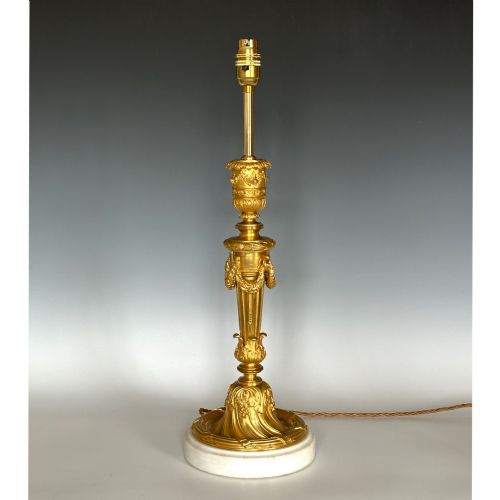
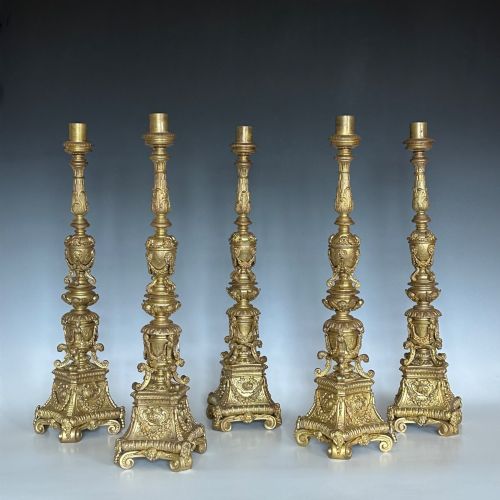
Rococo ormolu candlesticks are decorative lighting fixtures defined by the ornate, scroll-heavy aesthetic of the French revival periods. When looking through these listings, a buyer will primarily encounter nineteenth-century interpretations alongside occasional eighteenth-century originals.
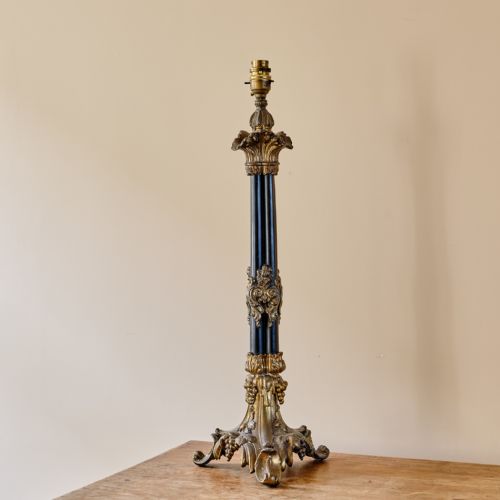
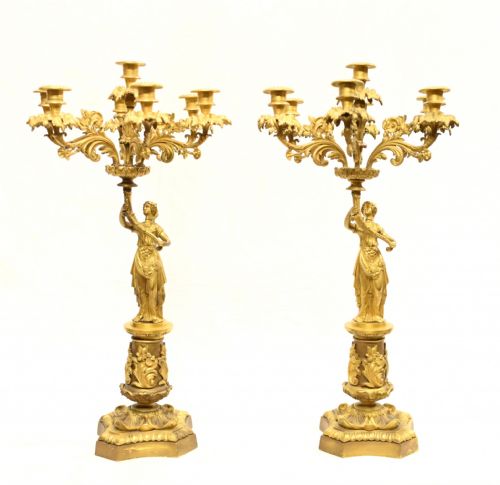
The selections span simple single-branch sticks to grand multi-arm candelabras, frequently accompanied by table lamps adapted from earlier forms. French workshops dominate the available examples, capturing the essence of Louis XV and Napoleon III tastes.
Many of these pieces integrate contrasting elements such as white or coloured marble bases, patinated bronze figures, and dangling glass lustres. Cherubs, putti and naturalistic flora motifs recur frequently across the design spectrum.
Distinguishing quality
Quality rests upon the crispness of the chasing and the depth of the metalwork relief after casting. Finer examples display hand-tooled details that sharpen acanthus leaves and facial expressions rather than relying on a soft, uniform finish.
The coherence of the design dictates overall merit, particularly in how multi-branch arms integrate with the central stem. Weight, stability, and the preservation of the original gilded surface separate standard production from exceptional library pieces.
Musicians and winged cherubs frequently inhabit these branches, frozen mid-song or dangling perpetually over marble plinths.
The Rococo Ormolu Candlesticks Glossary
- Ormolu
- Gilded bronze produced by applying a mercury-gold amalgam to a bronze base and heating it until the mercury vaporised. This historic technique yields a warm, distinct golden lustre.
- Candelabra
- A branched lighting fixture holding multiple candles or configured later for electric bulbs. These pieces often feature removable upper branches.
- Patinated bronze
- Bronze allowed to age naturally or treated with chemicals to produce a dark brown or greenish surface tone. It provides visual contrast against bright ormolu mountings.
- Lustre
- A glass pendant or prism hung from a candlestick to catch and refract light. They dangle around the drip pan or nozzle.
- Chasing
- The hand-finishing of cast metal using small punches and hammers to sharpen details and textures. Superior chasing defines the best French revival work.
Rococo Ormolu Candlesticks: Frequently Asked Questions
How do I clean ormolu candlesticks?
Dust these pieces gently with a soft, dry brush to prevent accumulation in the crevices. Avoid abrasive metal polishes that strip away the historic gilt surface.
Moisture can harm underlying bronze and marble bases, so keep cleaning strictly dry. Professional conservation is advisable if deeper cleaning becomes necessary.
Can I convert these to lamps safely?
Many historical examples arrive with previous electrical wiring or modern conversions. Re-wiring should be performed by a qualified electrician using internal brass tubes to protect the antique structure.
Original forms without drilling preserve higher collector interest, though wired versions offer practical daily lighting. Reversible mounting methods prevent permanent alteration to the metalwork.
How do I date nineteenth-century pieces?
Nineteenth-century revivals draw heavily on eighteenth-century Louis XV vocabulary, making style alone an unreliable dating tool. Examine the casting seams, assembly screws, and the composition of the bronze.
Later Victorian and Third Republic pieces often display heavier casting methods and brighter chemical gilding. Comparing the patination and wear patterns against documented examples helps narrow the decade.
Where should I display these candlesticks?
Place them on mantelpieces, sideboards, or console tables where ambient light can interact with the gilded surfaces. Their reflective quality brightens dark corners and adds formal symmetry to a room.
Keep them away from direct heat sources and strong sunlight to protect any integrated marble or fabric components. Stable surfaces prevent accidental tipping of top-heavy multi-branch designs.