
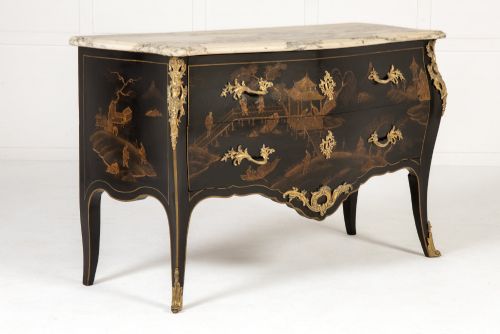

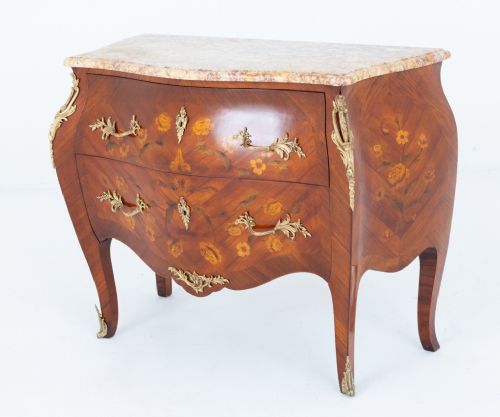
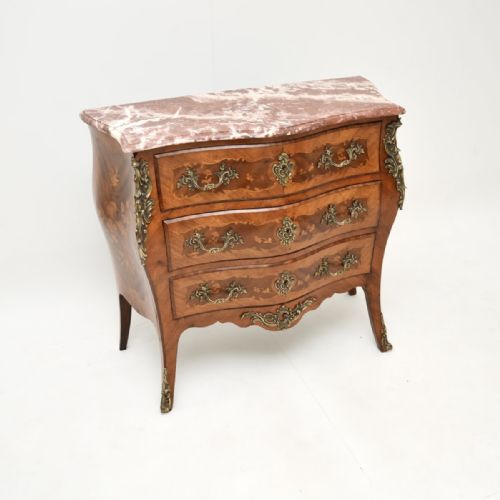
Rococo Marble Top Drawers
These rococo marble top drawers combine sculptural stone tops with serpentine wooden carcasses, offering both decorative presence and practical storage.
Rococo Marble Top Drawers
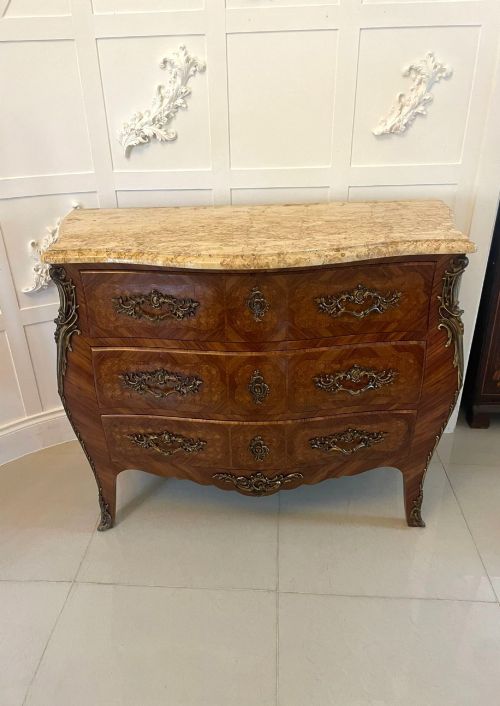
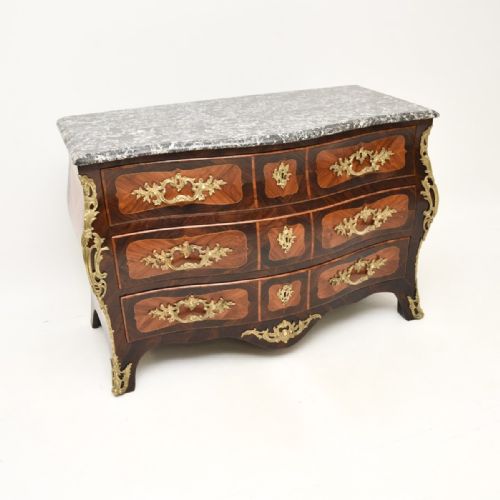
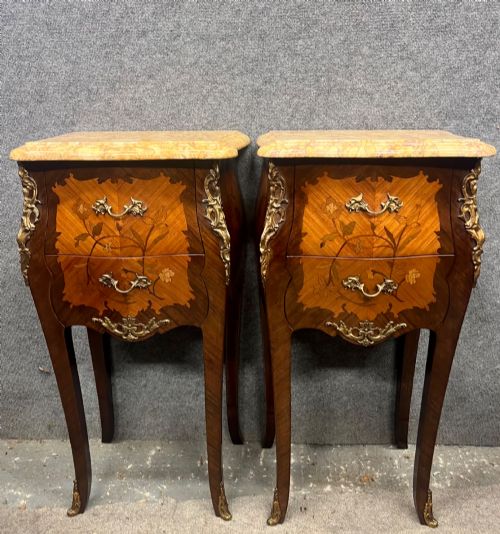
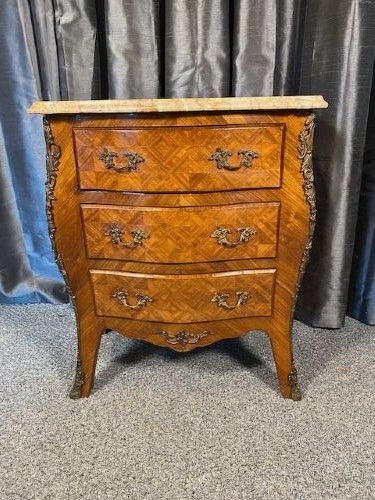
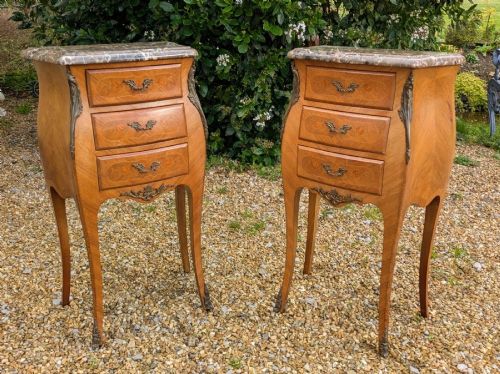
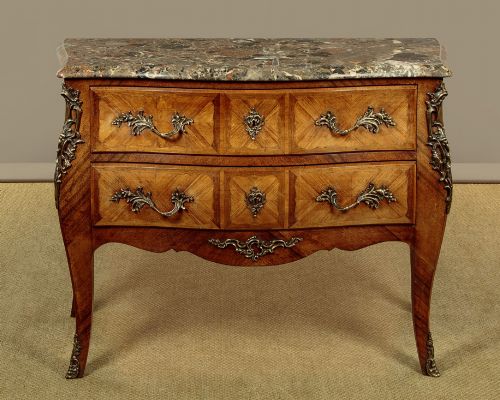
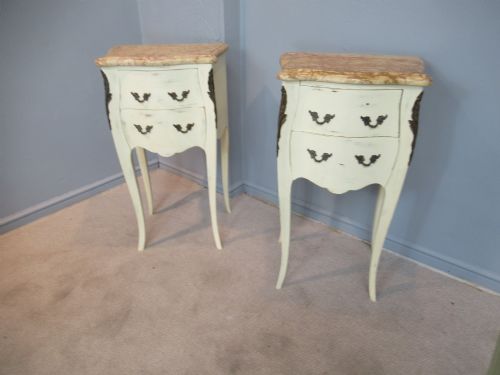
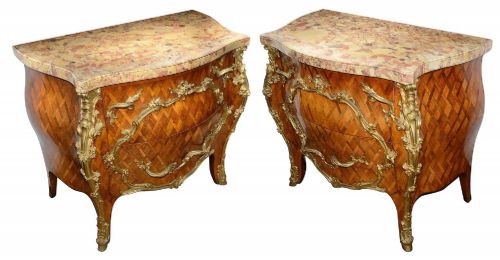
When you search for rococo marble top drawers, you encounter pieces designed primarily as commodes, bedside cabinets, and dressing tables spanning from the eighteenth century into the twentieth century. The version you meet most often on this page is the French commode or bedside chest, displaying the characteristic serpentine or bombe outline associated with Louis XV styles.
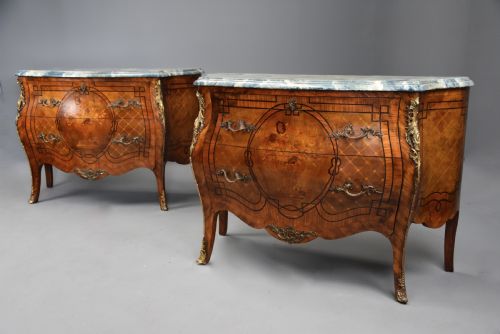
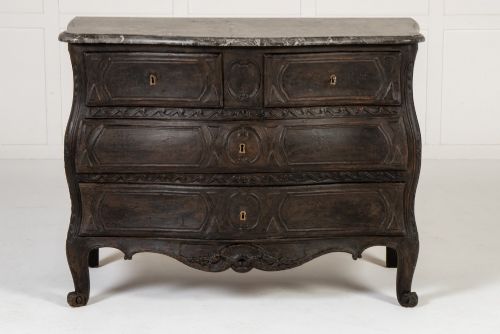
The evidence shows a strong representation of continental cabinet-making, featuring walnut, kingwood, and mahogany carcasses paired with shaped marble tops. Pieces range from eighteenth-century examples to later revival works from the nineteenth and early twentieth centuries, including pairs as well as single cabinets.
Forms extend from large multi-drawer chests to smaller lamp tables and secretaire cabinets, all united by stone slabs and curved woodwork. Regional variations include Italian models alongside French designs, maintaining the curving silhouette.
Materials and construction
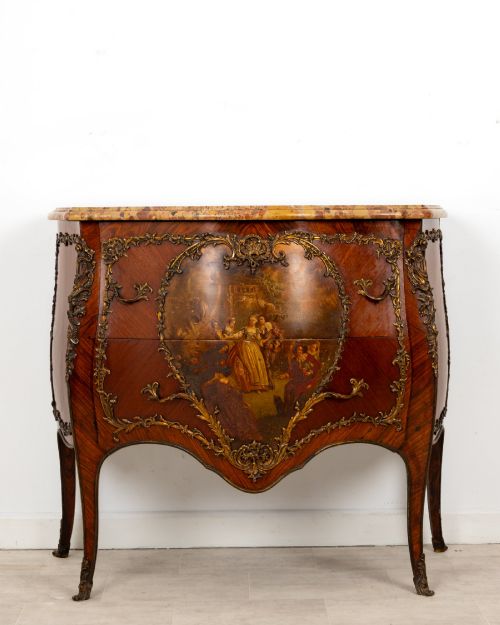
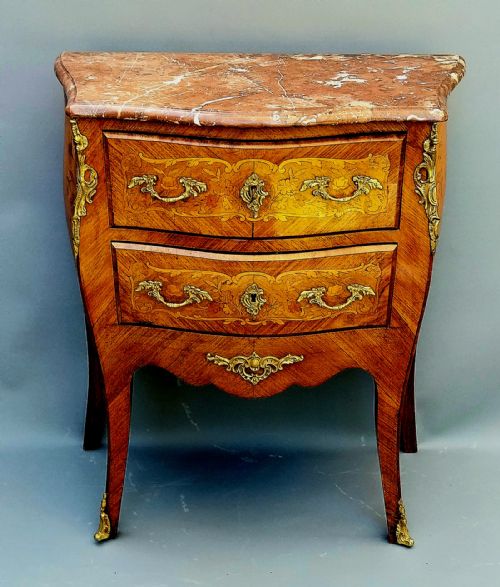
Carcasses are built from hardwoods such as walnut, mahogany, and exotic veneers like kingwood, shaped into serpentine or bombe contours. These wooden frames often receive marquetry or parquetry inlays, and occasionally painted or lacquered finishes.
Heavy marble slabs form the tops, fitted precisely to the undulating contours of the wooden furniture beneath them. Mounts in ormolu, gilt-bronze, brass, and bronze accent the corners, handles, and apron mounts.
Materials span walnut, kingwood, mahogany, and painted wood paired with marble and ormolu.
Evaluating quality and execution
The distinction between tiers rests upon the fluidity of the carving, the precision of the veneer work, and the weight of the bronze mounts. Finer examples display seamless matching in parquetry and marquetry panels that follow the complex curves without buckling.
The integration of the marble top dictates much of the visual success, where thick stone with varied natural veining conforms exactly to the serpentine wooden edge. High-grade cast ormolu mounts show crisp chiselling rather than soft, commercial definition.
Jacques Bircklé
The Rococo Marble Top Drawers Glossary
- Bombe
- A bulging, outward-curving chest profile that swells on the front and sides. This swelling shape requires advanced woodworking skill to veneer successfully.
- Ormolu
- Gilded bronze mounts applied to furniture for decoration and edge protection. The term derives from French phrasing for ground gold.
- Marquetry
- Fitted patterns of wood veneers assembled into pictorial or geometric designs. Craftsmen arrange different timber colours to create contrast across drawer fronts.
- Serpentine
- A furniture front or top shaped with a convex centre flanked by concave curves. This line mimics natural movement found in rococo design.
- Breccia
- A marble variety composed of broken rock fragments embedded in a fine-grained matrix. It provides complex multi-coloured patterns on stone tops.
Rococo Marble Top Drawers: Frequently Asked Questions
What rooms suit these cabinets?
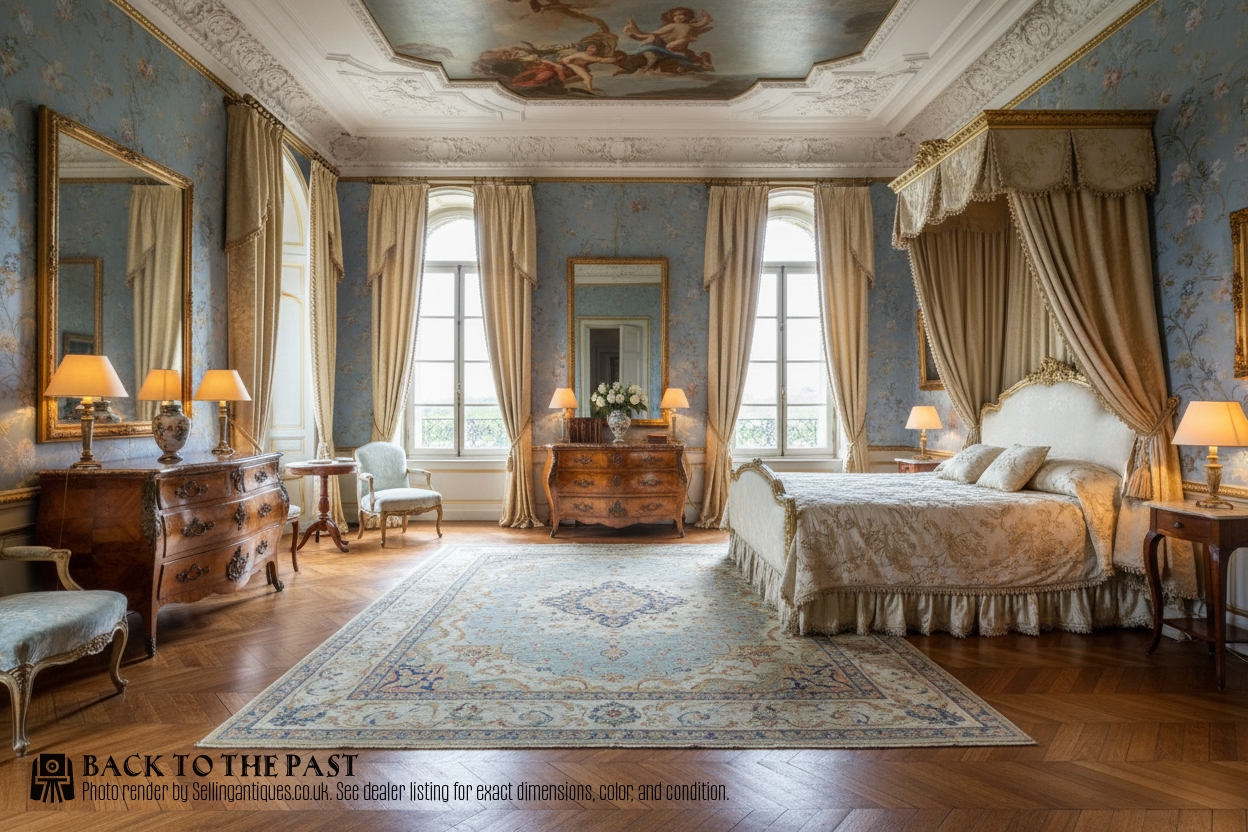
Bedside cabinets and smaller commodes fit easily beside low beds or within compact hallways, providing surface space and enclosed storage. Larger multi-drawer chests anchor living rooms or dining spaces while holding linens or tableware.
The stone tops offer durable surfaces for lamps and decorative objects, tolerating daily use better than polished wood alone.
How do I care for the marble?
Wipe stone surfaces with a damp cloth and mild soap, avoiding acidic cleaners that etch polished finishes. Protect the marble from prolonged moisture and oils by using coasters under glasses.
Treat the wooden carcass with traditional wax polish applied sparingly with a soft cloth to maintain the timber lustre.
Are eighteenth and nineteenth century pieces different?
Eighteenth-century originals display period construction methods, hand-cut dovetails, and specific timber ageing consistent with age. Nineteenth-century revival pieces often copy these forms utilising similar hardwood veneers and gilt-bronze mounts.
Both categories utilise heavy marble tops and curved profiles, though revival pieces frequently reflect Victorian or later manufacturing techniques.
Why choose a bombe shape?
The swelling sides of bombe chests create a strong visual statement that defines rococo styling. This contour softens room geometry by replacing straight lines with sweeping curves.
The form also allows cabinet-makers to display advanced veneering techniques across complex three-dimensional surfaces.