
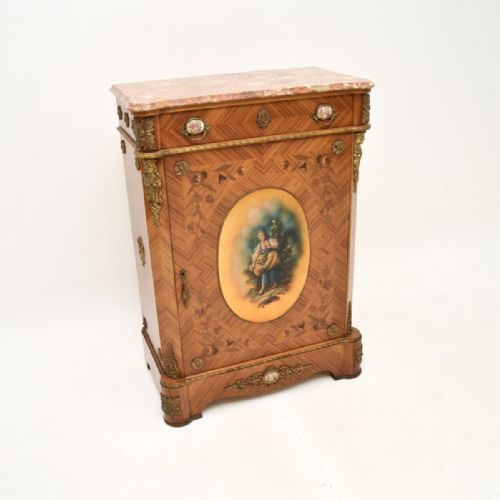
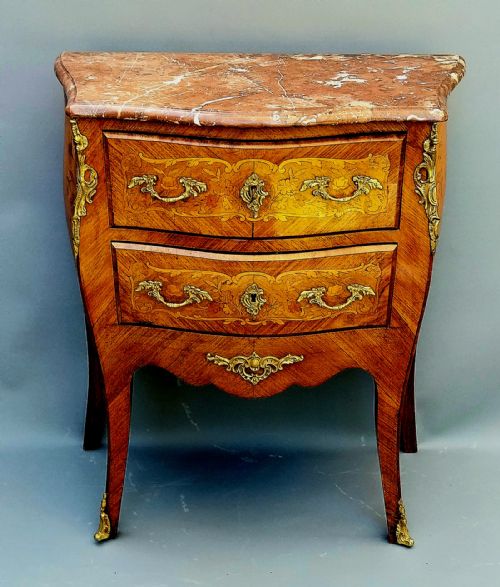
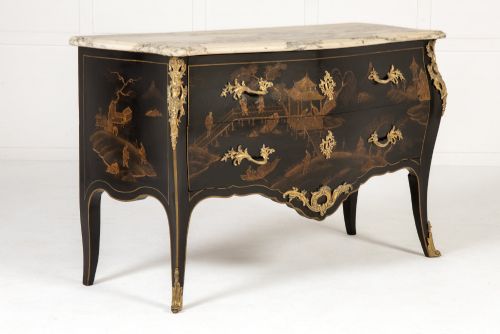


French Bronze Commode Cabinet
A french bronze commode cabinet brings substantial presence to a room, combining substantial timber structure with ornate gilt mounts and cool stone surfaces.
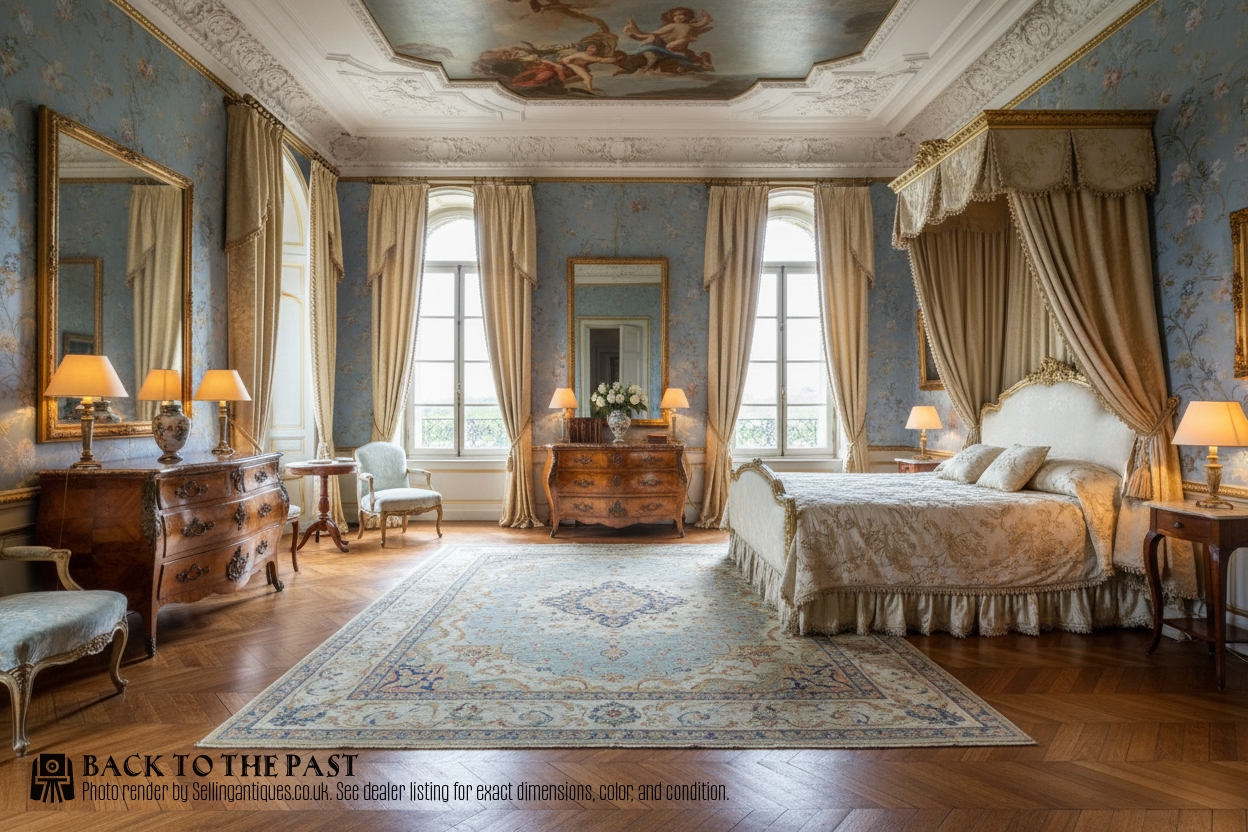
French Bronze Commode Cabinet
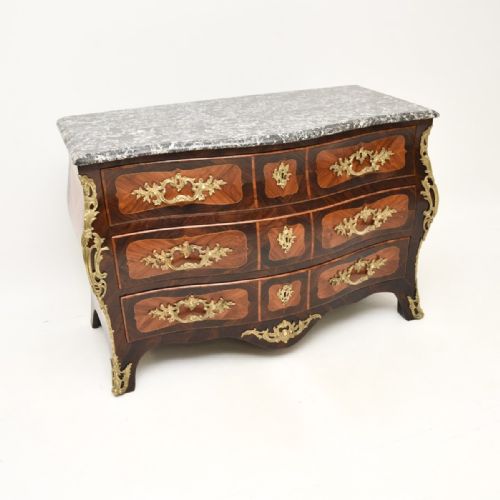
A french bronze commode cabinet encompasses storage furniture formed as chests of drawers, side cabinets, and bedside tables originating across the eighteenth and nineteenth centuries. These pieces function as prominent focal points within a room, combining functional storage with decorative surfaces.
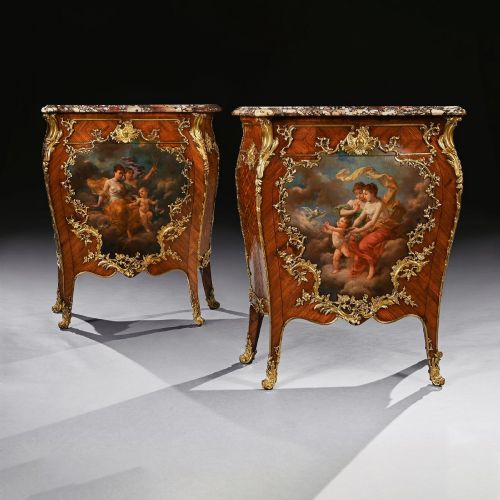
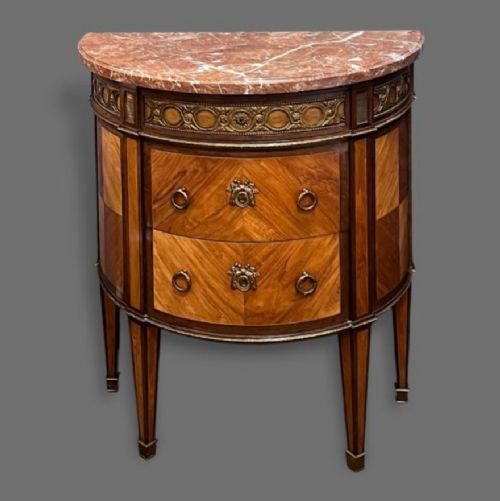
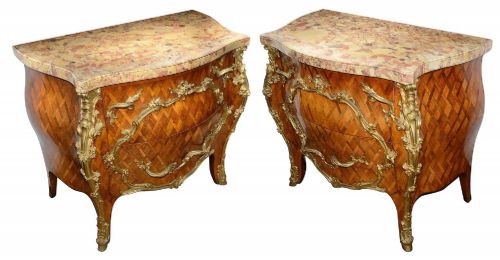
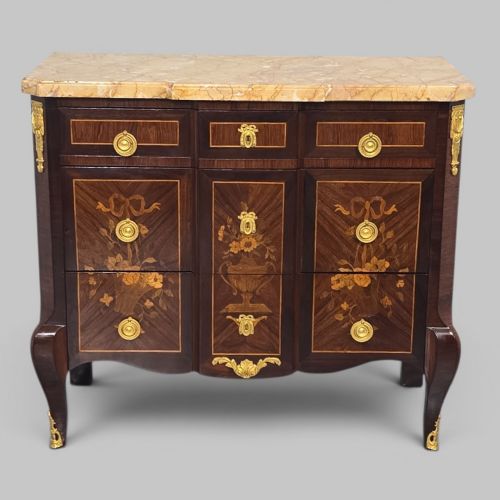
The selections available here lean heavily toward nineteenth-century revivals of earlier court tastes, alongside original eighteenth-century items. Buyers frequently encounter pieces displaying the curvaceous lines of Louis XV or the geometric rigour of Louis XVI.
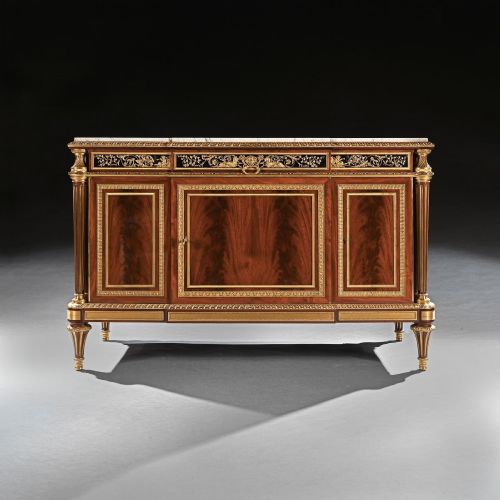
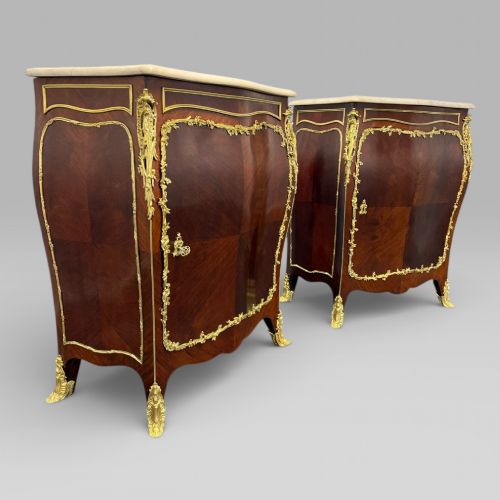
Forms range from compact bedside cabinets and demi-lune chests to substantial bombé commodes and sideboards. Marble tops and gilt bronze or ormolu mounts recur across the various cabinet forms.
How they were made
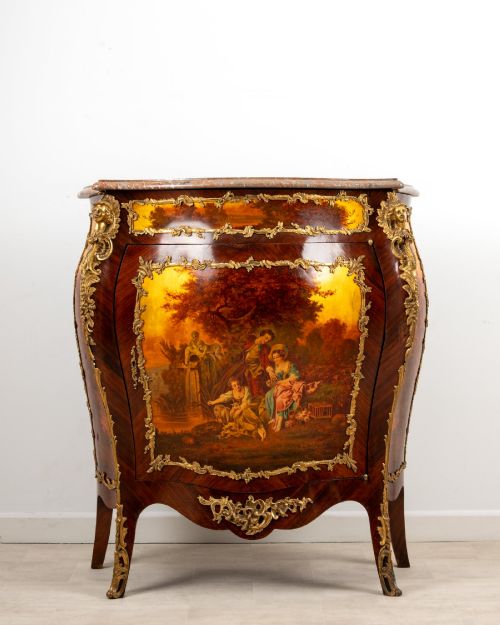
Construction relies upon solid timber carcases overlaid with fine veneers including kingwood, mahogany, walnut, and rosewood, sometimes arranged in intricate parquetry or marquetry patterns. Certain examples employ vernis martin painted finishes or japanned lacquer to achieve decorative surfaces.
Mounts cast in gilt bronze or ormolu accent corners, handles, and aprons, secured directly to the wooden structure. Heavy marble slabs, shaped to match the contours of the cabinet tops, rest upon the upper surfaces.
Cabinet styles span Louis XV and Louis XVI revivals, alongside French Rococo and Empire forms.
What varies in quality
The crispness of the gilt bronze chasing determines the visual success of the metal mounts, separating sharply defined castings from softer, rounded production. Similarly, the precision of the veneer work and marquetry layout dictates the refinement of the cabinet body.
The integration of the marble top with the wooden carcase indicates the original maker's standard of construction, where tight joints and well-matched stone slabs demonstrate superior workshops.
Jacques Bircklé·Henry Dasson·E. Kahn·Joseph Zwiener·Jean-Henri Riesener·Paul Sormani
The French Bronze Commode Cabinet Glossary
- Ormolu
- Gilt bronze applied as a decorative mount on furniture. This technique involves coating cast bronze with a gold amalgam.
- Bombe
- A swelling, outward-curved contour found on the front and sides of furniture. It is characteristic of mid-eighteenth-century cabinet making.
- Marquetry
- Fitted patterns of wood veneer applied to a furniture structure to create pictorial or geometric designs. Craftsmen select varied timbers to achieve natural colour contrasts.
- Vernis Martin
- A European imitation of East Asian lacquer work developed in France. The technique uses multiple layers of varnish to produce a glossy, painted surface.
- Demi-lune
- A half-moon or semicircular shape utilised for the footprint of specific commodes and side cabinets. These pieces fit flat against walls.
French Bronze Commode Cabinet: Frequently Asked Questions
How do I clean the marble top?
Wipe the stone surface using a soft cloth dampened with warm water and mild soap. Avoid acidic cleaners that etch the polished finish.
Dry the marble thoroughly with a clean towel to prevent water spots from forming on the vintage stone.
Where should I place a commode cabinet?
These cabinets suit entrance halls, living rooms, and bedrooms where their decorative mounts and stone tops can be appreciated. Ensure the floor is level so the heavy wooden carcase rests evenly.
Keep the timber away from direct heat sources and strong sunlight to protect the delicate veneer and polish.
How do I distinguish Louis XV from Louis XVI style?
Louis XV pieces feature asymmetrical curves, serpentine fronts, and flowing cabriole legs. The decoration relies on naturalistic rococo motifs.
Louis XVI furniture introduces symmetry, straight fluted legs, and neoclassical elements such as columns and geometric marquetry.
What is the function of ormolu mounts?
Ormolu mounts serve to decorate the corners, aprons, and handles of the wooden cabinet. They also protect vulnerable edges from physical damage.
The cast bronze elements provide structural accent and visual contrast against the dark wood veneers.