





Rococo Marble Sideboard
A rococo marble sideboard brings together heavy stone tops and sweeping serpentine woodwork rooted in eighteenth-century French design.
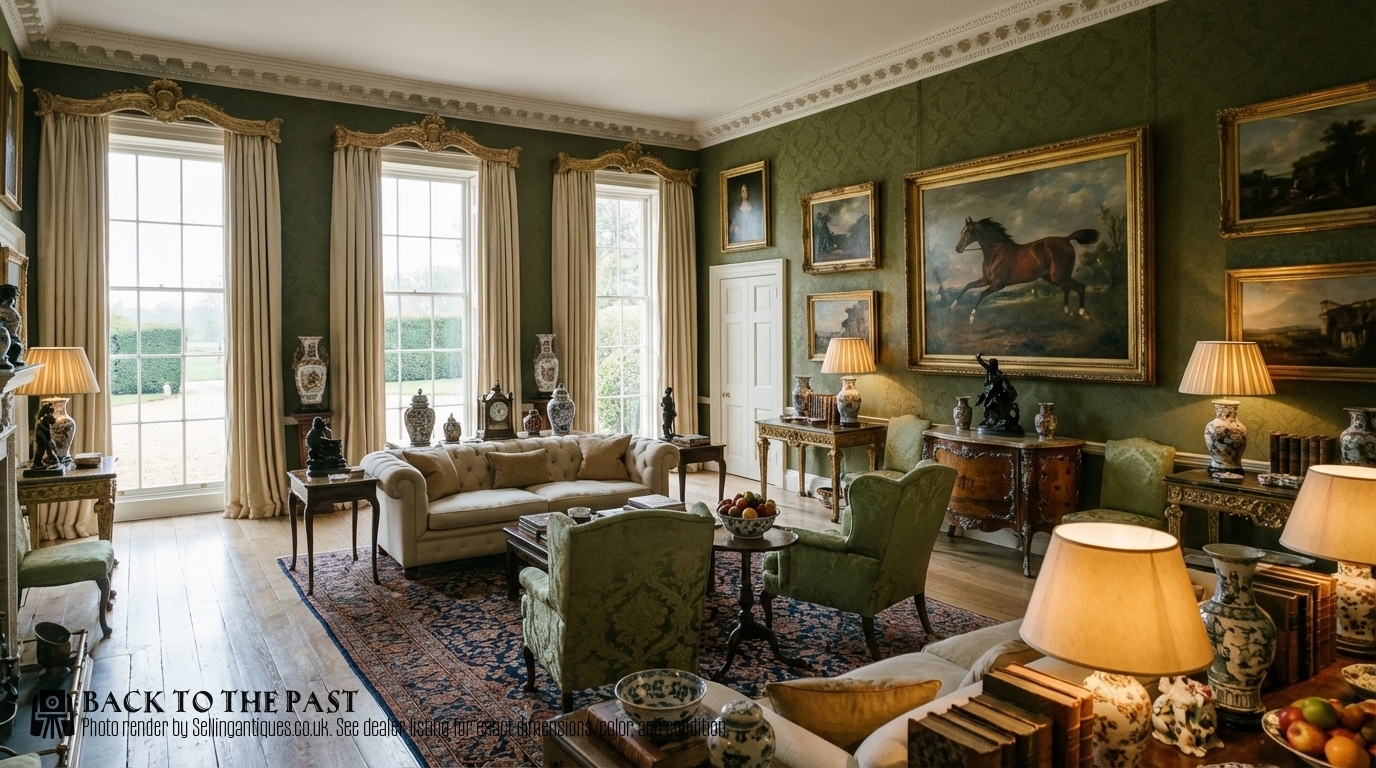
Rococo Marble Sideboard
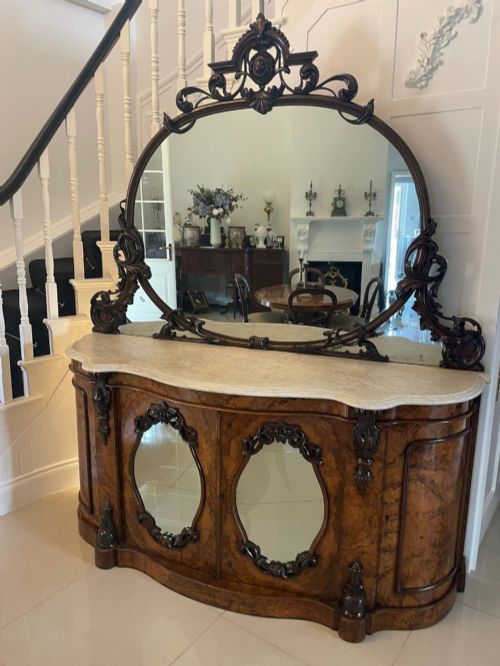
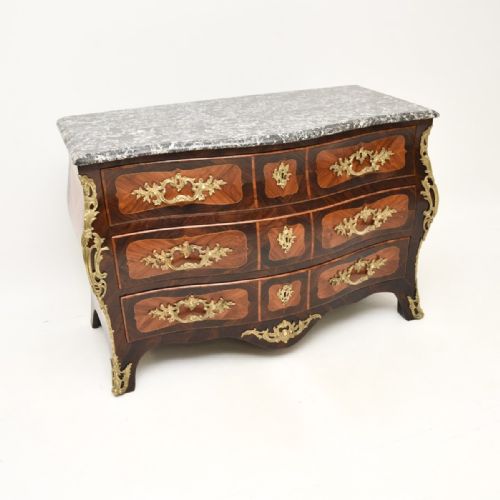
A rococo marble sideboard encompasses low commodes, tall credenzas and console tables topped with heavy slab stone. These pieces draw heavily on eighteenth-century French design, taking shape as serpentine fronts and bombe profiles.
The pieces listed here stretch from the seventeen-fifties through the Victorian era up to nineteen-thirty revivals. Buyers find French kingwood and walnut commodes alongside Victorian burr walnut mirror-back credenzas.
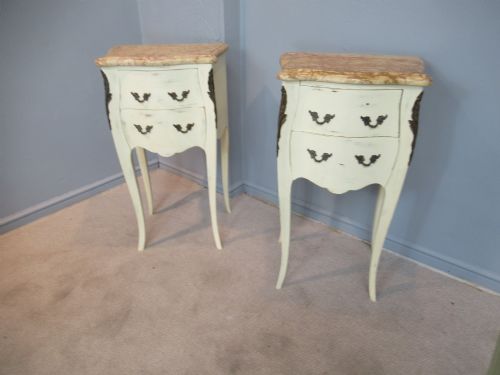
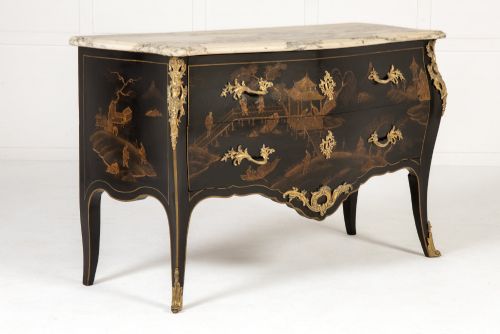
Makers often adopted Louis the Fifteenth styles, mounting marble onto inlaid marquetry, japanned lacquer and painted carcases. The primary forms function as sideboards, side cabinets and low chests of drawers.
Materials and construction
Cabinetmakers built these carcases using native walnut, burr walnut and exotic kingwood veneers over solid secondary timbers. Surfaces received elaborate floral marquetry, hand-painted finishes or japanned lacquer details.
Heavy marble slabs formed the tops, cut to follow the serpentine or bombe contours of the wooden base. Gilt bronze, ormolu, brass and silver mounts secured the corners and framed the key escutcheons.
Rococo Marble Sideboard Retail Price Guide 2026
Typical asking prices for rococo marble sideboard among the pieces listed under this phrase on Sellingantiques today, from the lower quarter to the upper quarter. They describe what is for sale here now, not the wider market.
Several pieces require navigation around swelling bombe curves that threaten to bump into narrow hallway corners.
Distinctions in craftsmanship
Quality rests upon the fluency of the carved woodwork and the precision of the veneer matching across curved drawer fronts. Finer examples display crisply cast ormolu mounts that integrate naturally with the timber rather than appearing added as an afterthought.
The thickness and selection of the marble top also separate standard production from exceptional pieces. Stones with natural veining that match the exact contour of the serpentine frame indicate superior bespoke manufacture.
Jacques Bircklé·Germain Landrin·Gaudreaux
The Rococo Marble Sideboard Glossary
- Commode
- A low French chest of drawers standing on legs, typically fitted with a marble top. These pieces originated in the late seventeenth century and became central to formal reception rooms.
- Credenza
- A side cabinet used for displaying plate or serving food, frequently featuring glass doors or mirror backs. Victorian examples often incorporate elaborate walnut veneers.
- Bombe
- A swelling, bulging contour found on commode sides and drawer fronts. This curved profile requires exceptional woodworking skill to veneer accurately.
- Ormolu
- Gilded bronze mounts applied to furniture corners and feet. The metal is cast and chased by hand before receiving a gold amalgam finish.
- Marquetry
- Inlaid patterns formed from different coloured wood veneers. Craftsmen assemble these pictorial designs on paper before gluing them directly to the furniture carcase.
Rococo Marble Sideboard: Frequently Asked Questions
How do I clean the marble top?
Use warm water and a soft cloth to wipe down the stone surface.
Avoid acidic cleaning products that can etch or dull the polished marble finish.
Where should I place a credenza?
Position these large pieces against a principal wall in a dining room or hallway.
Ensure the floor is level so the heavy marble top and wooden carcase bear weight evenly.
How do I identify a revival piece?
Nineteenth and twentieth-century revival pieces often utilise machine-sawn veneers and standardised hardware.
Check the secondary timbers inside the drawers for circular saw marks characteristic of later manufacturing.
What is the difference between a commode and a sideboard?
Commodes are traditionally lower chests of drawers with prominent serpentine or bombe fronts.
Sideboards span a broader category including taller credenzas and cabinets designed for storage.