
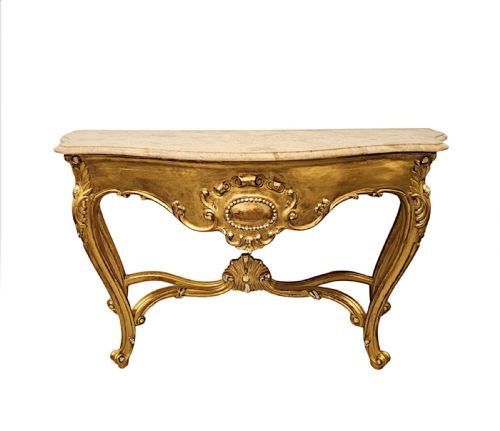
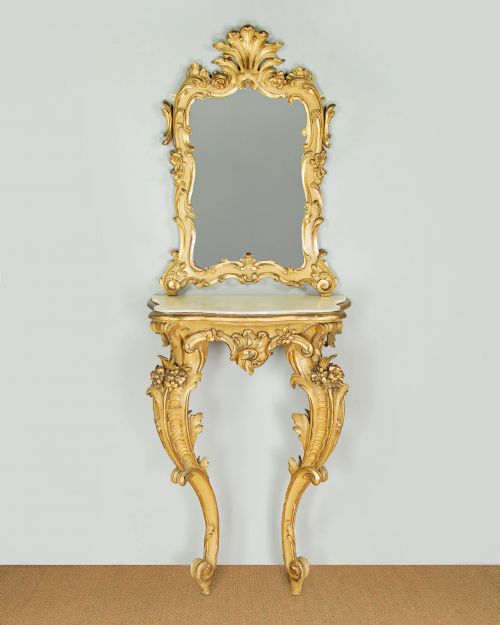


Rococo Giltwood Pier Table
A rococo giltwood pier table brings undeniable drama to an interior through organic carving and brilliant reflective surfaces.
Rococo Giltwood Pier Table
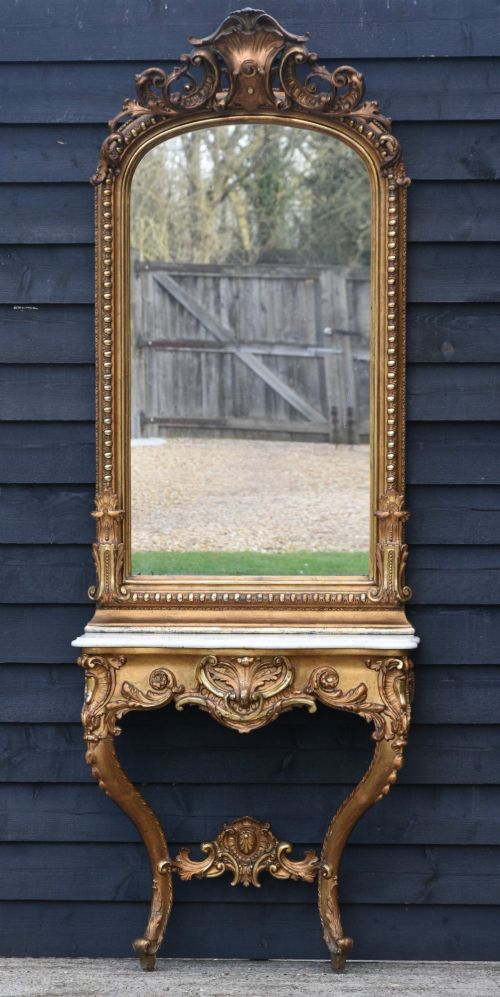
A rococo giltwood pier table is typically designed to sit flat against a wall between two architectural windows, often accompanied by a matching wall mirror. These statements in furniture are rooted primarily in the eighteenth and nineteenth centuries, spanning French, Italian, and Venetian interpretations of the style.
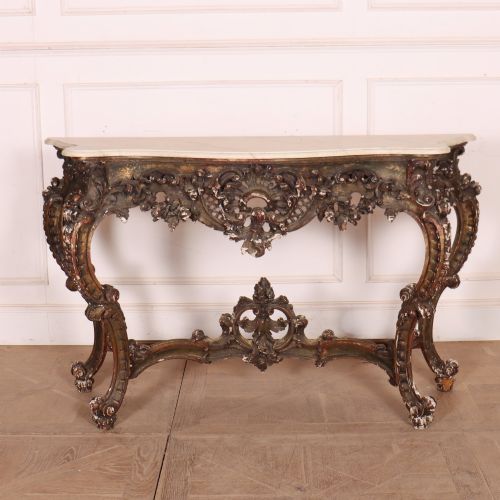
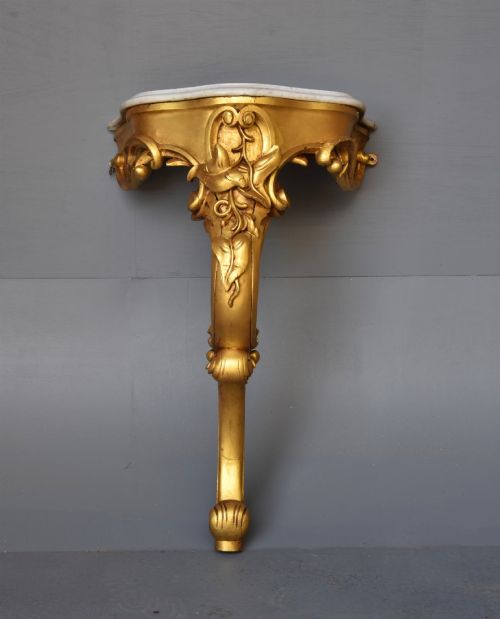
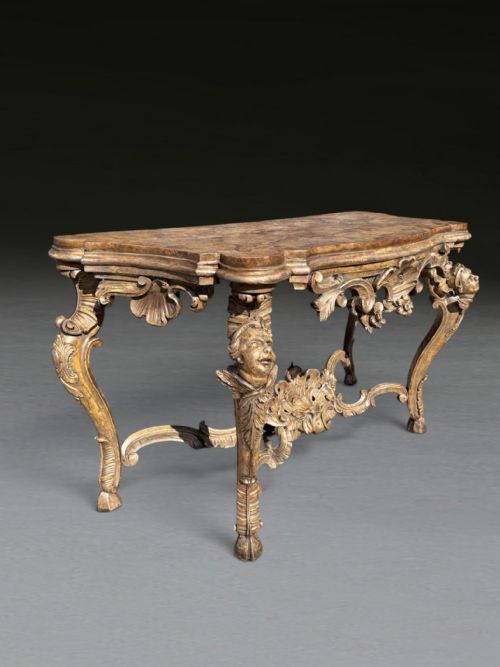
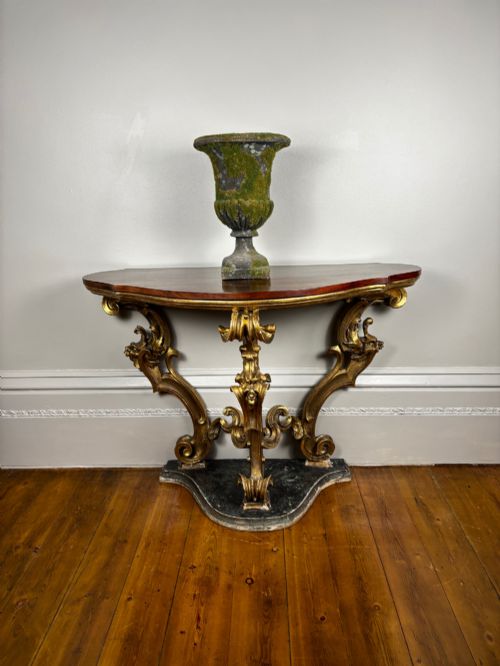
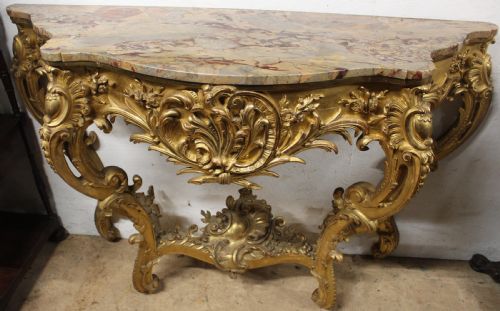
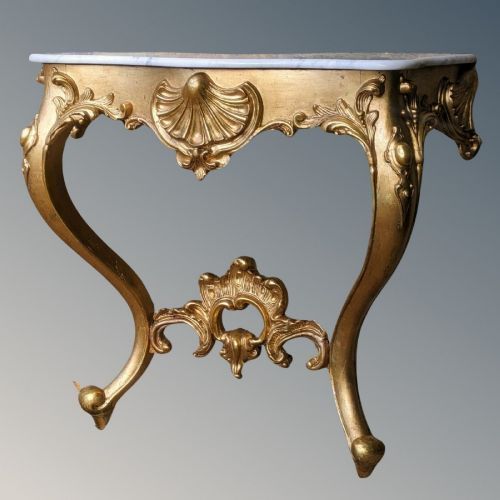
The most frequent form encountered on this page is a console table featuring a shaped marble top resting upon an elaborately carved wooden frame. Surviving examples range from intimate small side tables to substantial pairs built for grand reception rooms.
Makers and artisans built these pieces to command attention in formal reception spaces, utilising serpentine fronts and heavy structural underframes. The dialogue between the cold stone top and the warm gilded base defines the visual weight of each piece.
Materials and construction
The foundation of a rococo giltwood pier table relies on carved wood, frequently built up with layers of gesso to provide a smooth, responsive surface for gilding. Artisans applied thin sheets of gold leaf over this prepared ground, creating a luminous finish that catches natural daylight.
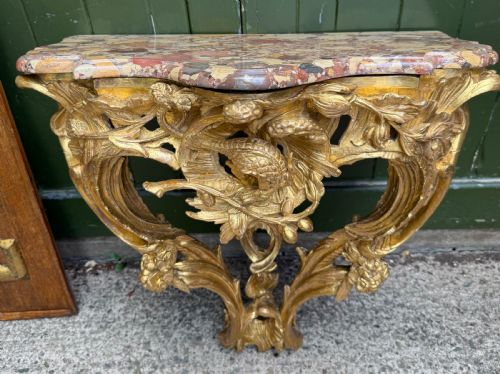
Heavier marble tops, including varieties such as Carrara and breche d'alep, rest directly upon the structural framework, their cool veining contrasting with the gilded decoration below. Paint and glass occasionally supplement the primary giltwood and marble schema in matched mirror sets.
Some console tables feature fierce rams and maiden heads peering out from the gilded scrolls.
Judging the execution
Depth and sharpness of the hand-carving distinguish finer examples from simpler commercial outputs, particularly in the rendering of asymmetrical scrolls and floral motifs. Crisp edges and deeply undercut foliage demonstrate the confidence of the carver.
The integrity of the original gold leaf and the subtlety of the gesso preparation dictate the visual richness of the surface. Surviving stone tops that retain their original figure and thickness add substantial substance to the piece.
The Rococo Giltwood Pier Table Glossary
- Giltwood
- Wood that has been coated with thin leaves of metal to simulate solid gold. This finish responds distinctively to age through gentle wear and patination.
- Pier table
- A table designed specifically to stand against the wall between architectural windows. They often stand beneath tall mirrors to double the reflected light in a room.
- Rococo
- An ornate design style characterised by asymmetry, C-scrolls, and naturalistic shell and plant motifs. It originated in France before spreading across European furniture workshops.
- Serpentine
- A curved line that undulates inwards and outwards in a smooth, continuous wave. This contour frequently defines the front edge of high-status console tables.
- Gesso
- A plaster mixture applied to wood to create a smooth surface for gilding or painting. Its thickness allows carvers to achieve sharp relief details.
Rococo Giltwood Pier Table: Frequently Asked Questions
Where should I place a pier table?
These tables are traditionally positioned against a flat wall in a hallway, drawing room, or entrance foyer. They are shallow by design to avoid obstructing traffic flow.
Pairing the table with a matching wall mirror completes the historical arrangement and bounces light deep into the space.
Are marble tops original to the tables?
Many eighteenth and nineteenth-century tables retain their original stone slabs, which were cut specifically to fit the serpentine contours of the wooden frame. Heavy veined marble provides necessary downward weight to stabilise the tall, ornate legs.
Slight variations in the underside fitting help confirm whether the stone has lived with the base for centuries.
How do I care for antique giltwood?
Gold leaf requires gentle maintenance, as harsh modern chemical cleaners can strip the delicate metallic surface. Dusting softly with a dry, clean microfibre cloth prevents particle buildup without damaging the fragile gesso underneath.
Keep these tables away from direct sunlight and damp environments to protect the underlying wooden construction.
How do I distinguish eighteenth-century pieces from later revivals?
Eighteenth-century examples display hand-cut joinery and tool marks consistent with period workshop practices, alongside a softer, deeper patination in the gold leaf. Revival pieces from the Victorian era often utilise more standardised framing and crisper, heavier machine-assisted preparation.
Examining the underside and the construction of the carcase reveals the working methods of the period.