
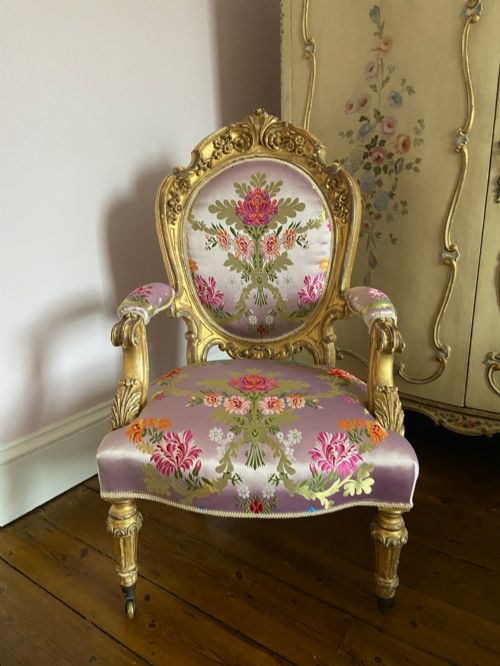
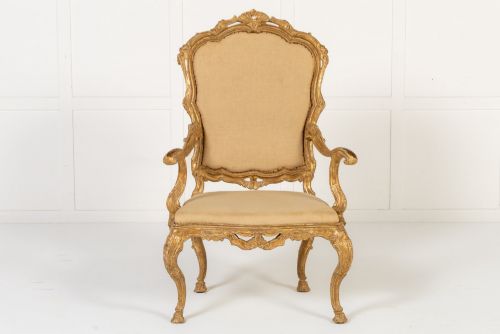
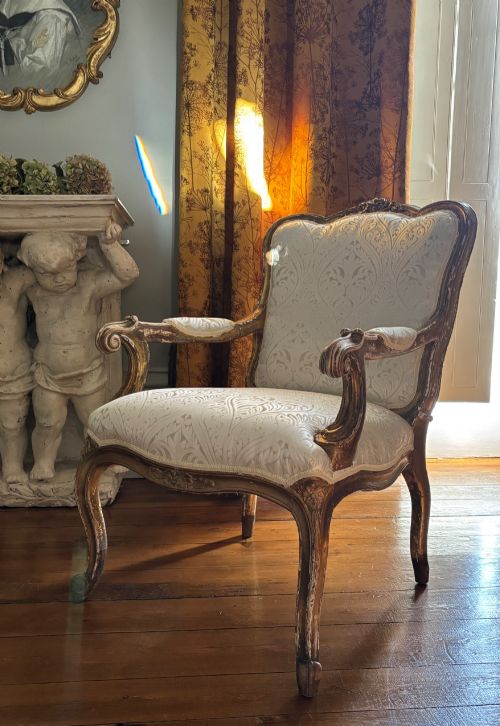
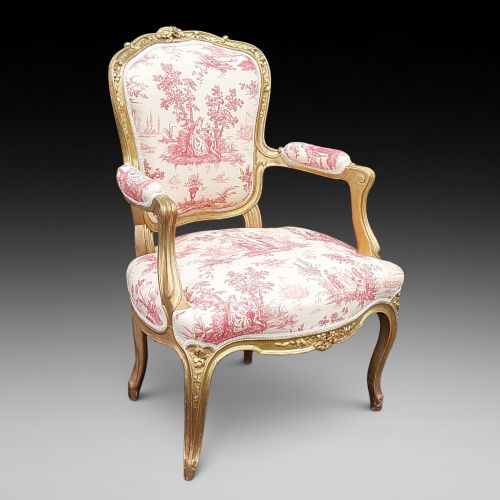
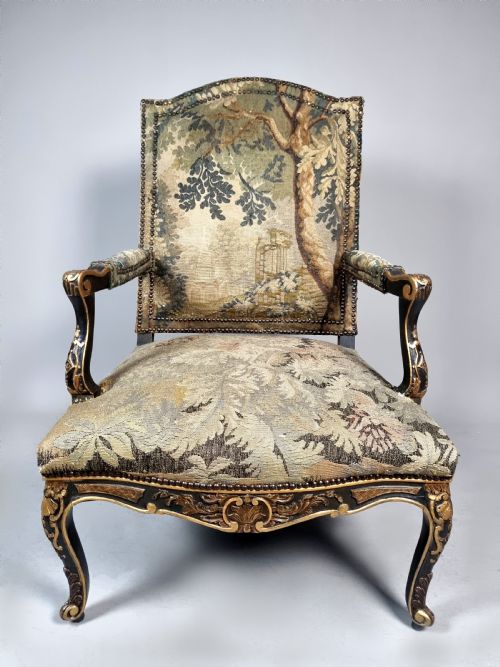

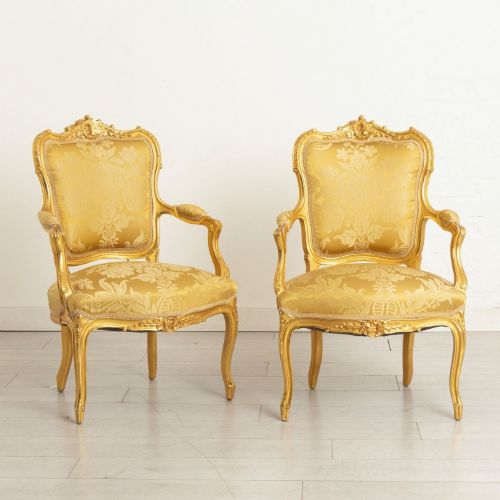


Rococo Gilt Armchairs
Rococo gilt armchairs bring exuberant curves and gilded surfaces into a room, offering ornate seating shaped by eighteenth and nineteenth century tastes.
Rococo Gilt Armchairs
When you search for rococo gilt armchairs, you encounter heavily carved seating originating primarily from French and Italian workshops across the eighteenth and nineteenth centuries. These pieces encompass distinct revivals alongside authentic period examples, taking forms that range from open armchairs to larger salon suites.
The versions you meet most often on this page date from the nineteenth century, reflecting the enthusiasm for French styles during periods such as the Napoleon III era. Alongside these, eighteenth century Italian and English pieces appear, offering deeper history and substantial carved detail in giltwood and silver gilt.
Makers and designers of these seats drew inspiration from earlier royal aesthetics, producing exuberant frames with scroll arms and upholstered panels. Whether configured as single occasional chairs or matched pairs, they serve as focal points in traditional and eclectic interiors.
Assessing Quality and Execution
The crispness and depth of the wood carving distinguish superior examples from simpler production. Master carvers achieved flowing, asymmetrical scrollwork and organic leaf motifs that appear integrated into the structural lines of the frame rather than merely applied.
The application and preservation of the giltwood or silver gilt layer determine much of the visual impact. Hand-applied leaf that retains its varied sheen and integrates harmoniously with the underlying gesso demonstrates higher workshop standards than flat, mechanical modern substitutes.
Several chairs feature scroll arms designed to accommodate voluminous historic garments without crushing the fabric.
Blaise Maucuy
The Rococo Gilt Armchairs Glossary
- Giltwood
- Wood that has been coated with thin gold leaf over a prepared ground of gesso. This finish provides the characteristic metallic brilliance seen on formal historic seating.
- Gesso
- A plaster-like mixture applied to wooden chair frames to create a smooth surface for gilding. It allows carvers to refine delicate details before metal leaf is laid down.
- Bergere
- A closed armchair featuring upholstered sides padded and enclosed with fabric. These seats offer a deep, enclosed form distinct from open-armed salon chairs.
- Salon Suite
- A matched set of seating furniture comprising armchairs, side chairs and settees designed for formal reception rooms. They maintain uniform stylistic details across all pieces.
- Louis XV Style
- An aesthetic defined by asymmetrical curves, naturalistic foliage, and C-scrolls originating in the eighteenth century and revived later. It forms the primary decorative vocabulary for these chairs.
Rococo Gilt Armchairs: Frequently Asked Questions
What is a rococo gilt armchair?
These are highly ornamented wooden seats covered in gold or silver leaf, featuring the sweeping curves and natural motifs characteristic of the rococo style. They were designed for formal domestic interiors.
Most examples date from either the eighteenth century or later nineteenth century revivals, encompassing various regional interpretations from French and Italian makers.
How do I date these armchairs?
Dating relies on examining the timber species, the preparation layers under the gilding, and stylistic cues specific to periods like Napoleon III or the eighteenth century.
Secondary evidence such as tool marks, upholstery webbing, and wear patterns on the giltwood further clarify whether a piece is an eighteenth century original or a nineteenth century revival.
Where were these chairs used?
Historically, they occupied formal reception rooms, drawing rooms, and salons where hosts entertained guests. Their ornate carving and gilded surfaces projected status and taste.
Today, buyers place them in living rooms, bedrooms, or entrance halls as statement seating that contrasts with modern furnishings.
Are pairs common for these chairs?
Many listings feature matching pairs or larger sets, as formal seating was traditionally produced in symmetrical groupings for domestic display. Single occasional chairs also appear frequently.
Pairs generally command stronger interest from collectors seeking balanced arrangements for interior styling.