
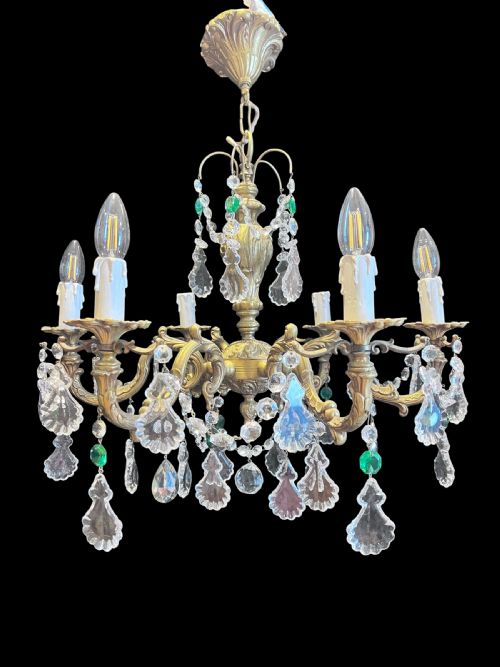
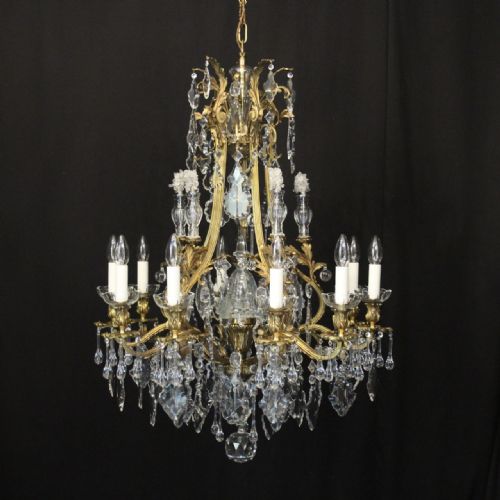


Rococo Crystal Pendant Light
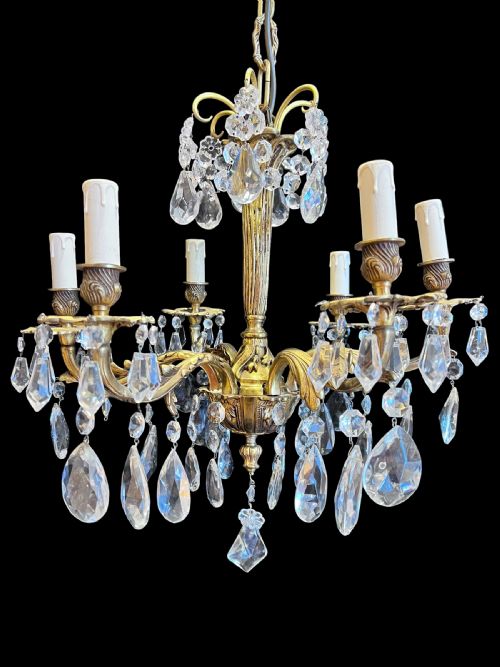
A rococo crystal pendant light brings dramatic French and Italian styling into a room through intricate gilded frames and sparkling glass drops.
Rococo Crystal Pendant Light
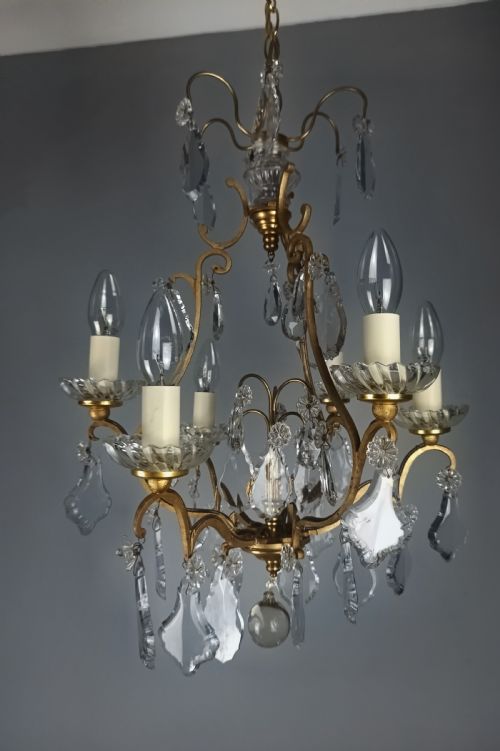
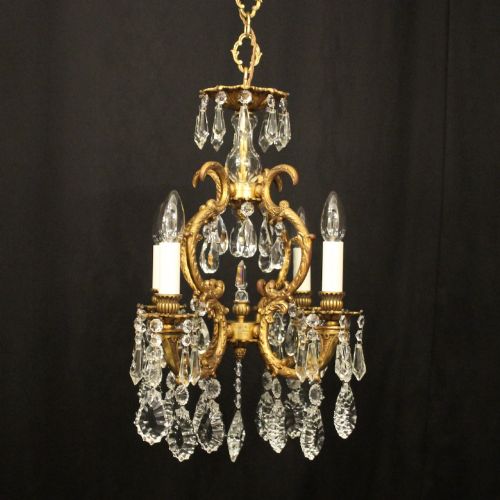
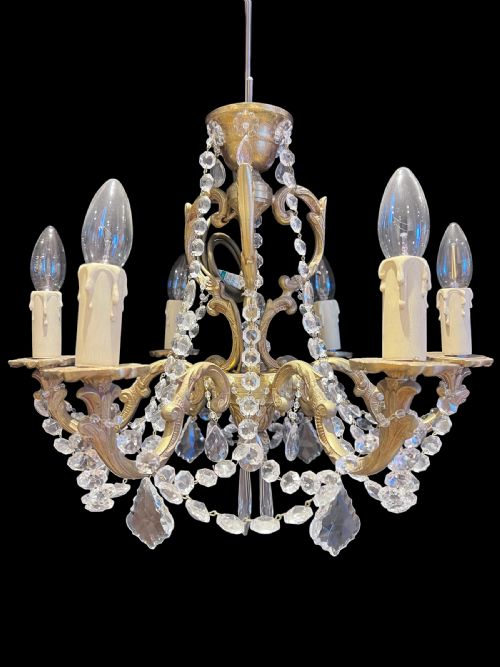
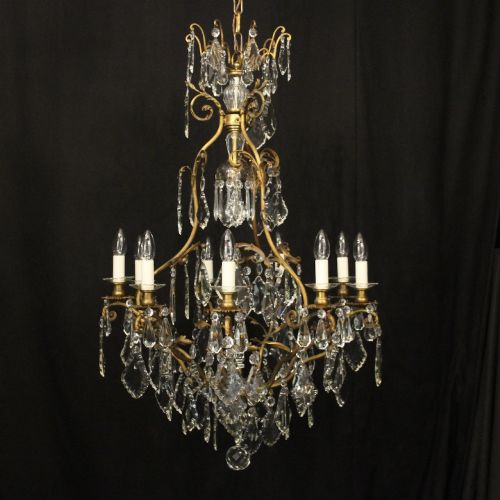
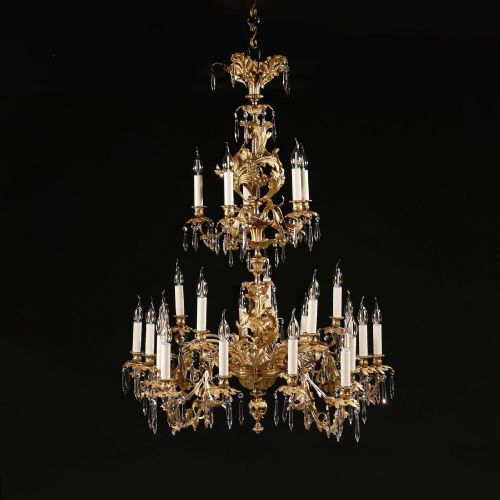
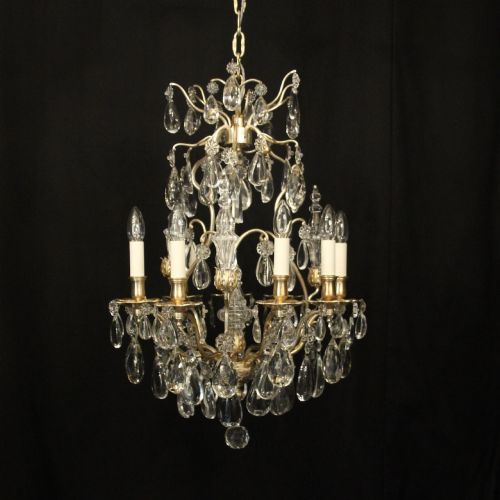
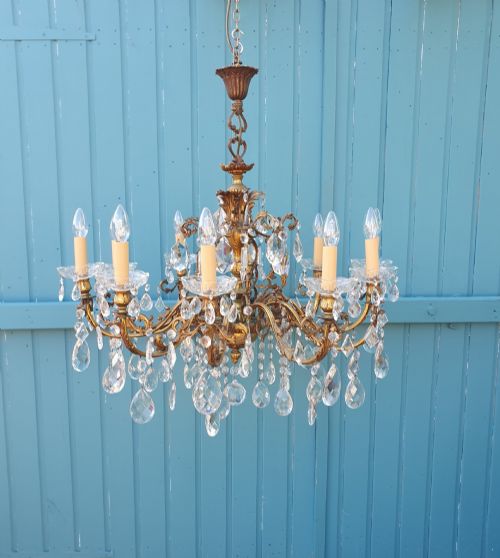
When searching for a rococo crystal pendant light, buyers encounter ornate hanging light fixtures spanning the nineteenth century through the 1930s. The selection on this page consists predominantly of French and Italian chandeliers, ceiling lights, and wall lights created in styles such as French Rococo, Italian Baroque, and Marie Therese.
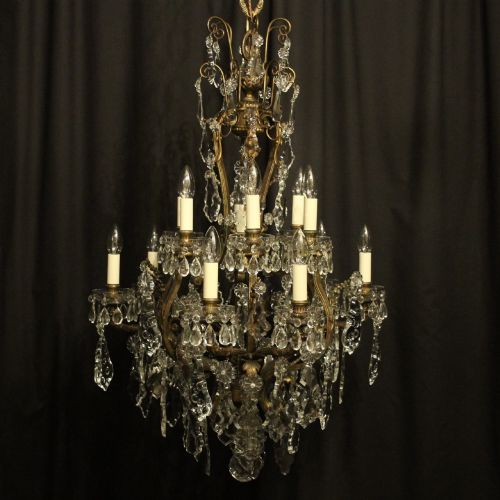
These fixtures range from compact three-light birdcage designs to grand multi-tiered chandeliers with up to twenty-five lights. Forms include gilded brass frames, wrought iron structures, and elaborate gilt bronze armatures hung with cut glass and crystal.
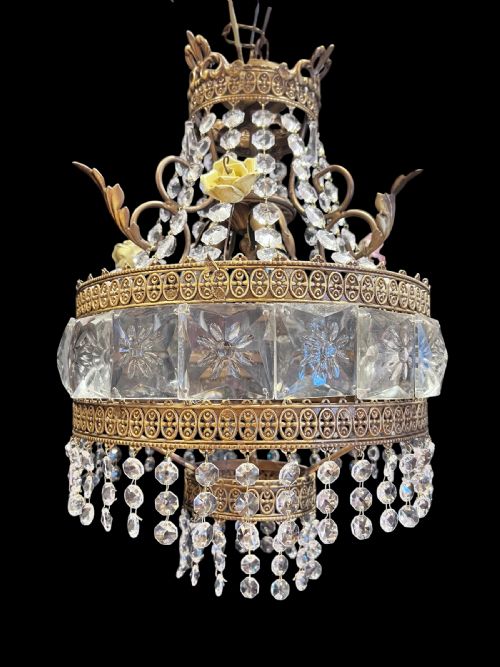
Most examples originate from early twentieth-century workshops, particularly from the 1920s and 1930s, alongside nineteenth-century pieces reflecting Louis XV revival tastes. Alongside standard chandeliers, buyers also find paired wall lights and pieces incorporating porcelain flowers or polychrome details.
How they were made
Makers constructed the primary frames of these light fixtures using cast or forged metals including gilded bronze, gilt brass, spelter, and wrought iron. Artisans then applied rich surface treatments such as silver gilding and polychrome accents to enhance the opulent decorative schemes.
The characteristic sparkle comes from cut glass and crystal drops, prisms, and coloured crystals suspended from the metal armatures by wire or pins. Specialised workers shaped porcelain flower elements and hand-assembled multi-tier frames, birdcage wirework, and arm clusters to hold multiple lights.
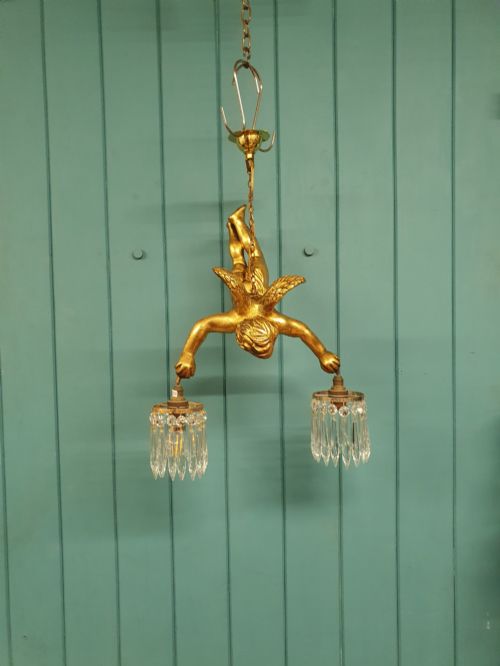
Some mid-century interpretations bravely combine gilt metal frames with cheerful porcelain flowers and flying cherubs for maximum decorative drama.
What varies in quality
The distinction between standard examples and exceptional pieces rests upon the crispness of the metal casting and the depth of the gilding. Heavier bronze armatures and finely chased details indicate superior craftsmanship compared to simpler brass or spelter stampings.
Quality also shows in the cutting and clarity of the crystal drops and the complexity of the frame design, such as double-tiered structures, porcelain floral integrations, or elaborate flying cherub motifs.
The Rococo Crystal Pendant Light Glossary
- Birdcage chandelier
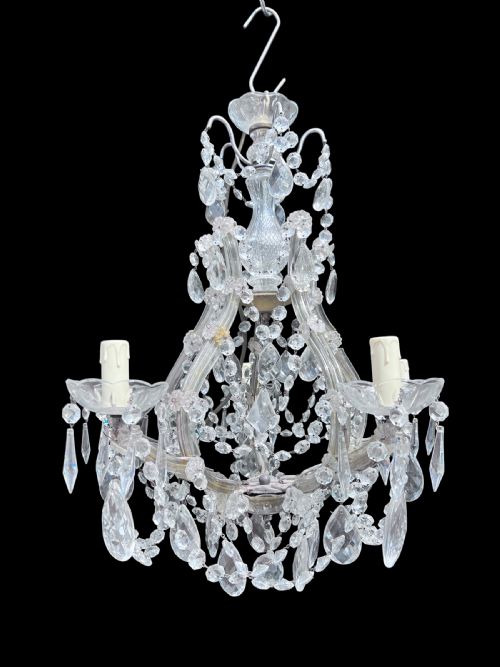
- A form of hanging light fixture characterised by a central metal cage framework wrapped in strings of small crystal beads.
- Marie Therese
- A specific style of flat-framed glass or crystal chandelier originating in Central Europe and popular in Italian and French workshops.
- Gilt bronze
- A metal substrate coated with a fine layer of gold, also known as ormolu, offering a warm and durable finish.
- Cut crystal
- Glass containing lead oxide that is mechanically or hand-cut and polished to refract light into prismatic colours.
- Spelter
- A zinc alloy commonly used as a cost-effective substitute for bronze in decorative metalwork during the nineteenth and early twentieth centuries.
Rococo Crystal Pendant Light: Frequently Asked Questions
How do I hang a heavy antique chandelier safely?
These metal and crystal fixtures require secure anchoring directly into ceiling joists using a rated ceiling hook and substantial chain support. Heavy multi-arm examples demand professional electrical and structural installation to bear the weight safely.
Weight distribution depends on the frame material, with solid gilded bronze and large multi-tiered designs weighing considerably more than standard brass or smaller birdcage formats.
What is the difference between Marie Therese and standard chandeliers?
Marie Therese style fixtures feature a flat, ribbon-wrapped metal frame completely concealed by glass plates and crystal garlands rather than exposed bronze or brass arms. They present a lighter, more transparent silhouette against the ceiling.
Standard chandeliers showcase their structural metalwork more prominently, highlighting chased bronze, gilt brass, or wrought iron frames beneath the hanging crystal drops.
How do I clean crystal drops without damaging the frame?
Cleaning involves removing individual crystal elements where possible or wiping them gently in situ with a mild solution of warm water and mild detergent. Care must be taken to avoid harsh chemical cleaners that can strip the gilt finish from the bronze or brass framework.
Dried crystal should be polished with a soft lint-free cloth to restore maximum light refraction without disturbing the antique wiring or fragile glass pins.
Are these lights compatible with modern electrical systems?
Most antique fixtures have been rewired or adapted for modern electrical standards, though checking the internal wiring condition prior to installation remains essential. Standard candle-style lamp holders accommodate modern LED or incandescent pygmy bulbs.
Original sockets may require replacement to meet contemporary safety codes while maintaining the historical exterior appearance of the arms and drip pans.