
Drop Crystal Light Fitting
These drop crystal light fittings bring unmistakable sparkle and illumination to a room, drawing the eye upwards with cascading glass and metal work.
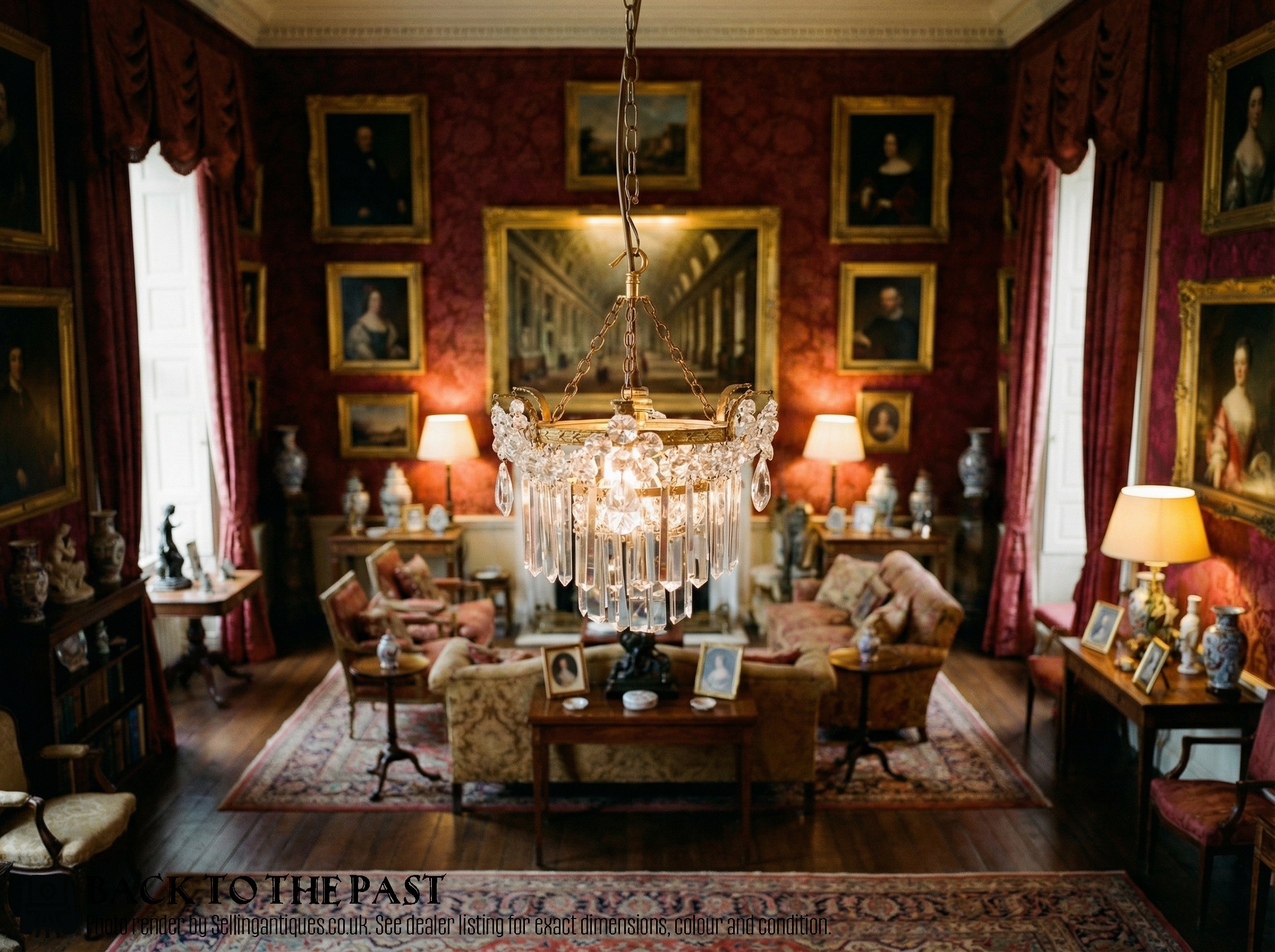
Drop Crystal Light Fitting
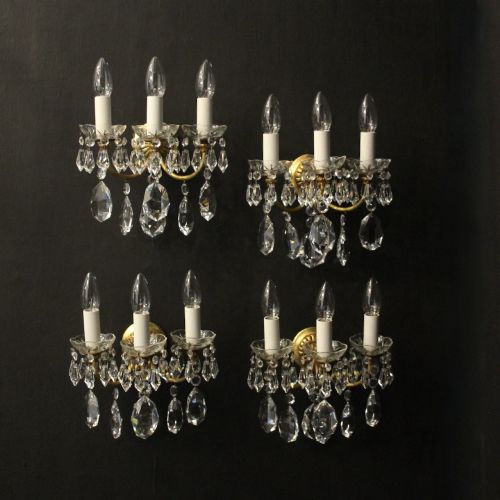
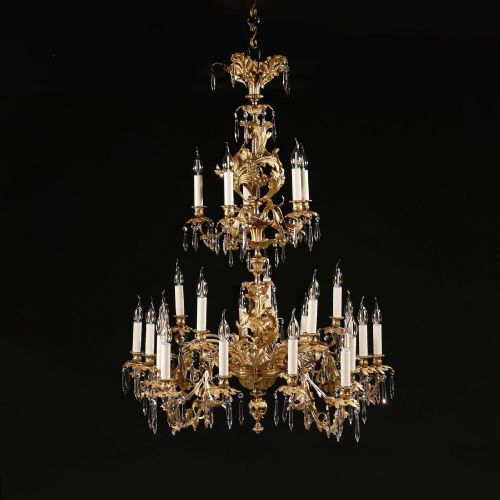
A drop crystal light fitting encompasses chandeliers, pendant lights, and wall lights designed to refract light through cut glass and crystal. When you search for a drop crystal light fitting, you encounter pieces originating from the nineteenth century through to the 1930s, with a strong representation of Edwardian and early twentieth-century examples.
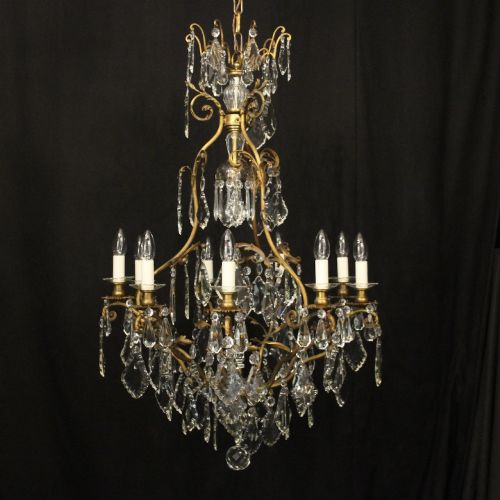
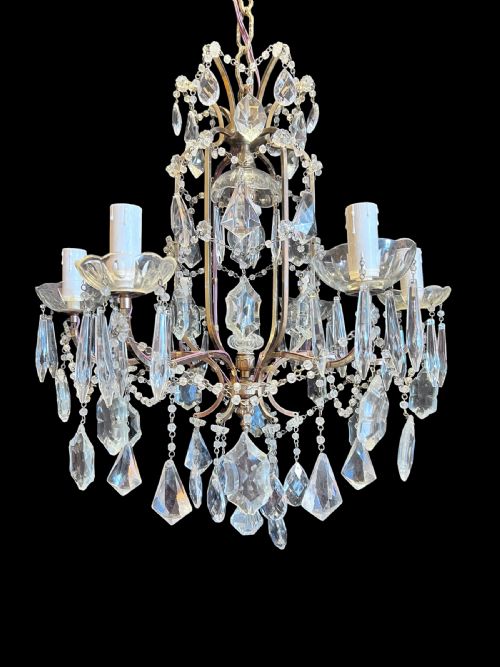
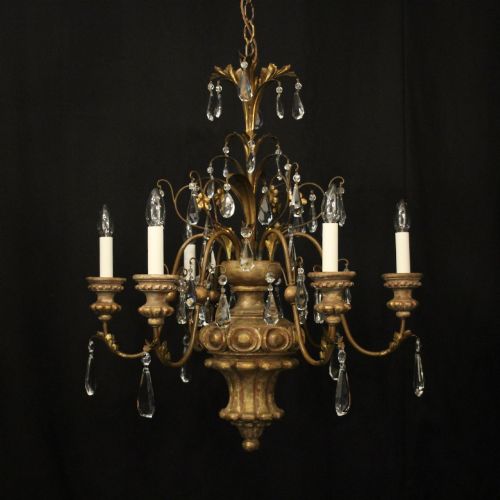
The selections span distinct stylistic traditions, including French Empire, French Rococo, and Italian designs. Many pieces utilise brass, gilt bronze, or wrought iron frames to support extensive arrangements of glass drops, spikes, and prisms.
Materials and construction techniques
The primary structural frames are cast or wrought in brass, gilt bronze, spelter, and iron, providing robust support for multiple lamp holders. These metal components often feature gilded or silvered surface treatments.
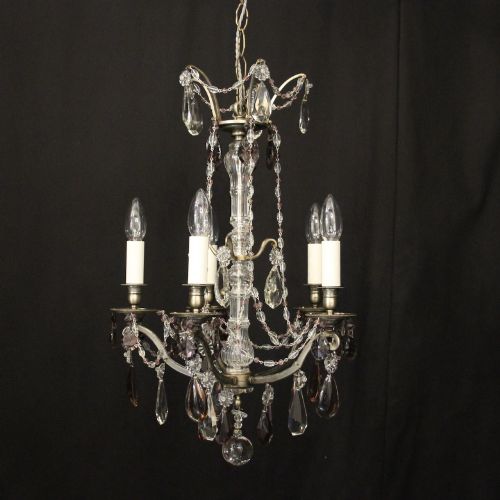
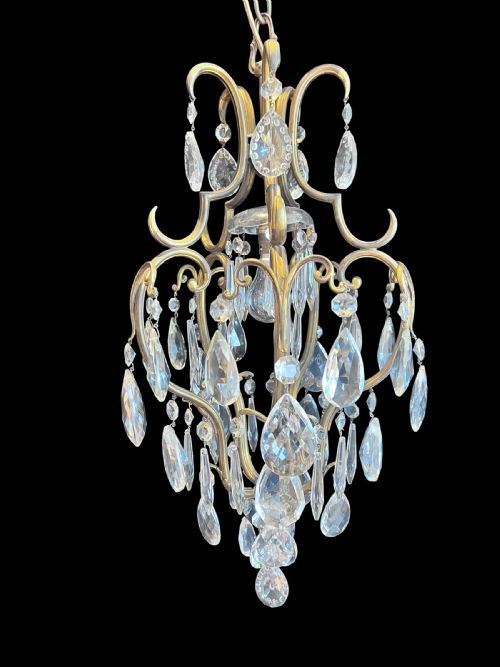
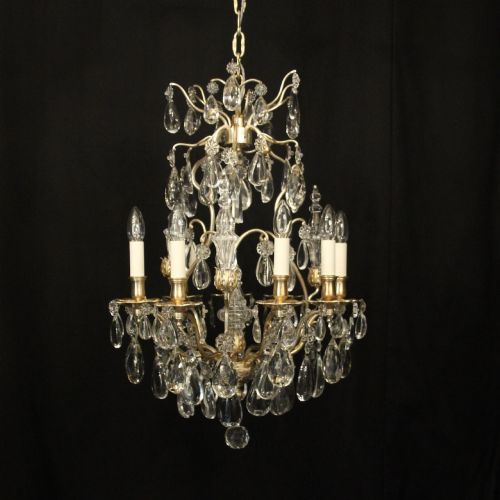
Hanging elements consist of cut glass and crystal shaped into spikes, coffin prisms, and beads. These optical components are linked together by wire to form tents, cascades, and bag configurations that catch and scatter light.
Materials recur across brass, gilt bronze, and wrought iron frameworks paired with cut glass, crystal, and coloured crystals.
Factors determining quality
Quality depends upon the precision of the cut glass and the complexity of the metal framework. Finer examples display deeply faceted crystals that refract light cleanly, alongside intricately chased or gilded bronze mounts rather than simpler cast metal.
The harmony of the assembly dictates the overall standard. Superior pieces maintain a balanced proportion between the metal armature and the dense layering of glass drops, ensuring structural integrity beneath heavy crystal loads.
The Drop Crystal Light Fitting Glossary
- Tent and waterfall
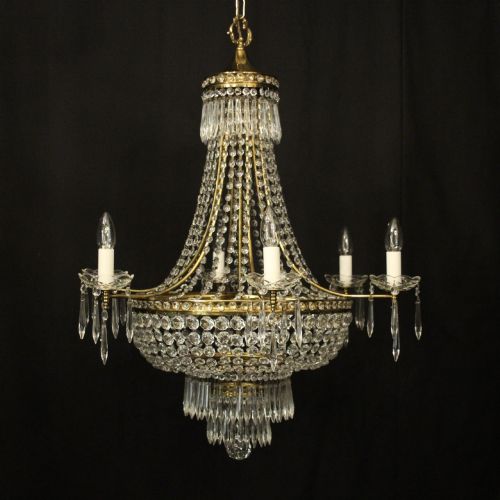
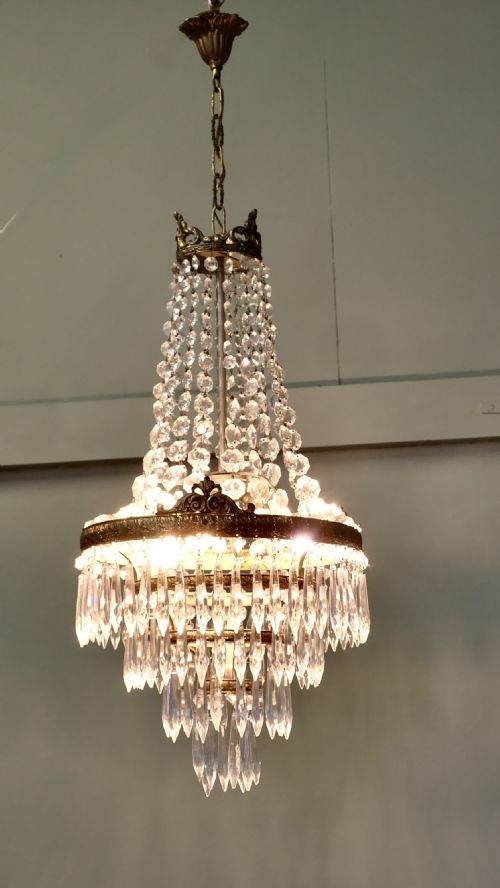
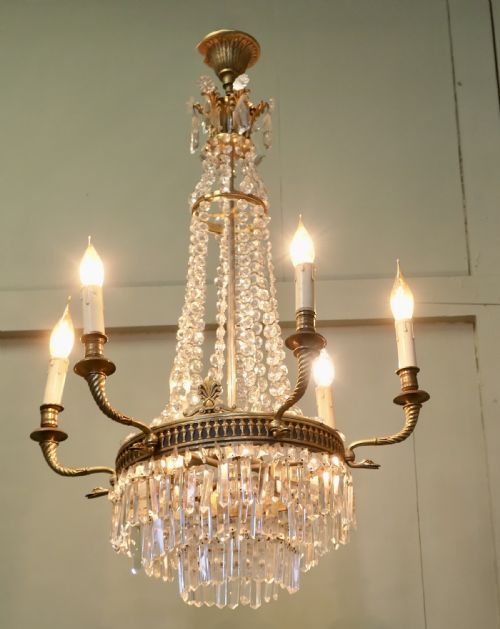
- A configuration where glass crystals form an upper canopy resembling a tent above a cascading flow of drops. This layout originates from classic Empire designs.
- Bag chandelier
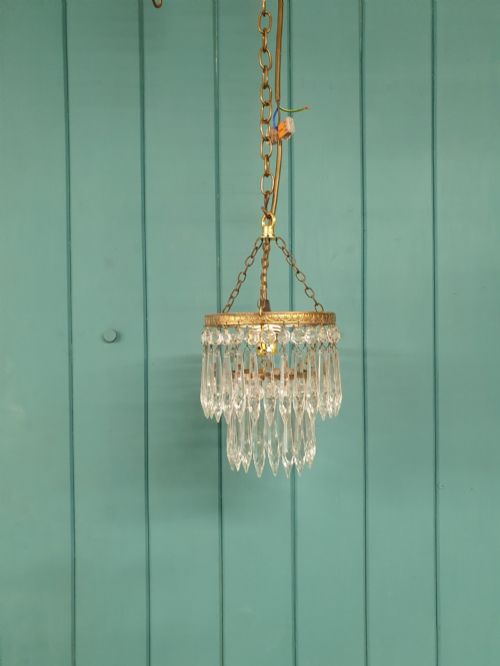
- A style featuring a flattened or rounded bag shape formed from myriad small crystals suspended beneath a metal ring. These compact fittings distribute illumination widely.
- Spike chandelier
- A design characterised by elongated, pointed crystal drops hanging vertically or at angles around the frame. They provide a distinct silhouette.
- Gilt bronze
- Metalwork coated with a thin layer of gold, providing a durable and decorative surface finish. This material is frequently found on French frames.
- Coffin prisms
- Rectangular glass drops faceted into elongated wedge shapes resembling coffins. They hang individually to catch the light.
Drop Crystal Light Fitting: Frequently Asked Questions
How do I hang a heavy crystal chandelier safely?
Suspension requires securing the fixture directly into ceiling joists using a rated ceiling hook and appropriate fixings. The weight of the metal frame and glass drops demands professional electrical and structural installation.
Ensuring the support can bear the load prevents damage to both the ceiling and the antique fitting itself.
What is a tent and waterfall chandelier?
This style arranges the upper crystals into a conical tent shape that flows downward into a looser cascade of drops. It creates a layered visual effect characteristic of classical design periods.
The arrangement maximises the reflective surface area facing the light bulbs.
How should I clean crystal light fittings?
Maintenance involves wiping individual glass drops with a mild cleaning solution while supporting them from beneath. Detaching every piece is unnecessary if you clean them carefully in place.
Using soft cloths prevents scratching the glass and preserves the finish of the surrounding metal mountings.
How do I date an antique crystal chandelier?
Dating relies on examining the metal casting techniques, wiring methods, and the specific cut of the glass prisms. Edwardian and 1920s examples often display machine-cut precision alongside older hand-finished elements.
Stylistic cues such as French Empire motifs or Art Deco geometry also point toward specific decades of manufacture.