



Rococo Bronze Candleholders
Rococo bronze candleholders bring swirling asymmetry and sculptural presence to a room, making them essential for period interiors.
Rococo Bronze Candleholders
When you search for rococo bronze candleholders, you encounter elaborate lighting pieces designed to hold one or multiple candles. These works mostly originate from the eighteenth and nineteenth centuries, spanning French revivals and Venetian craftsmanship.
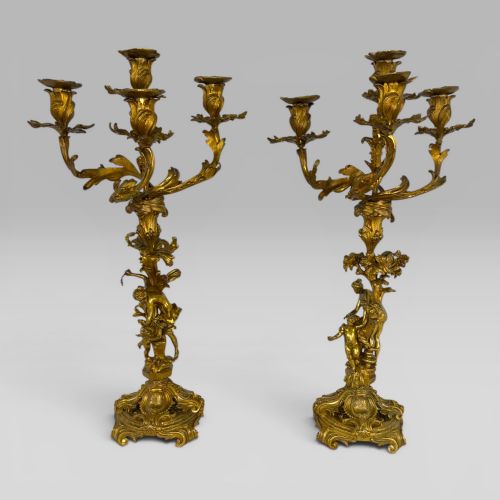
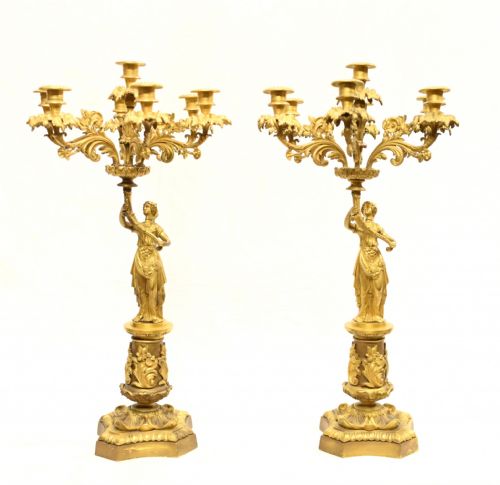
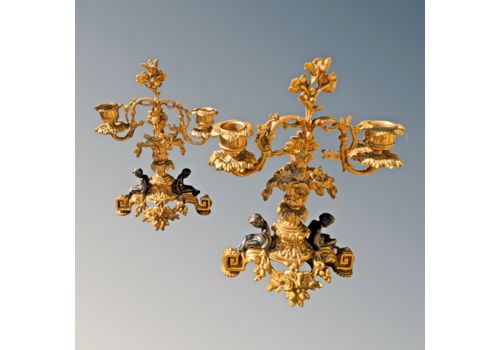
The objects on this page appear primarily as matched pairs of candlesticks and multi-branched candelabra. Many incorporate figural elements such as cherubs, putti, mermen, or porcelain birds alongside the metalwork.
Forms range from single sticks to five-light candelabra, frequently mounted on marble bases or combined with ceramic elements like Samson porcelain and Chinese vases.
How they were made
Makers utilised cast bronze, shaping the metal through traditional foundry methods before applying surface finishes. Ormolu and gilt bronze treatments provided a bright golden lustre, while patinated bronze offered darker, contrasting tones.
Secondary materials such as marble served as heavy foundational bases, and porcelain components were integrated into the metal frames. These mixed-media constructions required skilled bronze workers and ceramic mounters working in tandem.
Several pairs enlist cherubs and mermen to haul your candles about.
What varies in quality
Integration of materials also sets examples apart, as tighter joins between the bronze mounts, marble bases, and porcelain elements demonstrate superior workshop assembly.
The Rococo Bronze Candleholders Glossary
- Ormolu
- Gilt bronze created by applying a mercury and gold amalgam to a bronze base and firing it. This historic technique produced a distinctive, deep golden finish found on many revival pieces.
- Candelabra
- A branched candlestick holding multiple lights on separate arms. These fixtures often feature removable branches to function as simple candlesticks.
- Patinated bronze
- Bronze that has been chemically treated to alter its surface colour, usually resulting in dark brown or greenish tones. This finish contrasts with the bright reflection of gilt elements.
- Girandole
- An ornamental bracket or branched candlestick designed to be fixed to a wall or used on a table, frequently incorporating reflective surfaces.
Rococo Bronze Candleholders: Frequently Asked Questions
How do I clean bronze candleholders?
Dust the metal gently with a soft, dry cloth to prevent the accumulation of grime in the recesses of the casting. Avoid abrasive cleaners and chemical polishes that can strip away historic gilt or patinated surfaces.
For pieces combined with marble or porcelain, keep moisture away from the joints where different materials meet. Gentle care preserves the original finish achieved by the nineteenth-century makers.
Were these pieces always used for lighting?
These fixtures served a practical lighting purpose in domestic interiors before the widespread adoption of electricity. Candles provided illumination in salons and dining rooms, held securely within the metal nozzles.
At the same time, their sculptural forms acted as decorative ornaments on mantelpieces and side tables. Their dual function combined utility with ostentatious display.
How do I tell nineteenth century pieces apart?
Nineteenth-century revival pieces often draw directly upon earlier eighteenth-century French design motifs. Examining the casting quality, the composition of the base, and any added ceramic elements helps establish the manufacturing period.
French workshops produced a vast quantity of these items during the Second Empire and Victorian eras. Stylistic clues within the figures, such as the rendering of cherubs or mermen, indicate the specific decade of production.
What is the difference between candlesticks and candelabra?
Candlesticks support a single candle in a single nozzle mounted on a shaft and base. They represent a simpler form of domestic lighting compared to their branched counterparts.
Candelabra feature multiple arms extending from a central stem to hold several candles simultaneously. Many examples on this page allow the branches to be detached.