
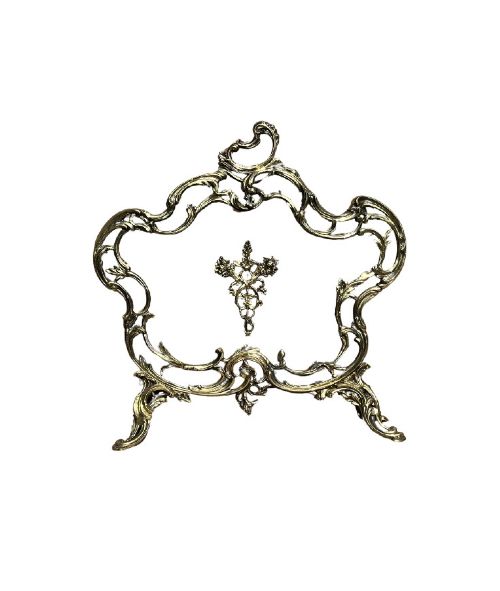
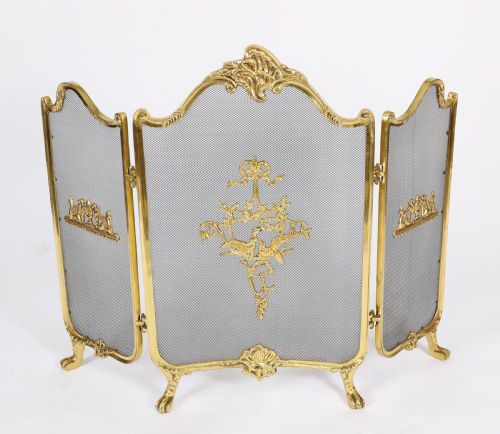
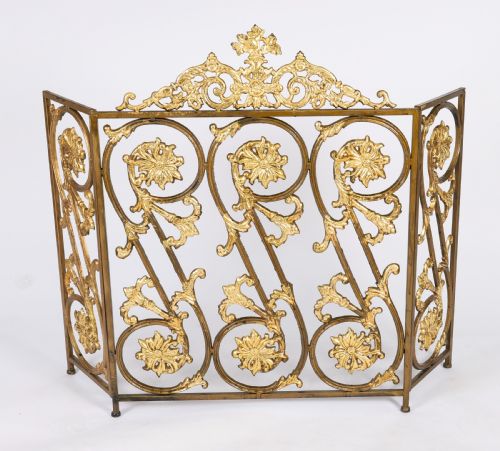
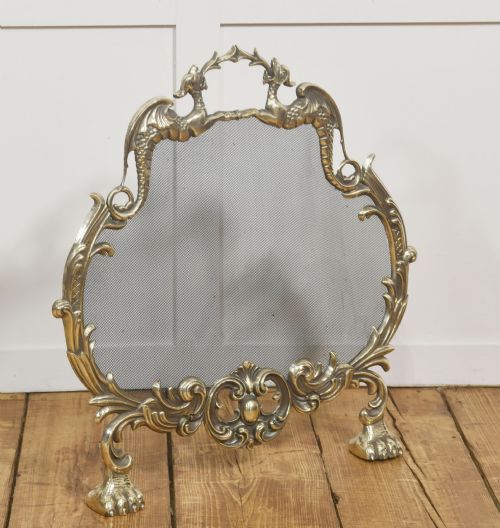
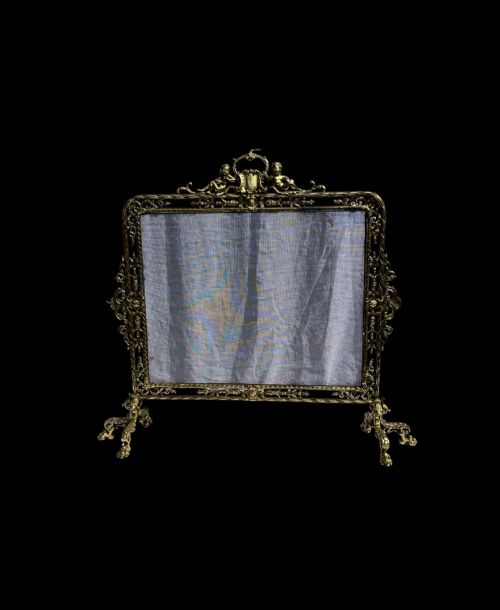
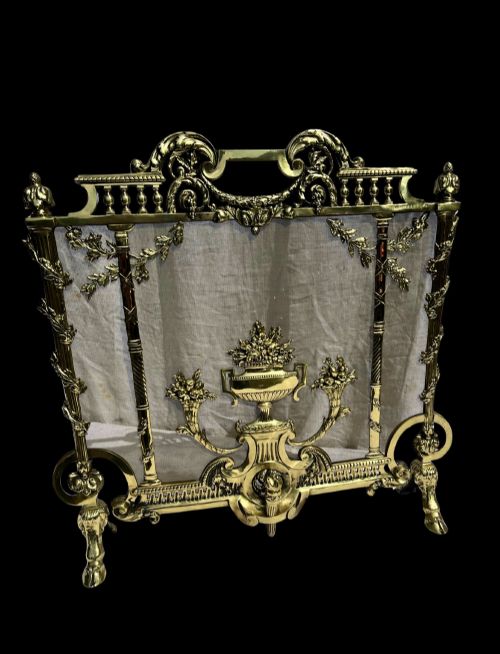


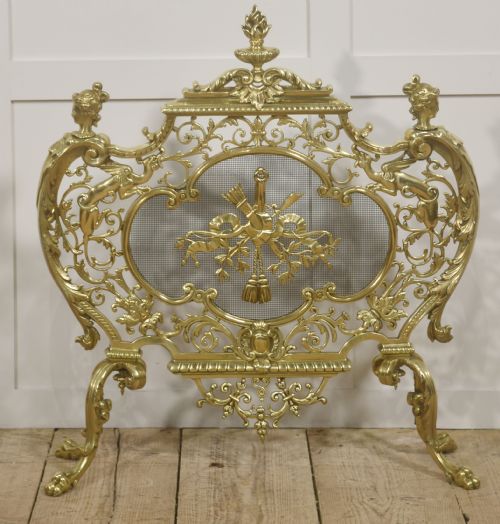


Rococo Brass Fireplace Screen
A rococo brass fireplace screen brings sculptural French curves and practical spark protection to a hearth, combining decorative metalwork with functional mesh.
Rococo Brass Fireplace Screen
When you search for a rococo brass fireplace screen, you encounter ornate hearth guards shaped by French revival designs from the nineteenth century. These pieces function as decorative spark screens while framing the fireplace with elaborate metalwork.
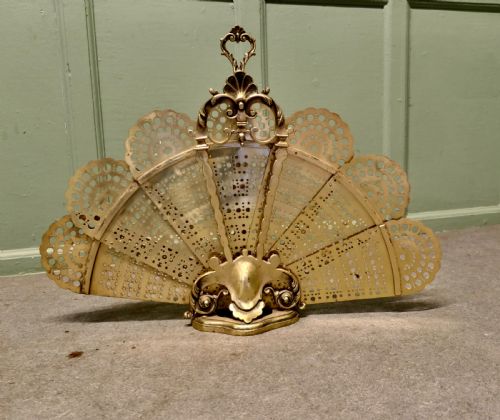
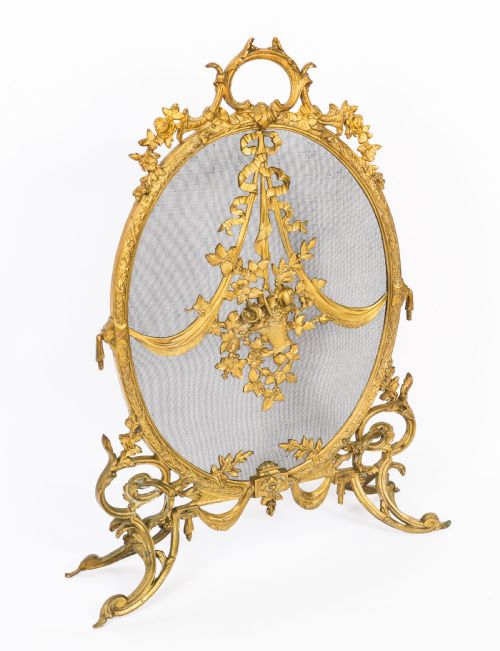
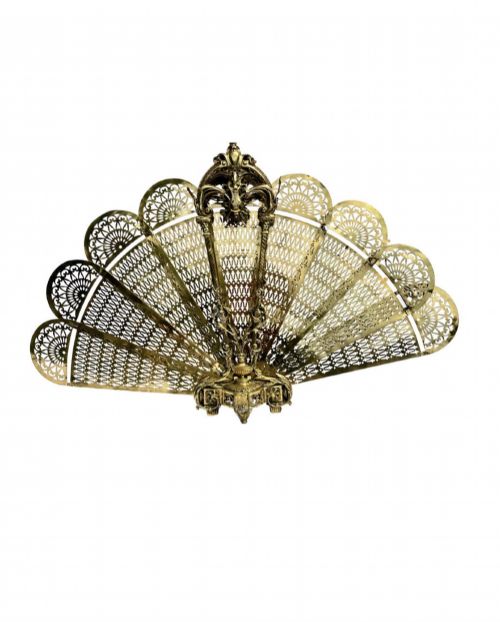
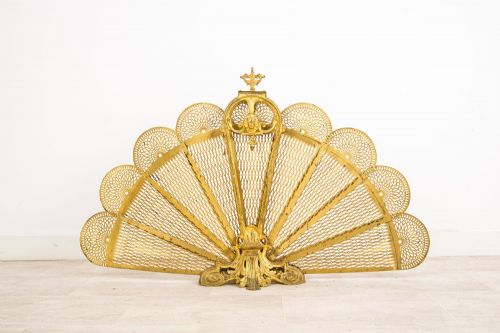
The versions most commonly met on this page date from the nineteenth century, including specific years like 1860, 1870, 1880, 1900, and 1910. They appear in forms such as folding peacock tail screens, fan designs, and solid frames featuring dolphins, flaming torches, or pierced brass.
Most examples originate from French design traditions, spanning French Rococo Revival, Louis XV style, and Louis XIV Revival aesthetics. They stand freely by the hearth as prominent fireplace accessories.
What varies in quality
The standard of a screen depends on the depth and crispness of the cast ornamentation, where finely chased gilt bronze and ormolu display sharper detail than simpler brass stampings. Heavy cast brass frames demonstrate superior structural integrity compared to lighter alternatives.
Complexity of form also distinguishes pieces, with multi-folding peacock tail designs and figural elements like dolphins or flaming torches requiring greater skill in assembly than basic rectangular spark guards.
Materials recorded across the inventory include wire mesh, cast brass, gilt bronze, and ormolu.
The Rococo Brass Fireplace Screen Glossary
- Ormolu
- Gilded bronze produced by applying a mercury and gold amalgam to a bronze base, creating a rich golden surface. This technique was widely utilised in French decorative metalwork.
- Rococo Revival
- A nineteenth-century design movement that revived the asymmetrical scrolls, C-curves, and naturalistic motifs of the eighteenth-century French Rococo style. It dominates the ornamentation of these hearth screens.
- Spark screen
- A protective mesh barrier placed before an open fire to catch escaping embers. In these pieces, it is integrated within an ornate decorative frame.
- Peacock tail
- A folding screen design that expands outward like a fan or tail feathers. This configuration allows the guard to adjust in width before the hearth.
- Gilt bronze
- Bronze that has been coated with a thin layer of gold or gold-coloured alloy. It provides a durable and lustrous finish on decorative mounts.
Rococo Brass Fireplace Screen: Frequently Asked Questions
How do I use a folding fan screen?
A folding fan or peacock tail screen expands outward on a central pivot to cover the hearth opening when a fire burns. When not in use, the blades fold inward compactly against each other.
This mechanism allows the guard to adjust in width depending on the size of the fireplace opening and the required level of spark protection.
What is the difference between brass and ormolu?
Brass is an alloy of copper and zinc, used structurally and decoratively across the main body of these screens. Ormolu specifically denotes gilded bronze, carrying a deeper and more refined golden hue achieved through historic mercury gilding or modern plating methods.
Items described as gilt bronze or ormolu typically indicate higher-end French manufacture from the nineteenth century.
How do I clean a brass fire screen?
Dust the wire mesh and metal frame regularly with a soft, dry cloth to prevent soot accumulation. Avoid harsh chemical polishes that can strip original gilding or patina from antique gilt bronze and brass surfaces.
Gentle wiping preserves the historic finish developed over the nineteenth century.
Are these screens safe to use with modern fires?
The integrated wire and metal mesh provides functional spark protection suitable for containing embers from an open hearth. Ensure the freestanding frame sits steadily on a flat hearth surface before lighting a fire.
They serve as practical spark guards while maintaining their decorative revival aesthetic.
How can I tell a Louis XV style screen apart?
Louis XV style pieces feature asymmetrical scrolls, shell motifs, and naturalistic floral curves characteristic of rococo design. They contrast with the more formal symmetry found in Louis XIV revival pieces.
Examining the cast brass or gilt bronze mounts reveals the specific French revival vocabulary utilised by the maker.