



Rococo Brass Commode
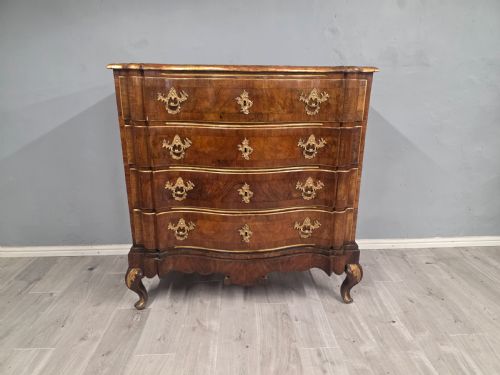
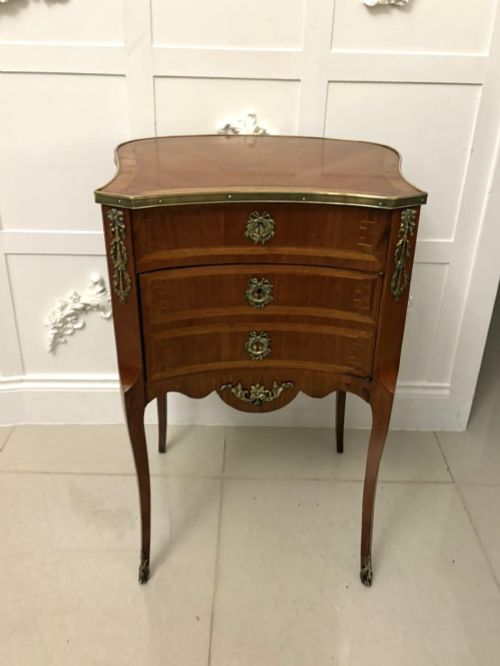
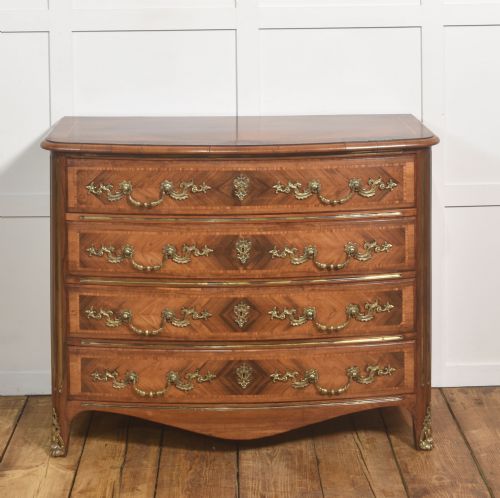
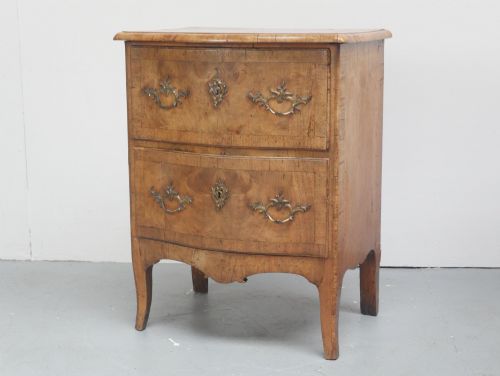
A rococo brass commode brings fluid lines and tactile weight to a room, offering generous storage disguised as sculpture.
Rococo Brass Commode
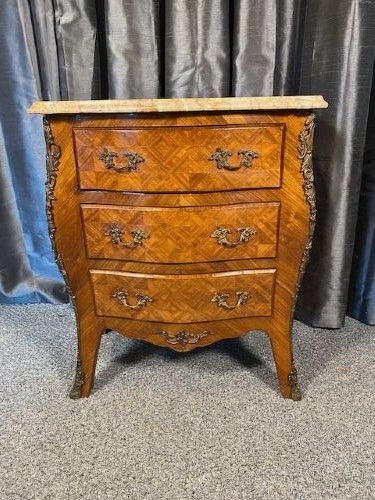
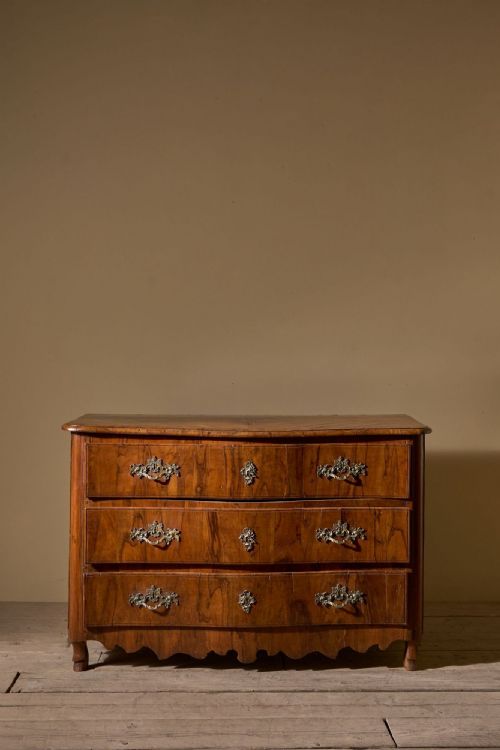
When you search for a rococo brass commode, you encounter a variety of drawer chests, side cabinets, sideboards, and bedside tables dating from the 18th century onward. The selection spans periods including Georgian and the 19th century, reflecting diverse regional interpretations across Europe.
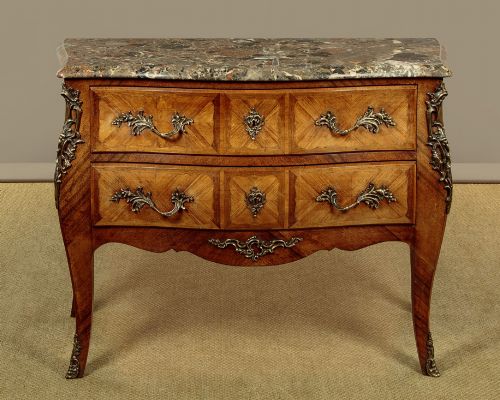
You are most likely to meet French and Dutch pieces on this page, particularly those finished in the Louis XV style or structured with bombe profiles. These examples showcase serpentine shapes and ornate mounts that define the aesthetic.
The objects function primarily as storage furniture while serving as prominent decorative focal points within domestic interiors. Their forms range from full-scale chests to compact bedside tables and miniature furniture.
Materials and construction
Cabinetmakers utilised timber carcasses built from walnut, fruitwood, oak, kingwood, mahogany, and pine, often finished with burr walnut, olive-wood, or marquetry veneers. These foundational woods provided the stability required for curved serpentine and bombe outlines.
Metal elements such as brass and ormolu were cast and applied to mounts, handles, and escutcheons to accent the fluid contours of the woodwork. Marble slabs frequently formed the top surface, adding weight and a smooth counterpoint to the timber below.
Rococo Brass Commode Retail Price Guide 2026
Typical asking prices for rococo brass commode among the pieces listed under this phrase on Sellingantiques today, from the lower quarter to the upper quarter. They describe what is for sale here now, not the wider market.
Several miniature furniture chests appear alongside full-sized sideboards, offering master cabinetmakers a way to demonstrate their skills to prospective clients.
Distinctions in quality
The standard of carving and the crispness of the brass or ormolu mounts dictate the visual success of the piece. Superior examples exhibit fluid, hand-chased metalwork that integrates harmoniously with the timber contours, whereas lesser items rely on rigid, repetitive casting.
The choice and handling of veneer distinguish finer pieces, particularly where burr walnut, fruitwood, or marquetry patterns wrap smoothly around complex serpentine and bombe curves. Skill in timber selection ensures the grain patterns flow logically across drawers and sides.
The Rococo Brass Commode Glossary
- Bombe
- A bulging, convex shape swelling outwards on the front and sides of a cabinet. This curved profile requires advanced woodworking skill.
- Serpentine
- A furniture front or top shaped with a curving line, typically convex in the centre and concave at the sides. It creates gentle movement across the piece.
- Ormolu
- Gilt bronze mounted onto furniture as decorative handles, mounts, and feet. The technique involves applying a gold amalgam to bronze.
- Marquetry
- Inlaid patterns formed by fitting small pieces of veneer into a backing timber to create pictures or geometric designs. It uses contrasting woods to achieve tonal depth.
Rococo Brass Commode: Frequently Asked Questions
Where should I place a commode?
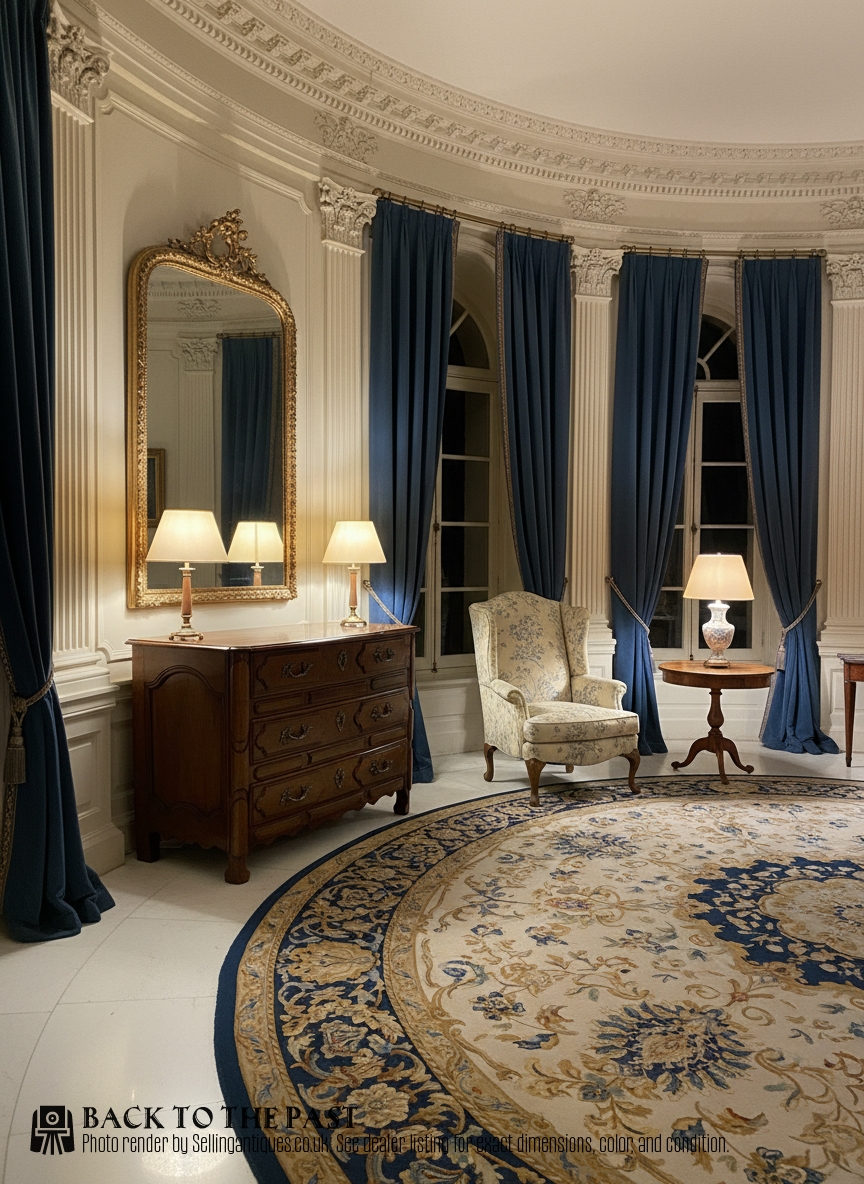
These pieces suit living rooms, hallways, or bedrooms where their sculptural profiles can be appreciated. They provide practical surface space and drawer storage while anchoring a room's decorative scheme.
Ensure the dimensions allow clear passage around the curved or bulging outlines, particularly with bombe models that extend further into the room.
How do I care for marble tops?
Wipe the marble surface regularly with a soft, damp cloth and mild soap to prevent staining. Avoid acidic substances that can etch the polished stone.
Use coasters under glasses and place protective pads beneath heavy decorative objects to guard against scratches.
What defines the Louis XV style?
The Louis XV style relies on asymmetry, organic curves, and scrollwork derived from natural forms. Furniture from this design vocabulary avoids straight lines in favour of flowing serpentine and bombe contours.
Brass and ormolu mounts accentuate these sweeping shapes, often echoing the floral and foliate motifs carved into the wood.
How do I distinguish regional styles?
Dutch examples often feature pronounced bombe curves and rich floral marquetry or burr walnut veneers. French variants tend to emphasise refined ormolu mounts and delicate serpentine lines associated with the Louis XV aesthetic.
Swedish pieces frequently display lighter painted finishes or pale fruitwoods alongside restrained rococo carving.