


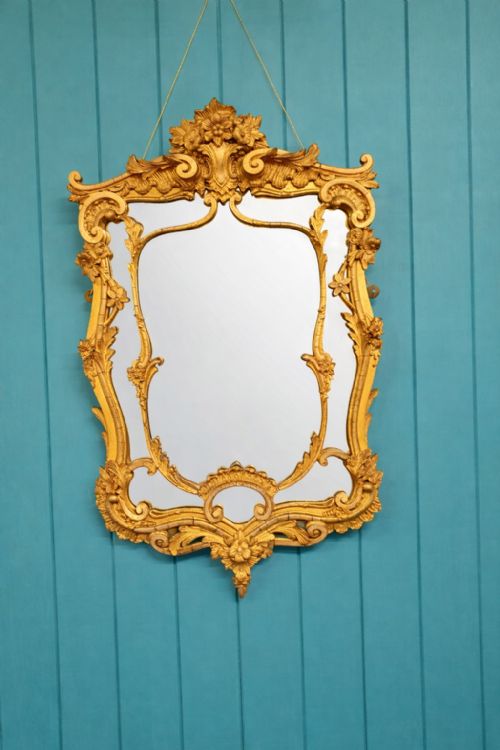
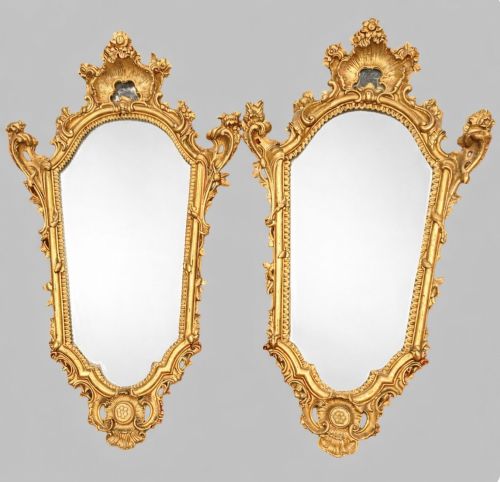


Rocaille Carved Wood Mirror
A rocaille carved wood mirror brings asymmetric elegance and organic movement to a room, driven by naturalistic curves and fluid frames.
Rocaille Carved Wood Mirror
When you search for a rocaille carved wood mirror, you enter a world of scrolls, shell motifs, and natural asymmetry that defines the height of Continental decorative arts. These wall mirrors serve as dramatic focal points, reflecting light while introducing sculptural presence to an interior. Buyers encounter pieces spanning several eras, from genuine eighteenth-century origins to nineteenth-century revivals.
Materials and construction methods
Makers shaped these frames from carved wood, applying layers of gesso to build up the intricate relief work of the rocaille decoration. Artisans then finished the surfaces with gold leaf or silver leaf, creating a luminous reflective quality that caught the candlelight of period interiors. Over the centuries, the interaction between the wooden substrate and the metallic leaf produces the characteristic patina seen on surviving examples.
The mirror glass itself was set within the carved frame, often following irregular cartouche or shaped top silhouettes. Traditional joinery secured the wooden components, allowing the elaborate scrollwork and asymmetrical motifs to project outward without losing structural integrity.
Carvers occasionally hid tiny asymmetry flaws in plain sight, daring viewers to find where the left shell motif stopped mirroring the right.
Distinctions in craftsmanship and design
The depth and fluidity of the carving separate superior examples from simpler production. Master carvers achieved a sense of organic movement where the wood appears to curl and grow naturally, whereas lesser work remains stiff and formulaic.
The quality of the gilding and the preservation of the original surface further define the hierarchy of these objects. Intact gesso and subtle burnishing on the gold leaf demonstrate the original maker's hand, while heavy restoration or modern repainting alters the visual weight of the piece.
The Rocaille Carved Wood Mirror Glossary
- Rocaille
- An ornamental style based on shellwork, pebbles, and curving organic shapes. It forms the foundation of the Rococo movement.
- Cartouche
- An ornamental frame resembling a scroll or rolled-up piece of paper, often bearing a central design. These frames frequently house the mirror plate.
- Gesso
- A plaster mixture applied to wood as a smooth base for gilding. It allows for sharp, crisp detail in the carved relief.
- Giltwood
- Wood that has been covered with thin sheets of gold leaf. This technique protects the timber and provides a brilliant metallic sheen.
- Louis XV Manner
- A design style characterised by asymmetry, C-scrolls, and floral motifs. It represents the peak of French Rococo expression.
Rocaille Carved Wood Mirror: Frequently Asked Questions
How do I hang a heavy carved wood mirror safely?
These frames require robust fixings attached directly to structural wall studs rather than relying on standard plasterboard anchors. Professional mirror hangers use heavy-duty D-rings and steel wire rated well above the weight of the timber and glass.
Ensuring the frame rests securely against the wall distributes the load evenly across the mounting points. This prevents the wooden joints from twisting under the downward pull of gravity over time.
Are eighteenth-century mirrors different from nineteenth-century revivals?
Eighteenth-century originals display hand-carving techniques and material patination unique to the period of their creation. The gesso work and timber show organic wear consistent with centuries of age.
Nineteenth-century revival pieces emulate the earlier French and Italian aesthetics with great technical skill. They often utilise similar giltwood and gesso methods but carry the stylistic signatures of Victorian craftsmanship.
What rooms suit a rocaille wall mirror best?
Living rooms and hallways benefit greatly from the light-reflecting properties and sculptural presence of these frames. Placing a mirror above a fireplace mantel creates a traditional focal point that draws the eye upward.
Dining rooms also accommodate these pieces well, where the reflective surface enhances ambient lighting during evening gatherings. The organic shapes soften architectural rigidity in modern spaces.