
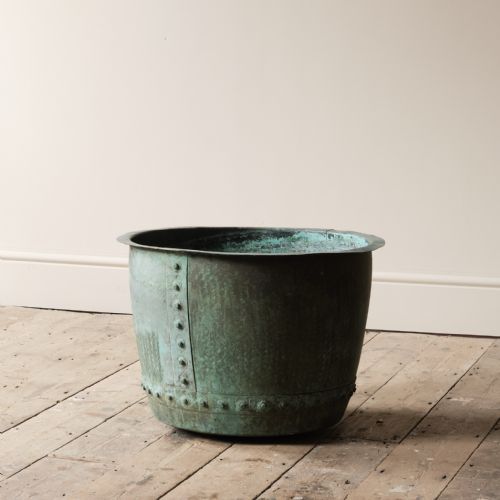
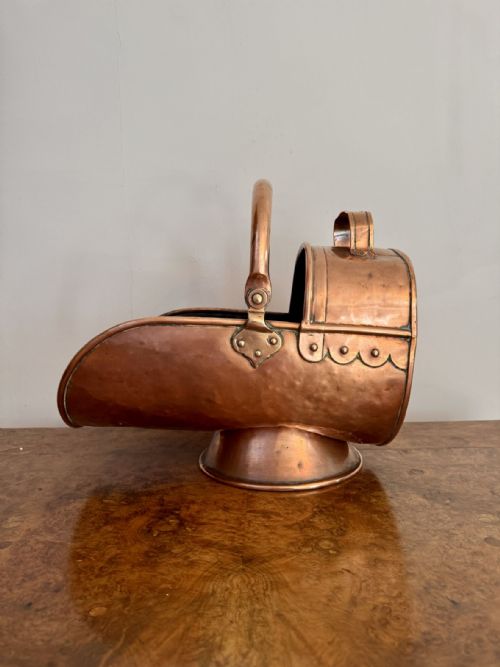
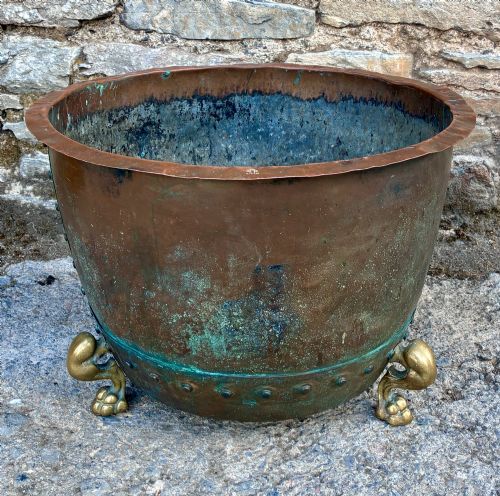
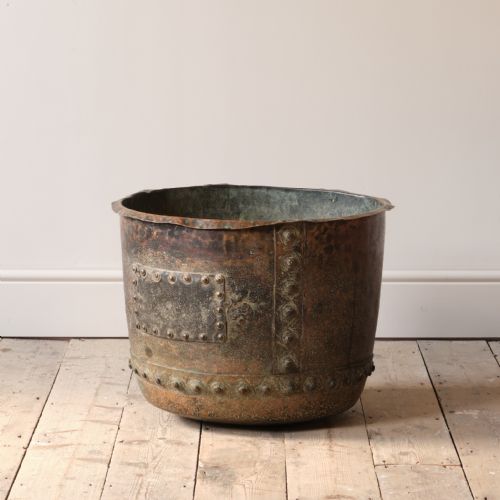
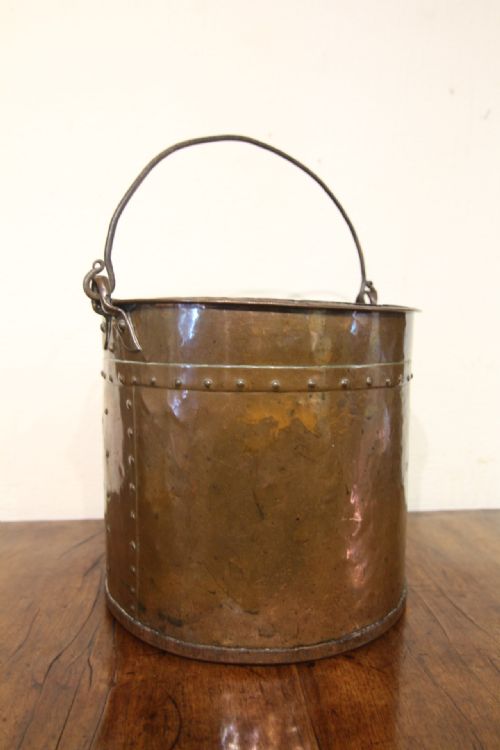


Riveted Copper Log Bucket
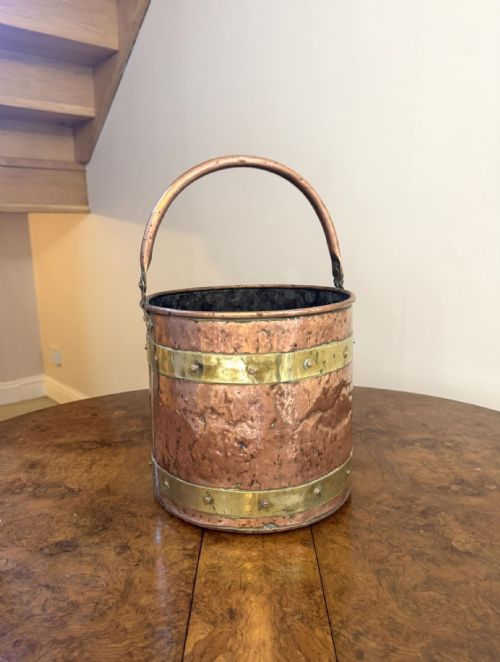
These heavy riveted copper log bucket pieces bring honest warmth and texture beside an open hearth.
Riveted Copper Log Bucket
A riveted copper log bucket serves primarily to hold firewood and coal beside the hearth while displaying utilitarian craftsmanship. These items span periods from the Georgian era through the Victorian period and into the 20th century, drawing on practical utility styles.
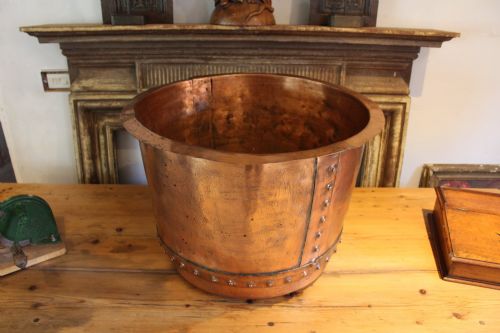
You are most likely to encounter nineteenth century Victorian examples featuring heavy copper sheet construction joined with visible metal fasteners. Many pieces also double as log bins, coal scuttles, and planters.
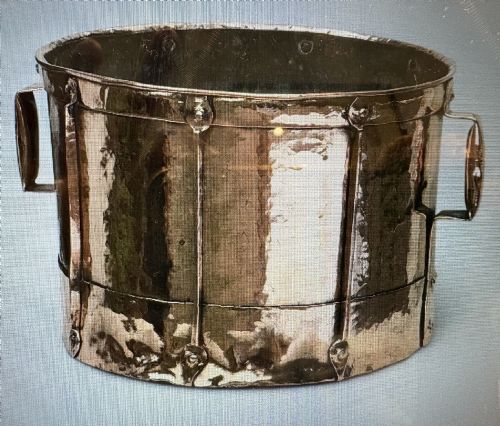
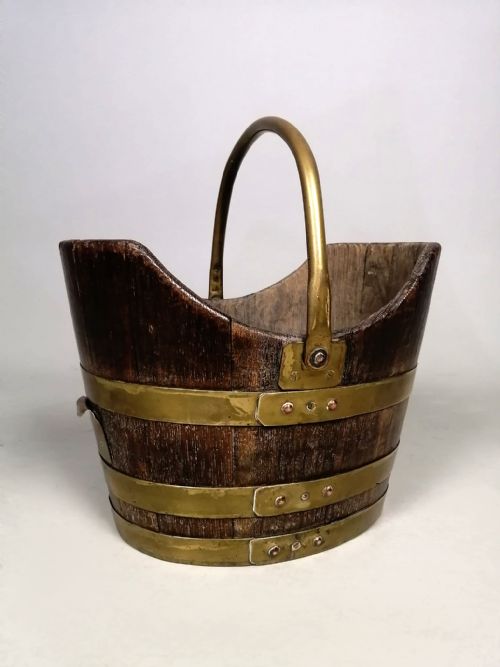
Forms range from straight-sided tubs to oval vessels and grain measures adapted for domestic fireside use. Makers often combined brass bands, iron handles, and wrought iron mounts to strengthen the heavy copper bodies.
What varies in quality
Quality depends upon the thickness of the original copper sheet and the regularity of the hand-beaten hammering. Thicker metal resists denting better and maintains a more stable structure under heavy use.
The choice of secondary metals influences the overall standard, with brass bands, claw feet, and wrought iron handles showing varying degrees of refinement. Pieces displaying tighter rivet placement and more substantial hardware represent the higher end of production.
Listings feature pieces incorporating copper, brass, iron, oak, and galvanised steel across various nineteenth century utilitarian forms.
The Riveted Copper Log Bucket Glossary
- Riveted
- Joined together using metal pins hammered flat at the ends. This mechanical fastening method creates strong structural seams visible on the exterior of the vessel.
- Ferrat
- A traditional French agricultural measure or container adapted for domestic storage. These cylindrical copper vessels often feature heavy riveted construction and distinctive proportions.
- Coal Scuttle
- A utilitarian container designed for carrying coal to the fire grate. Many examples include a sloped opening or a swinging handle for easier pouring.
- Jardiniere
- An ornamental pot or stand intended for holding live plants. In copper and brass, these items share identical construction methods with fireside log holders.
Riveted Copper Log Bucket: Frequently Asked Questions
How do I clean my log bucket?
Wash the surface gently using warm soapy water and a soft cloth to remove dust and soot. Avoid harsh abrasive cleaners that strip away the natural patina accumulated over the centuries.
Dry the copper thoroughly after washing to prevent water spotting. Leave the metal to age naturally rather than polishing it to a bright shine.
Can I use these for logs outdoors?
These vessels were built for indoor domestic service beside the fireplace. Placing them outside exposes the copper and iron components to damp weather that accelerates corrosion.
Keep the containers in dry interior spaces to preserve the original metalwork and structural integrity. Use them strictly for indoor storage of firewood or as dry planters.
What is the difference between a log bin and a coal bucket?
Log bins generally take a wider, deeper cylindrical or oval form to accommodate sizeable pieces of firewood. Coal buckets often feature specific spouts or smaller proportions designed for shovelling loose fuel.
Many antique vessels served both purposes interchangeably depending on household needs. The handle placement and opening shape usually indicate the intended primary function.
How can I tell a Victorian bucket from an earlier one?
Georgian examples often display hand-beaten surfaces with distinct joinery marks and refined brass banding. Victorian pieces tend towards heavier gauge metal with uniform industrial riveting.
Examine the construction details around the base and handles for clues regarding manufacturing techniques. Georgian items typically date from before eighteen thirty, whilst Victorian pieces belong to the later nineteenth century.