
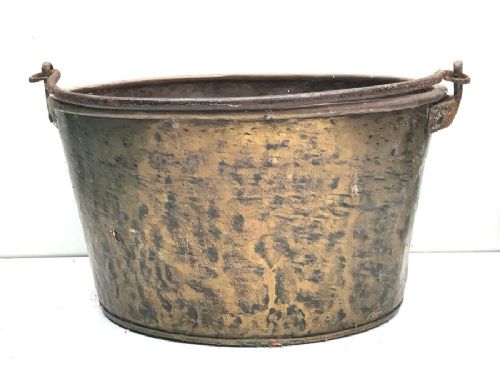
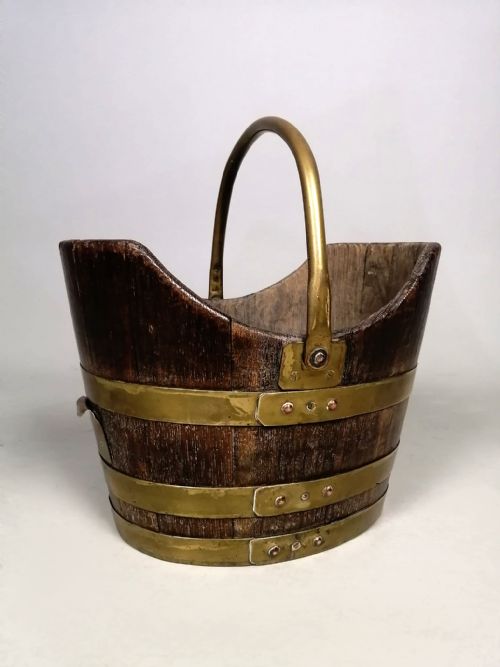
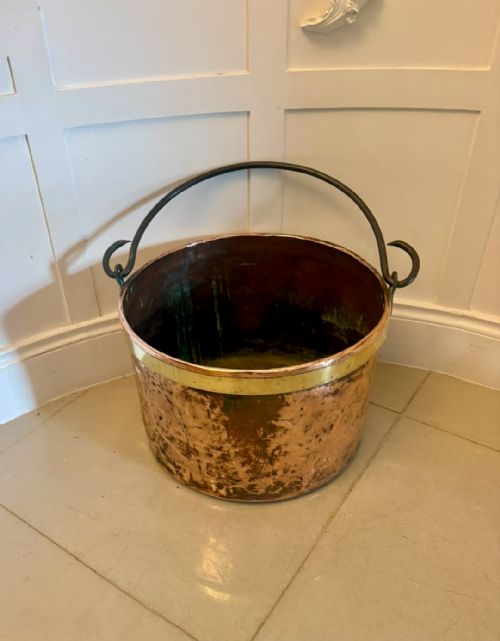


Georgian Copper Log Bucket
A georgian copper log bucket brings heft and warmth to a fireside, combining utilitarian metalwork with domestic craft.
Georgian Copper Log Bucket
A georgian copper log bucket serves primarily as a fireside accessory designed to hold fuel near the hearth, appearing in forms such as bins, cauldrons, coal buckets, and scuttles. These heavy vessels date across the eighteenth and nineteenth centuries, including George III periods and Victorian interpretations.
Buyers on this page most frequently encounter substantial copper bodies shaped with riveted seams, often lifted by swing handles and reinforced with brass bands or iron mounts. Alongside dedicated log bins, the selection encompasses related fireside vessels and domestic cookware sharing the same metalworking traditions.
How they were made
These pieces rely on heavy sheet copper beaten and shaped by hand, joined at the seams with visible hand-hammered rivets that provide both structural strength and visual character. Metalworkers integrated contrasting elements of brass and wrought iron, utilising bands, swing handles, and mounts to reinforce the rims and bases.
Certain vessels incorporate traditional coopered wooden construction using oak or walnut staves bound with metal hoops, bridging the gap between cabinetmaking and metal vessel production. Surface finishes display the natural warmth and varied patination of beaten copper and aged brass accrued over centuries of use.
Listings feature copper, brass, wrought iron, and oak, spanning eighteenth-century George III work through the Victorian era.
What varies in quality
Quality rests in the substantial gauge of the copper sheet and the integrity of the structural joints, where thicker metal resists denting and maintains a rigid form under heavy loads of wood. Superior examples display confident hand-riveting and well-balanced proportions that combine utility with decorative presence.
The choice of secondary metals and mountings also dictates distinction, with finely cast brass banding and robust wrought iron handles elevating a piece beyond basic utility. Original patination and the survival of matching handles or lids separate vessels retained in careful domestic settings from those subjected to heavy wear.
The Georgian Copper Log Bucket Glossary
- Log bin
- A large container designed specifically to store logs and fuel beside a fireplace. They appear in copper, brass, and coopered wood.
- Coal scuttle
- A domestic vessel used for carrying coal to the hearth, typically featuring a shaped mouth or angled rim for controlled pouring. Many share the metal construction of log buckets.
- Coopered
- Constructed from curved wooden staves assembled by a cooper, similar to barrel-making, often bound with metal bands to hold peat or fuel.
- Cauldron
- A round metal pot with a large capacity and a swing handle, traditionally used over an open fire but frequently repurposed as a fireside log holder.
- Riveted
- Joined by metal pins hammered flat to secure overlapping sheets of copper or iron, creating strong seams visible on antique metalwork.
Georgian Copper Log Bucket: Frequently Asked Questions
What is a georgian copper log bucket used for?
These vessels were built to hold logs, coal, and peat beside the hearth for domestic fires.
Today, they serve equally well as fireside storage or as large planters for indoor greenery.
How do I clean a copper log bucket?
Wash the surface gently with warm soapy water and a soft cloth to remove dust and soot.
Avoid harsh abrasives that strip away the aged patination collected over centuries.
Are these buckets watertight?
Many riveted copper and brass vessels retain tight seams suitable for holding water.
This makes them practical for use as plant holders or jardinières, though historical wear can affect seals.
How can I tell the period?
Dating relies on construction methods, such as hand-beated copper sheets and early riveted seams.
Georgian examples often align with George III styles, while later nineteenth-century pieces show Victorian manufacturing shifts.