

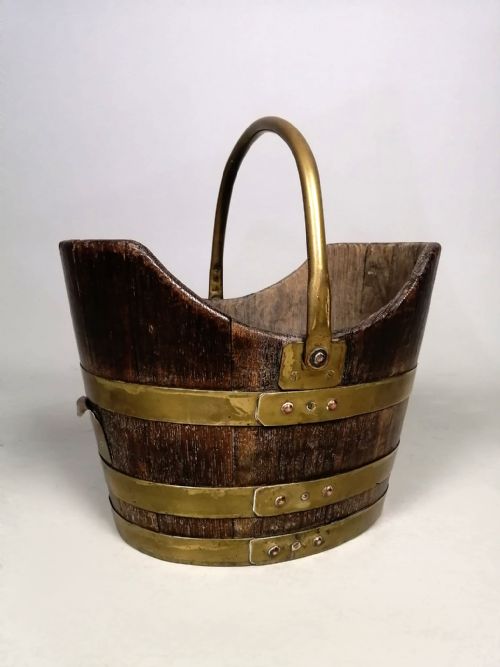


Riveted Copper Coal Scuttle
A riveted copper coal scuttle is a sturdy hearth container built to hold fuel, combining functional metalwork with domestic warmth.
Riveted Copper Coal Scuttle
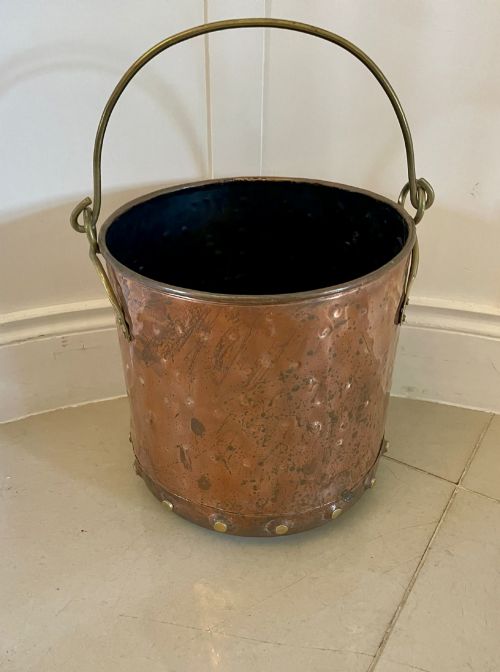
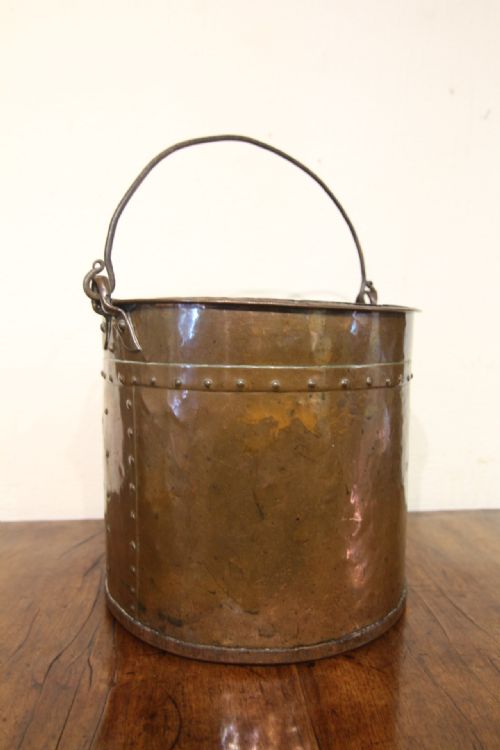
A riveted copper coal scuttle is a utilitarian hearth vessel designed for domestic fireside use, appearing across the eighteenth, nineteenth, and early twentieth centuries. These pieces encompass forms such as coal buckets, coal hods, log bins, and jardinieres, reflecting both industrial utility and interior display.
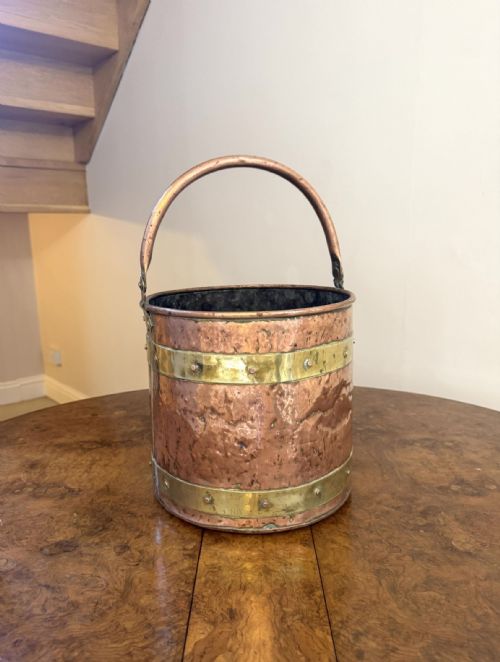
The version most commonly met on this page is the nineteenth-century Victorian riveted copper bucket, often reinforced with brass bands or iron handles. These items bridge the gap between heavy kitchen utility and refined parlour presentation.
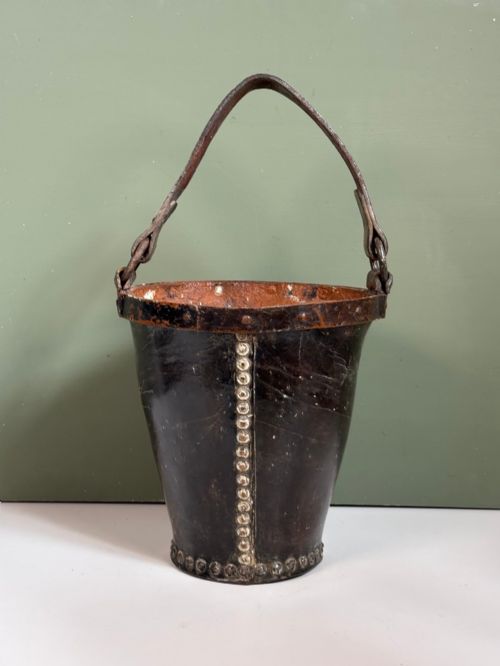
Alongside standard coal scuttles, the selection includes Georgian brass banded buckets and boiled leather containers which served parallel roles by the hearth. Each variation demonstrates the shift from purely functional metalwork to decorative fireside accessories.
Materials and construction
The construction relies heavily on hammered or sheet copper joined with visible metal rivets, creating a strong seam capable of withstanding heavy loads of coal and logs. Wrought iron handles and brass bands provide structural support and contrast against the warm tone of the metal body.
Selected pieces incorporate secondary materials like oak and wood, particularly in historical bucket forms, while alternative examples utilise boiled leather or iron. Metal plating and brass fittings further distinguish the finishing techniques applied during the Victorian period.
Riveted Copper Coal Scuttle Retail Price Guide 2026
Typical asking prices for riveted copper coal scuttle among the pieces listed under this phrase on Sellingantiques today, from the lower quarter to the upper quarter. They describe what is for sale here now, not the wider market.
Some copper buckets spent decades quietly holding coal before retiring to the drawing room as bewildered plant pots.
Judging quality and craftsmanship
The distinction between standard utility items and finer pieces lies in the weight of the copper sheet and the regularity of the riveting. Substantial metal thickness ensures the vessel retains its structural integrity through decades of daily fireside service.
Attention to detail in the handles, such as hand-hammered wrought iron or neatly fitted brass banding, separates ordinary domestic hardware from superior workshop production. The balance of the form and the preservation of the original surface patina ultimately determine the standing of each piece.
The Riveted Copper Coal Scuttle Glossary
- Riveted
- Joined together using metal pins that are hammered flat at the ends. This technique provides the robust structural joints essential for containers meant to hold heavy fuel.
- Coal Hod
- A specific bucket or scuttle shape featuring a sloping mouth and a handle at the rear. This design allows the user to tip coal smoothly into a fireplace.
- Jardiniere
- An ornamental pot or container originally intended for holding plants or flowers. In the context of metalwork, heavy copper buckets were frequently repurposed for this display role.
- Log Bin
- A large container designed specifically to store firewood beside a hearth. These vessels often feature sturdy iron handles to manage heavier timber loads.
- Brass Band
- A decorative and reinforcing strip of metal fitted around the circumference of a bucket. It provides both structural tension and visual contrast against the copper body.
Riveted Copper Coal Scuttle: Frequently Asked Questions
What is a riveted copper coal scuttle?
A riveted copper coal scuttle is a metal hearth container made to hold coal or logs for a domestic fire. These vessels combine sheet metal construction with visible fasteners to handle heavy loads.
They emerged from industrial and domestic workshops during the Georgian and Victorian eras, evolving from plain utility items into decorative fireside accessories.
How were these coal scuttles used?
They sat beside the fireplace to store fuel ready for burning, allowing homeowners to replenish domestic fires efficiently. The handles and spouts or open rims enabled easy transport and pouring of coal.
Over time, many of these copper and brass vessels transitioned from active hearth duty to ornamental roles as log bins or plant holders.
How do I live with a copper coal scuttle?
These pieces fit naturally beside traditional or modern fireplaces as storage for firewood, kindling, or magazines. Their warm metallic tones complement stone hearths and wooden flooring alike.
Maintenance involves minimal dusting to preserve the natural aged surface without removing the character built up over centuries of handling.
How do I tell Victorian pieces from earlier ones?
Victorian examples frequently display heavier machine-made riveting and bright brass banding associated with nineteenth-century industrial production. Earlier eighteenth-century pieces, such as Georgian designs, often feature simpler hand-forged iron work and distinct proportions.
Examining the construction methods around the base and handles reveals the manufacturing techniques typical of each period.