





River Valley Artwork
River valley artwork captures the quiet grace of waterways and pastoral scenes across British, Welsh, and European landscapes.
River Valley Artwork
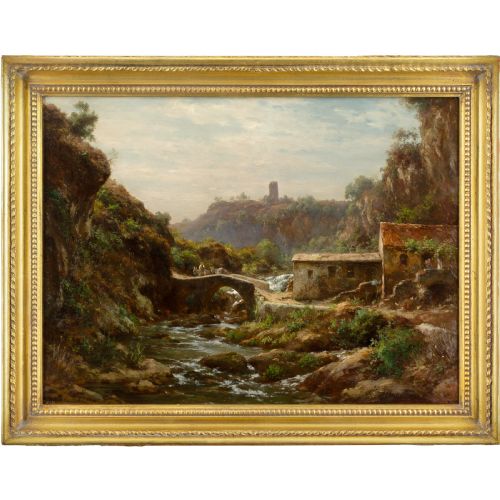
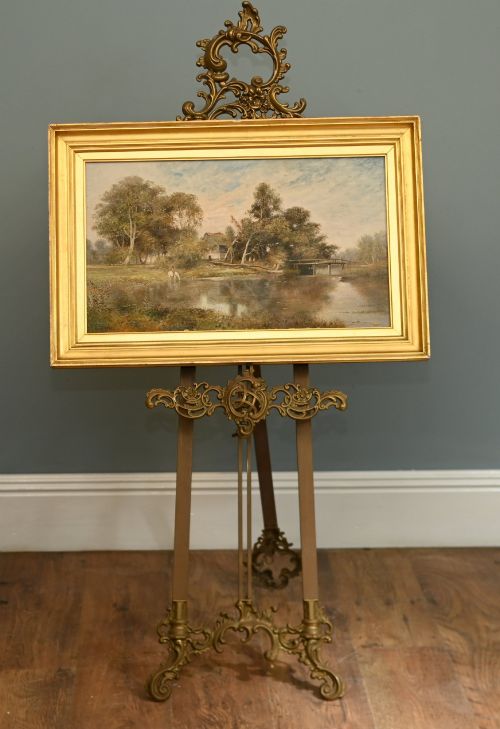
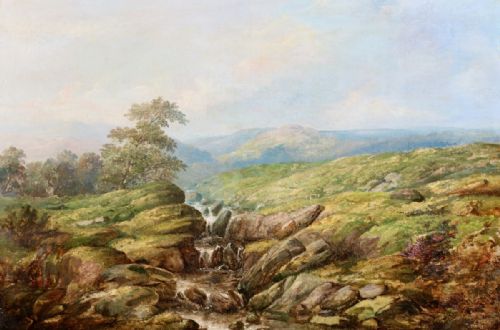
River valley artwork encompasses oil paintings and watercolour paintings that depict scenic waterways, bridges, and surrounding rural terrain. These pieces record landscapes from the nineteenth century into the early twentieth century, capturing specific locations like the Thames Valley, the Wye Valley, and various Welsh glens.
Buyers will encounter framed works on canvas and paper produced by named artists working within Victorian, Scottish School, and Impressionist traditions. The subjects range from tranquil pastoral scenes to architectural river views featuring chateaux and historic chapels.
Materials and techniques
Artists created these works primarily using oil paint on canvas or panel, alongside watercolour paint on paper. Gilt wood frames frequently house the finished paintings, providing traditional borders that complement the pastoral subjects.
Plein air execution allowed painters to capture natural light directly beside the riverbanks. Brushwork varies from the tight detail of Victorian naturalism to the looser application found in British and French impressionism.
River Valley Artwork Retail Price Guide 2026
Typical asking prices for river valley artwork among the pieces listed under this phrase on Sellingantiques today, from the lower quarter to the upper quarter. They describe what is for sale here now, not the wider market.
Listings feature works spanning the nineteenth century, Victorian era, and the 1920s to 1930s, executed in oil and watercolour on canvas, paper, and wood.
Distinctions in execution
Quality separates through the artist's command of atmospheric perspective and natural light upon the water. The handling of foliage, reflections, and distant hills demonstrates the painter's technical capability.
The sophistication of the original gilt frame and the clarity of the artist's signature or attribution contribute significantly to the standing of an individual piece.
Adolf Johann Höffler·F Staple·Alfred Young Nutt·William George Tennick·Clarence Henry Roe·William Mellor·Harold Lawes·George Melvin Rennie·Reginald Grange Brundrit·Edmond Defonte·Henry Sykes·Frederick Richard Lee·Cornelius Pearson·Charles Branwhite
The River Valley Artwork Glossary
- Oil on canvas
- A painting medium consisting of pigment suspended in drying oils applied to stretched woven fabric. This combination allows for rich colour depth and blended brushwork.
- Watercolour
- A painting method where water-soluble pigments are applied to paper. It produces transparent washes that capture light and atmospheric weather effects.
- Plein air
- Painting outdoors in direct natural light. This approach enables artists to record immediate observations of landscape and river conditions.
- Gilt wood
- Wood treated with a thin layer of gold leaf or metallic gilt finish. It forms traditional decorative frames characteristic of nineteenth-century presentation.
River Valley Artwork: Frequently Asked Questions
What periods do these river paintings span?
The selections span the nineteenth century through to the early twentieth century, encompassing Victorian and Edwardian periods.
Artists working during these decades recorded both British waterways and continental river scenes with distinct regional styles.
How should I care for an oil painting on canvas?
Keep paintings away from direct sunlight and areas subject to high humidity or temperature fluctuations.
Dust the surface gently with a soft, dry brush and avoid applying liquid cleaners to the canvas or the gilt frame.
Are watercolours different from oil paintings in display?
Watercolour paintings on paper require protection behind glass to prevent atmospheric damage and fading.
Oil paintings on canvas are more robust but still benefit from stable indoor environments away from damp walls.
How do I identify the location in a landscape?
Many nineteenth-century works include inscribed titles on the reverse, on the mount, or directly within the lower margins of the paper.
Contemporary framing or accompanying artist biographies often provide further geographical context for Welsh, Scottish, or Thameside views.