



River Thames Landscape Painting
A river thames landscape painting captures the changing moods of London water, from quiet reaches near Windsor to the busy docks of the Pool.
River Thames Landscape Painting
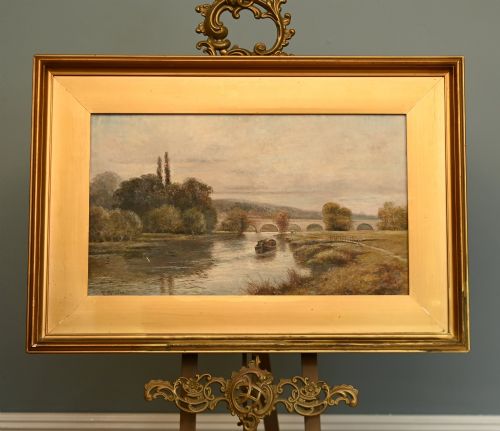
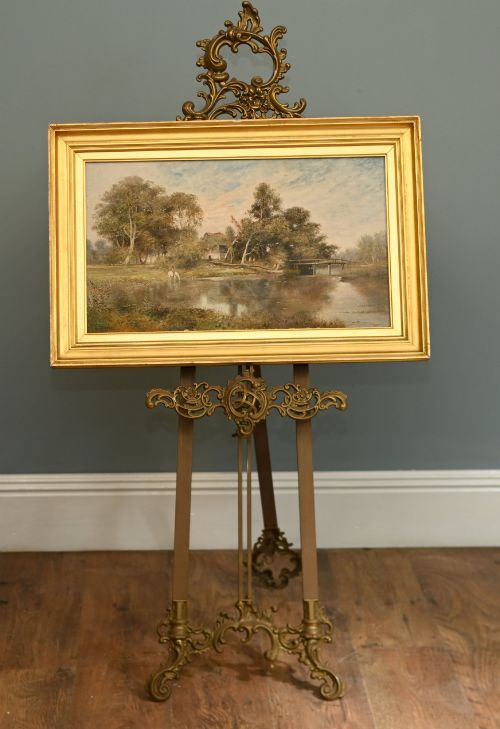
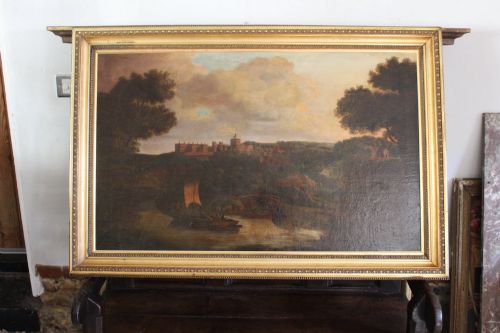
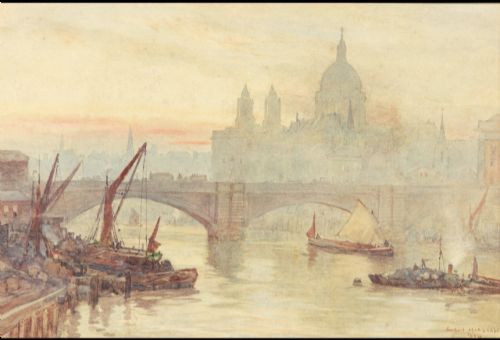
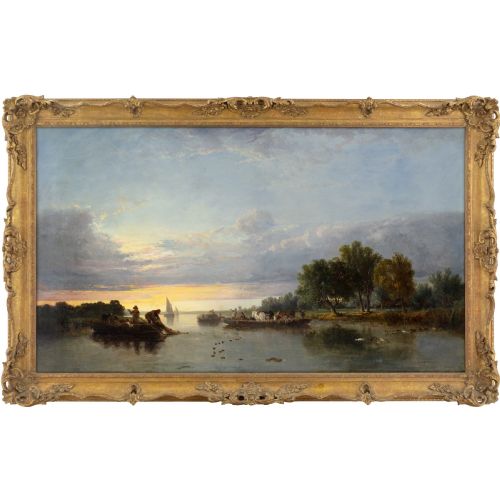
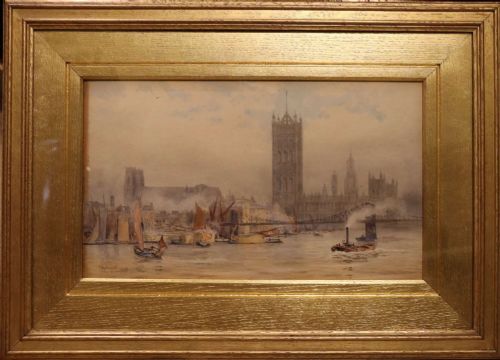
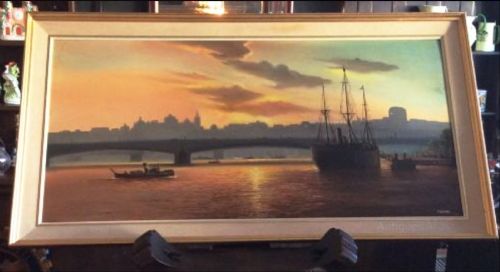
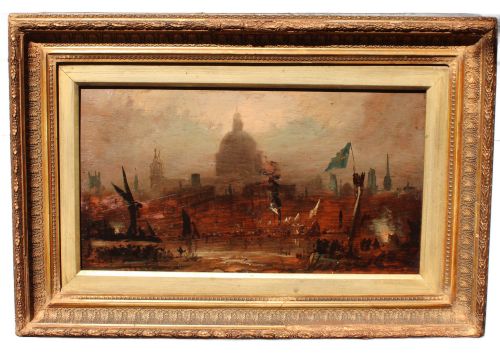
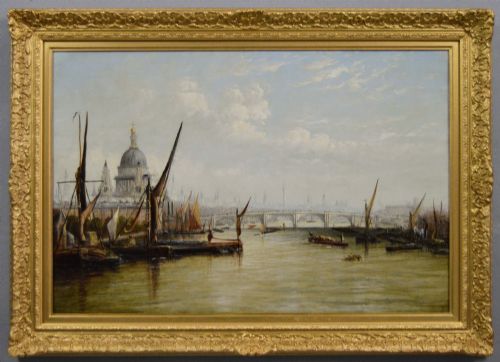
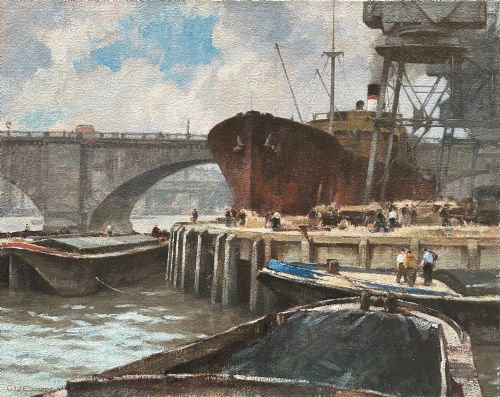
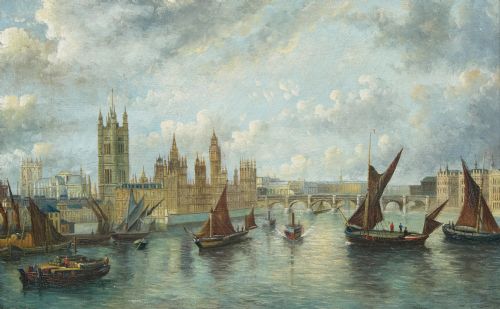
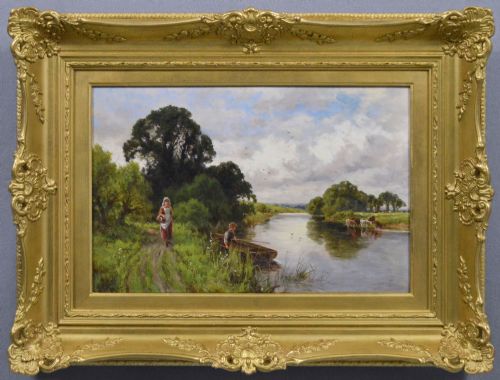
A river thames landscape painting records the changing face of the waterway, spanning quiet rural stretches and the stone embankments of the capital. These works range from early nineteenth-century studies down to mid-century views, recording bridges, barges and grand civic architecture.
The selections here lean heavily toward Victorian and Edwardian portrayals, featuring recognizable landmarks like St Paul’s Cathedral, Windsor Castle and the Houses of Parliament. Watercolours and oil paintings dominate the selection, offering both delicate atmospheric washes and rich, textured brushwork.
Materials and Methods
Artists relied primarily on oil paint applied to canvas or wood panels, and transparent watercolour pigments worked onto heavy paper surfaces. These traditional mediums allowed painters to capture the subtle reflections of light upon the water and the hazy atmosphere of the London air.
Finished works were frequently housed in wooden frames, often accented with gesso mouldings and gold leaf finishes to complement the subject matter. The interplay of pigment and support dictates how these historic pictures have survived down to the present day.
Artists frequently braved chilly Thames fog to capture seagulls wheeling past Parliament before the steamships drowned out the oars.
Distinctions in Quality
The strength of a composition rests upon the artist's command of light, atmosphere and perspective when rendering open water and architectural landmarks. Superior examples demonstrate a confident handling of brush or wash that brings movement to the river traffic and depth to the urban skyline.
Provenance and precise topographical identification further separate standard topographical records from masterful artistic interpretations. Works by established exhibited painters naturally carry greater historical weight than anonymous student copies or loose followers.
Herbert Menzies Marshall·Edward Williams·Francis Moltino·Charles William Wyllie·Henry John Kinnaird·Edward Henry Eugene Fletcher·Robert Winchester Fraser·Frank W Scarborough·Thomas Whittle the Younger·Frederick George Coleridge
The River Thames Landscape Painting Glossary
- Watercolour
- A painting method where fine pigment is suspended in a water-based, translucent solution applied to paper. This technique yields luminous washes ideal for capturing shifting atmospheric weather.
- Gesso
- A traditional primer mixture consisting of a binder mixed with chalk or plaster, applied to prepare wooden panels or frames. It creates a smooth, absorbent base for subsequent gilding or paint layers.
- Oil on Canvas
- Pigments bound in drying oils spread across a stretched woven fabric support. This medium permits rich impasto application and deep tonal layering.
- Topographical
- Representing exact places, buildings, and local scenery with descriptive accuracy. These views served as historical records before the widespread use of photography.
River Thames Landscape Painting: Frequently Asked Questions
What periods do these river paintings cover?
The available selection spans from the early nineteenth century through the Victorian and Edwardian eras, extending into the mid-twentieth century.
Most pieces originate from the Victorian and Edwardian periods, capturing both rural stretches and bustling industrial docks.
How were these historic works created?
Painters utilised oil on canvas, wood panels, and detailed watercolours on paper to capture the shifting light of the Thames.
Many historic pictures retain their original wooden frames, often enhanced with gesso detailing and gold leaf gilding.
Which London landmarks appear most frequently?
St Paul’s Cathedral, the Houses of Parliament, Waterloo Bridge and the Tower of London feature prominently across the collection.
Artists also recorded quieter locations upriver, including Windsor Castle, Kew, Marlow, Goring and various rural locks.
How do I choose between oil and watercolour?
Oil paintings on canvas offer rich textures, deeper tones and a substantial physical presence suited to dramatic marine and industrial scenes.
Watercolours provide delicate atmospheric transparency, capturing misty river mornings and subtle atmospheric light with quiet precision.