



Rich Brown Writing Cabinet
A rich brown writing cabinet is a practical piece designed for correspondence, mostly appearing here in mahogany across Georgian and Victorian periods.
Rich Brown Writing Cabinet
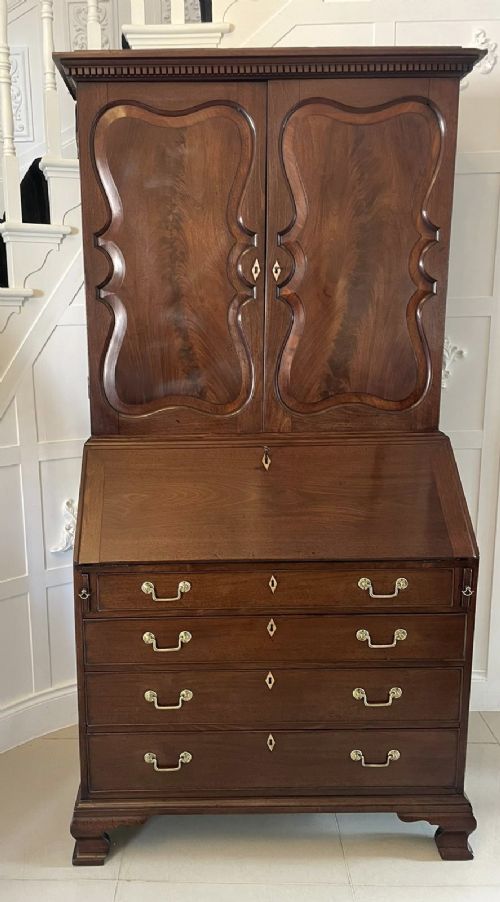
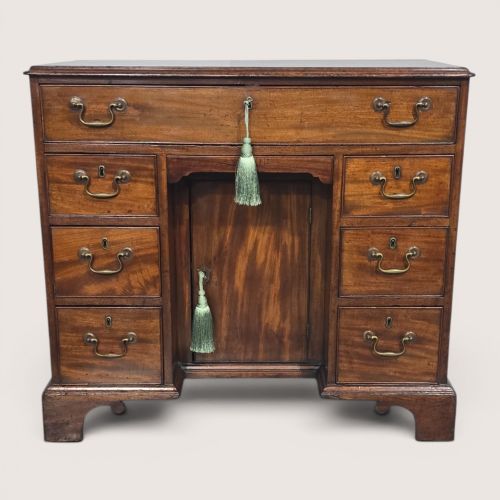
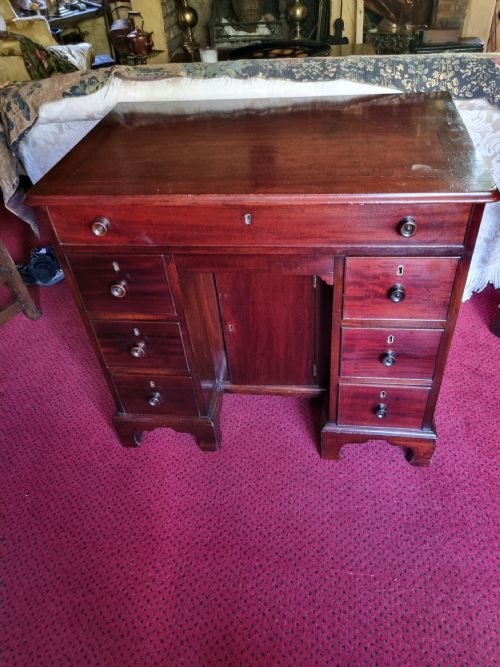
A rich brown writing cabinet is an essential domestic item intended for storage and letter writing, uniting a workspace with enclosed shelving or drawers. Buyers encounter various forms on this page, including bureau bookcases, secretaire abattants, kneehole desks, and davenports.
The selection spans several centuries and styles, featuring 18th century George II examples alongside Regency, William IV, Biedermeier, and Edwardian pieces. Mahogany dominates the furniture types, complemented by walnut, rosewood, and amboyna veneer.
How they were made
Cabinet makers utilised solid woods and fine veneers over secondary timbers, often applying satinwood stringing or marquetry inlay to enhance the primary surfaces. Brass handles, escutcheons, and occasional bone details provided functional and decorative accents.
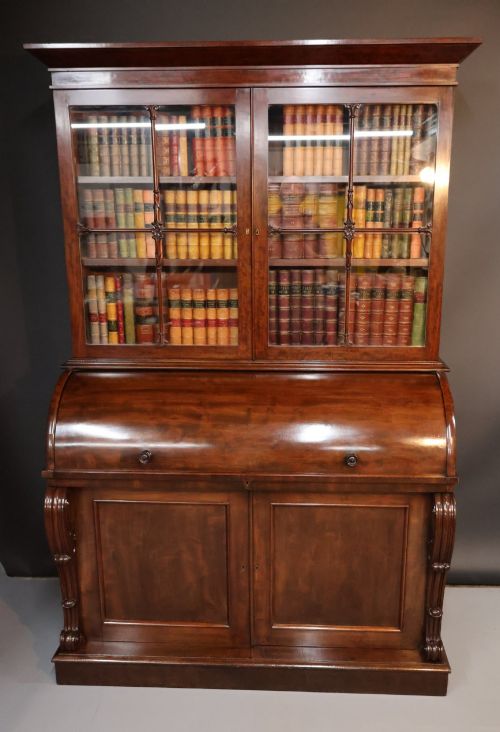
Construction techniques evolved from 18th century carcase building to later 19th century mechanical adaptations, such as pop-up mechanisms and cylinder fall fronts. Glass doors appeared frequently on the upper bookcase sections to protect books while keeping titles visible.
A pop-up mechanism lets a Victorian rosewood davenport hide its writing gear like a mechanical secret.
What varies in quality
The choice of timber grain fundamentally distinguishes individual examples, with highly figured mahogany and amboyna veneer commanding attention. Precision in joinery, the integrity of internal pigeonholes, and the retention of original brass hardware elevate certain pieces above standard utility furniture.
Design ambition also separates the items, ranging from simple Edwardian writing tables to elaborate George II bureau bookcases with fitted desk interiors and architectural cornices.
The Rich Brown Writing Cabinet Glossary
- Secretaire abattant
- A tall upright cabinet featuring a drop-down writing flap that conceals internal drawers and pigeonholes. This form offers a compact footprint for domestic writing tasks.
- Bureau bookcase
- A dual-purpose piece combining a sloping desk compartment below with a glazed shelving unit above. It serves both library and correspondence functions.
- Kneehole desk
- A compact desk design featuring a central recessed space for the legs, flanked by pedestals of drawers. These items date back to the 18th century.
- Cylinder desk
- A writing desk with a curved, rotating barrel shutter that covers the writing surface and interior compartments. This mechanism conceals papers when not in use.
- Marquetry
- Decorative woodwork where pieces of veneer are fitted together to form pictorial patterns on furniture surfaces. This technique frequently employs contrasting timbers.
Rich Brown Writing Cabinet: Frequently Asked Questions
What is a secretaire abattant?
A secretaire abattant is a tall, vertical cabinet with a drop-down front that opens to reveal a writing surface and small internal drawers.
This format allows owners to conceal correspondence and paperwork efficiently within a minimal floor space.
How do I identify a Georgian bureau bookcase?
Georgian bureau bookcases typically feature solid mahogany construction, fielded panels, and brass hardware appropriate to the 18th century.
They combine a sloping fall-front desk with an upper bookcase enclosed by wooden or glazed panel doors.
Where were davenport desks used?
Davenport desks served primarily as compact writing stations in Victorian drawing rooms and private sitting spaces.
Their small footprint made them suitable for rooms where a full-sized partner desk would prove too large.
What timber is most common?
Mahogany is the predominant timber found across these writing cabinets, appearing in varied grains from plain boards to highly figured surfaces.
Walnut, rosewood, and amboyna veneer also appear in specific 19th century and Biedermeier examples.