





Ribbon Bow Appliques
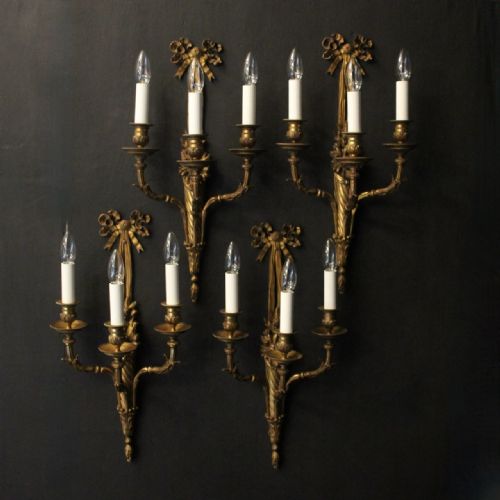
Ribbon bow appliques bring a refined Louis XVI character to interiors, cast in ormolu and gilded bronze to catch the evening candlelight.
Ribbon Bow Appliques
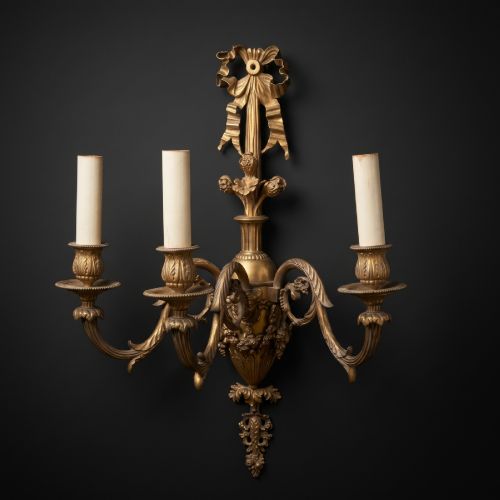
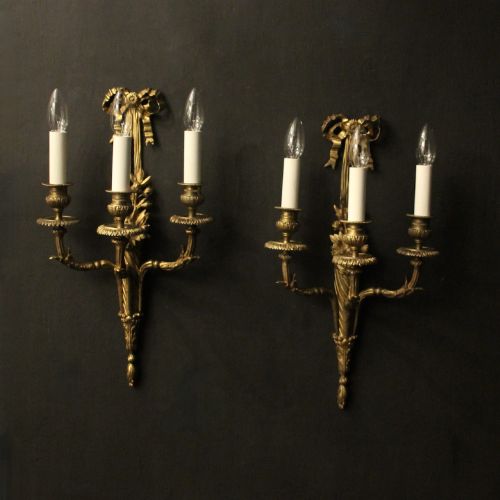
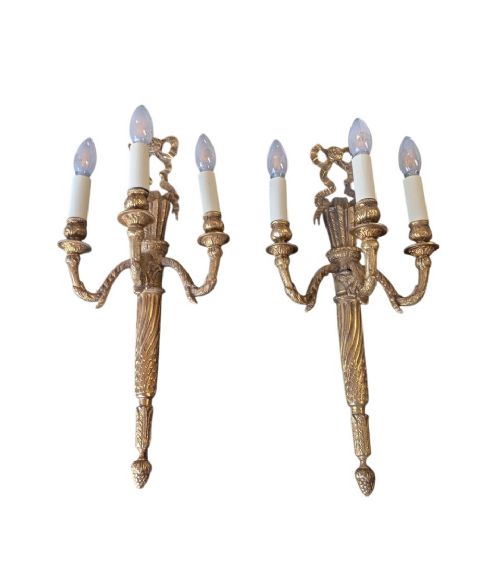
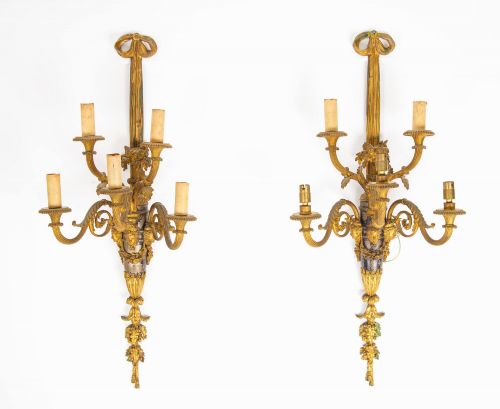
Ribbon bow appliques appear primarily as wall lights and wall sconces fashioned in French Neoclassical and Louis XVI styles. These decorative fixtures illuminate rooms through twin, triple, or five-arm branches extending from ornamental backplates.
Makers such as Henri Vian and Maison Baques contribute to the heritage of these wall lights, demonstrating the enduring appeal of cast metalwork. Each piece serves as both a functional light source and a sculptural ornament for the wall.
Materials and Construction
The creation of these wall sconces relies on metal casting techniques using ormolu, gilt bronze, and brass to form intricate ribbons, bows, and classical foliage. Artisans chased the cast metal surfaces by hand to sharpen details before applying gold leaf or silver gilt.
Alternative examples utilise carved timber finished with gesso and gold leaf to achieve the characteristic giltwood appearance. Frosted glass components occasionally supplement the metalwork, diffusing the light across twin and multi-branch configurations.
Ribbon Bow Appliques Retail Price Guide 2026
Typical asking prices for ribbon bow appliques among the pieces listed under this phrase on Sellingantiques today, from the lower quarter to the upper quarter. They describe what is for sale here now, not the wider market.
The inventory records pieces originating from the nineteenth century through to the 1930s, executed in gilt bronze, brass, and giltwood.
Evaluating Quality and Craftsmanship
Quality rests in the crispness of the metal casting and the depth of the hand-chasing, which separates finely rendered ribbon folds from softer, mass-produced versions. The weight of the bronze or brass backplate indicates substantial construction rather than hollow pressed metal.
The integrity of the gilding, whether original or restored, dictates the visual richness of the fixture under light. Signed pieces or those carrying foundry stamps offer a documented level of workshop provenance that elevates the status of the item.
Henri Vian·Maison Baques
The Ribbon Bow Appliques Glossary
- Ormolu
- Gilded bronze produced by applying a mercury and gold amalgam to a bronze base and firing it. This historic technique creates a warm, enduring golden surface.
- Applique
- A wall-mounted decorative fixture or sconce designed to hold candles or electric bulbs. It projects light forward from the architectural surface.
- Louis XVI Style
- A neoclassical design vocabulary characterised by straight lines, symmetry, and classical motifs such as ribbons, urns, and acanthus leaves. It originates in eighteenth-century France but saw major revivals.
- Chasing
- The manual tooling of cast metal using small punches and hammers to refine details and textures. Fine chasing distinguishes high-grade bronzes from simpler castings.
- Giltwood
- Timber, often pine or gesso-coated wood, covered in thin sheets of gold leaf. It provides a lightweight alternative to cast metal for decorative wall lights.
Ribbon Bow Appliques: Frequently Asked Questions
How were these wall lights originally used?
These fixtures functioned as primary wall illumination in formal reception rooms, mounted in pairs or larger sets to reflect candlelight across gilded surfaces. Mirrors were frequently placed between them to maximise the spread of light in evening salons.
Over time, many of these classical sconces were professionally adapted for electricity while retaining their original brass and bronze backplates for modern domestic use.
How do I distinguish between periods?
Nineteenth-century examples often display heavier cast bronze with deeper hand-chasing and distinct patination on the metal. Edwardian and later twentieth-century interpretations may show lighter construction or revival stylistic cues.
Examining the fixing points, screw types, and backplate thickness helps determine whether a piece belongs to the nineteenth-century revival period or later decades.
Are these wall lights suitable for modern electrical wiring?
Most antique wall sconces found here have already been adapted for contemporary electrical standards by previous owners. It remains advisable to have a qualified electrician inspect the internal wiring before final installation.
The branching arms accommodate standard candle-style bulbs that preserve the aesthetic of the original lighting design.