


Revolving Wooden Seat
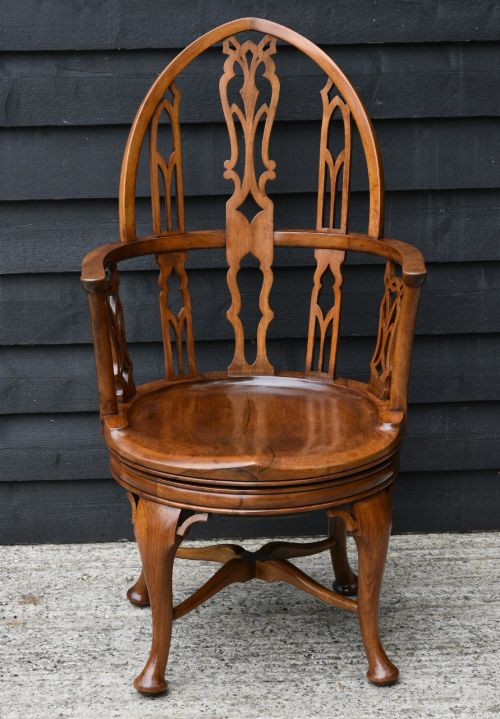
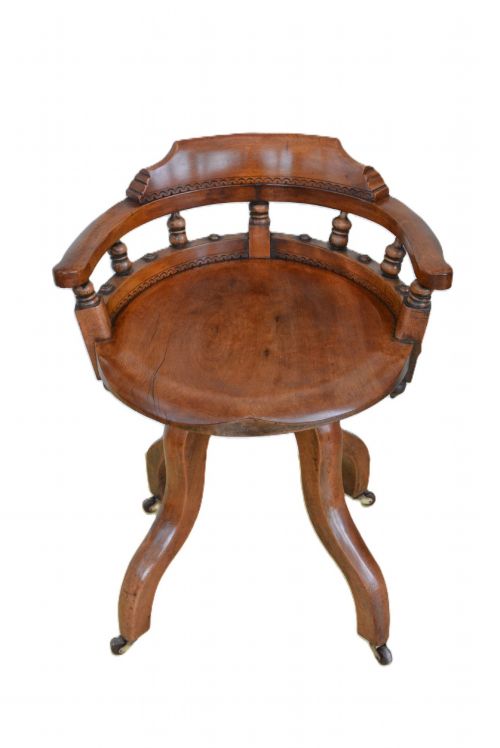
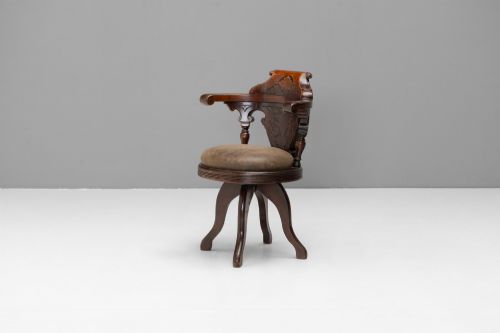
A revolving wooden seat offers functional rotation combined with period timber character, spanning Victorian and Edwardian workspace or music room forms.
Revolving Wooden Seat
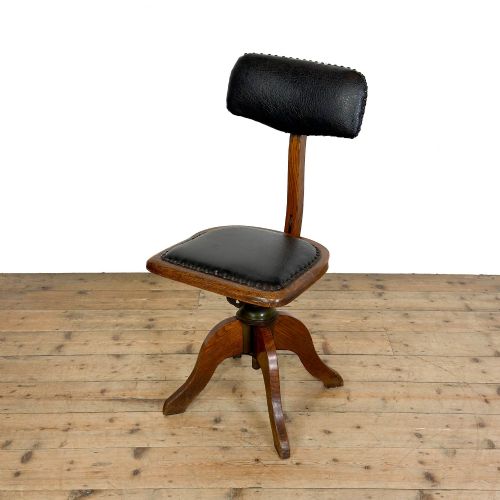
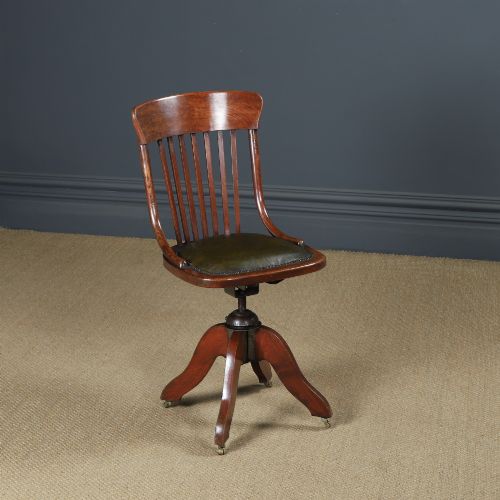
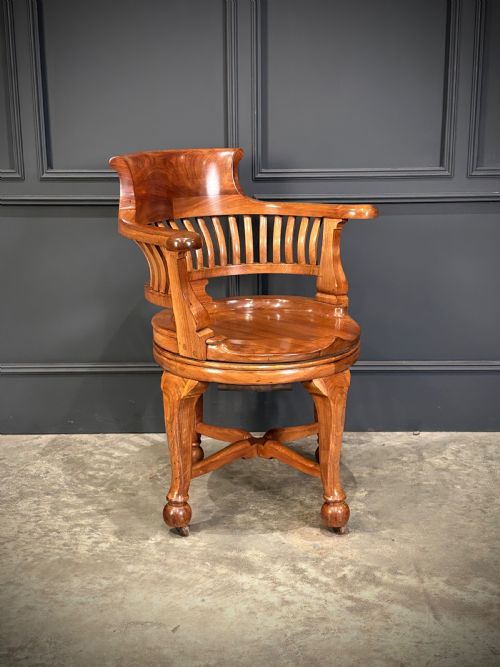
A revolving wooden seat encompasses adjustable piano stools, swivelling office chairs, and ships chairs designed for movement and practicality. When you search for a revolving wooden seat, you encounter pieces originating from the nineteenth century through to the early twentieth century.
The most common examples on this page are walnut and mahogany desk chairs and piano stools featuring central swivel mechanisms. These functional seats bridge domestic piano rooms and commercial offices from Victorian, Edwardian, and George V periods.
How they were made
Cabinet makers utilised dense hardwoods such as mahogany, walnut, and oak to construct the frames and seats of these revolving chairs. These timbers provided the structural integrity required to support internal swivel and height-adjustment mechanisms.
Metal components, including iron and brass screws or spindles, were integrated into the wooden architecture to facilitate smooth rotation and rise and fall movement. Upholstery, where present, incorporated leather inserts secured with metal tacks.
Several heavy oak examples recorded here originated as ships chairs, built to keep nineteenth-century sitters steady during rough weather.
What varies in quality
Quality rests in the robustness of the timber turning and the mechanical complexity of the swivel and tilt apparatus. Superior examples display intricate hand-carving on the wooden seat and backrest rather than plain industrial production.
The sophistication of the engineering dictates the calibre of the piece, with complex rise and fall screw mechanisms separating standard office seating from finer domestic piano stools.
Gillows
The Revolving Wooden Seat Glossary
- Swivel
- A mechanism allowing the seat to rotate fully on its base. This function appears frequently on desk chairs.
- Rise and fall
- An adjustable height mechanism operated by turning the seat or a central screw. This allowed players and clerks to alter their seating elevation.
- Gothic Revival
- A nineteenth-century design style drawing inspiration from medieval architecture. Pieces in this style often feature pointed arch motifs and heavy timber carving.
- Aesthetic Movement
- A late nineteenth-century design focus emphasising visual and compositional beauty over narrative content. Walnut office chairs sometimes display these stylistic traits.
Revolving Wooden Seat: Frequently Asked Questions
How do I adjust the height on these?
Height adjustment typically operates through a central wooden or metal screw thread concealed beneath the seat. Rotating the entire top surface winds the seat up or down.
Older examples rely entirely on manual rotation against a threaded iron spindle without modern pneumatic levers.
Were these used in offices or homes?
These seats served both commercial offices and domestic spaces depending on the specific form. Desk chairs supported clerks and professionals, while piano stools accommodated musicians in the parlour.
Some heavy oak examples also served aboard ships as stationary seating with rotation capabilities.
How do I date a revolving wooden seat?
Dating relies upon timber choice, stylistic ornamentation, and the construction of the revolving mechanism. Victorian pieces often display rich walnut or mahogany with hand carving.
Edwardian and later twentieth-century iterations tend towards simpler oak construction and heavier industrial or office styling.
Can I use an antique swivel chair daily?
These chairs were built for sustained daily utility using dense hardwoods like oak and walnut. Regular use remains practical provided the joints and central swivel spindle receive proper maintenance.
Care should be taken with the height-adjustment mechanism to avoid stripping historical threaded wooden or iron components.