

Revolving Pedestal Table
A revolving pedestal table spins its top upon a central support, offering steady access to books or writing gear.
Revolving Pedestal Table
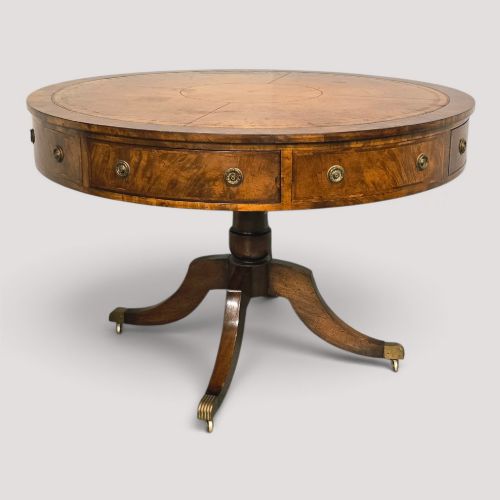
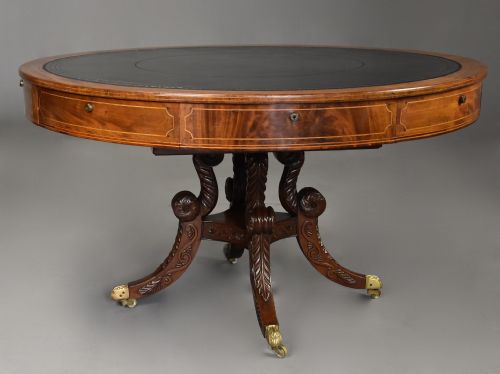
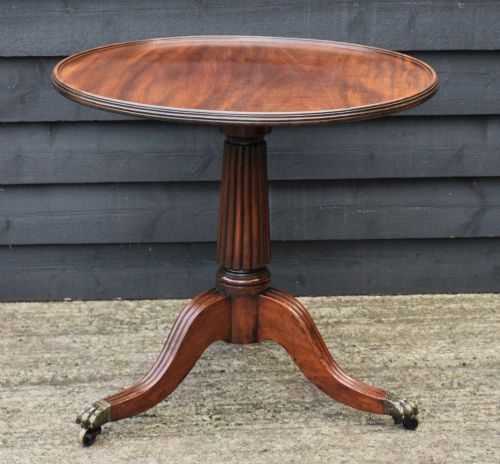
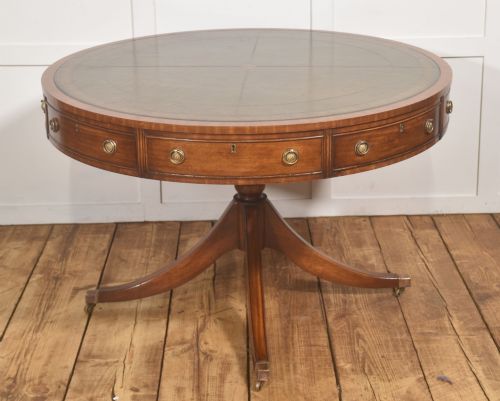
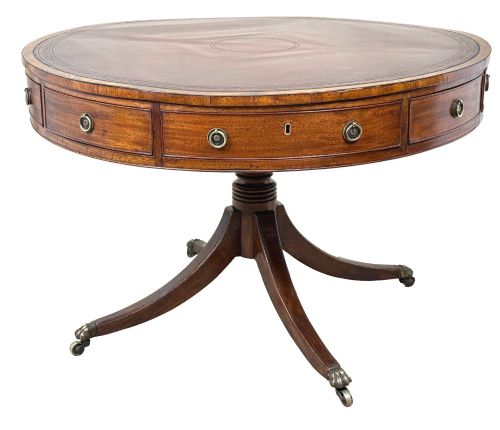
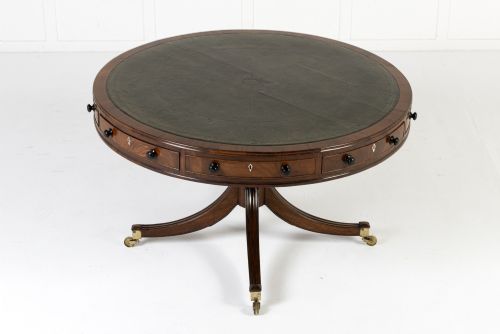
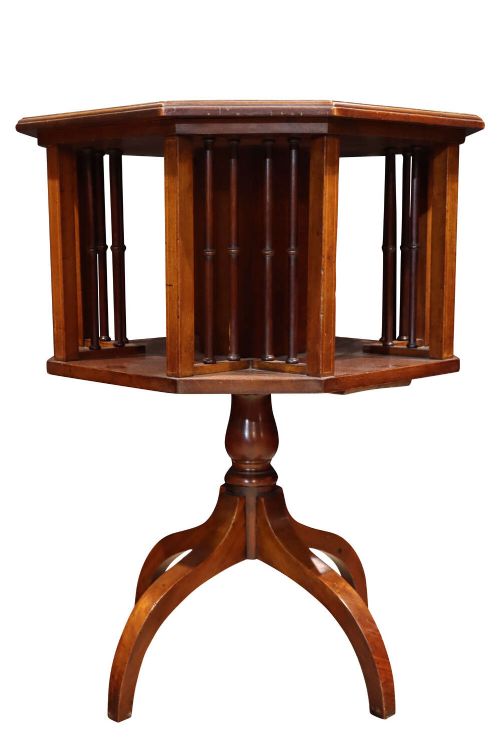
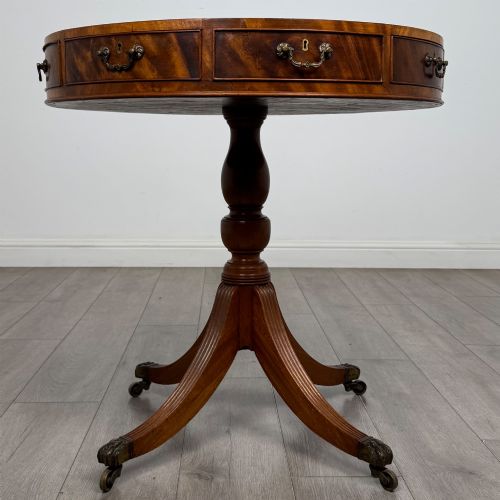
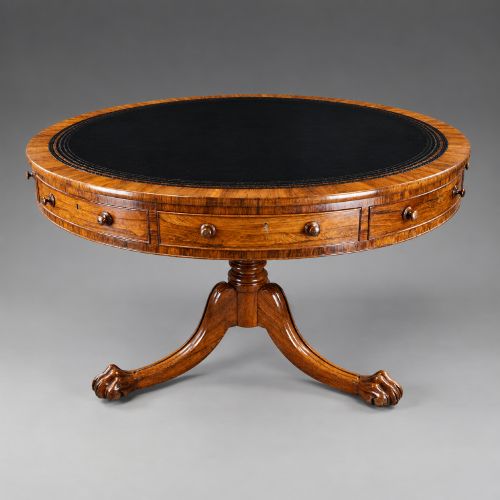
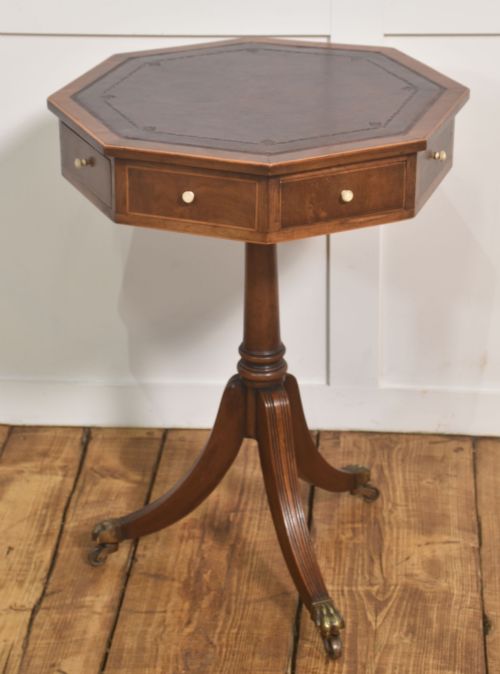
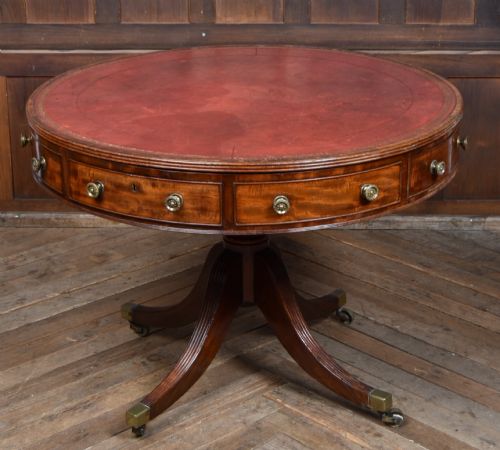
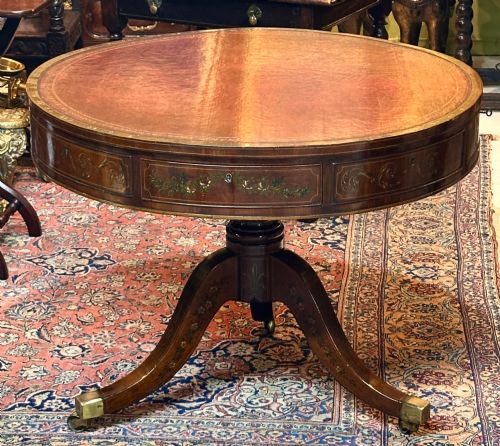
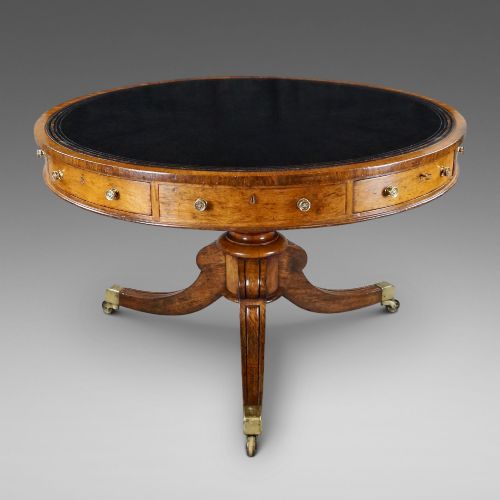
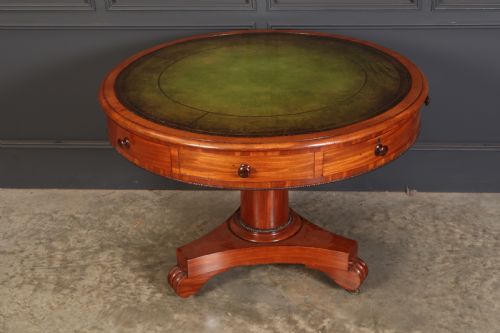
A revolving pedestal table provides a circular or octagonal surface supported by a central column and tripod or plinth base. These pieces span periods from the Georgian and Regency eras through to the Victorian and Edwardian years.
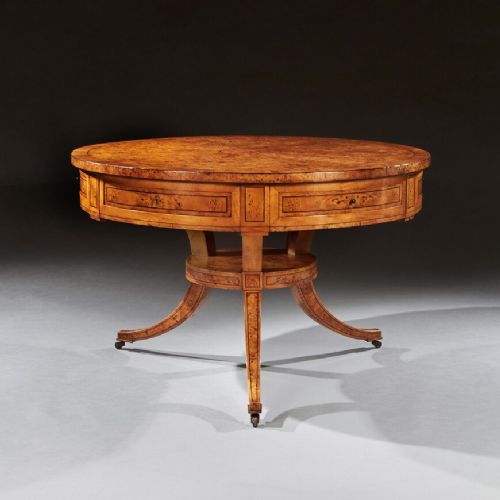
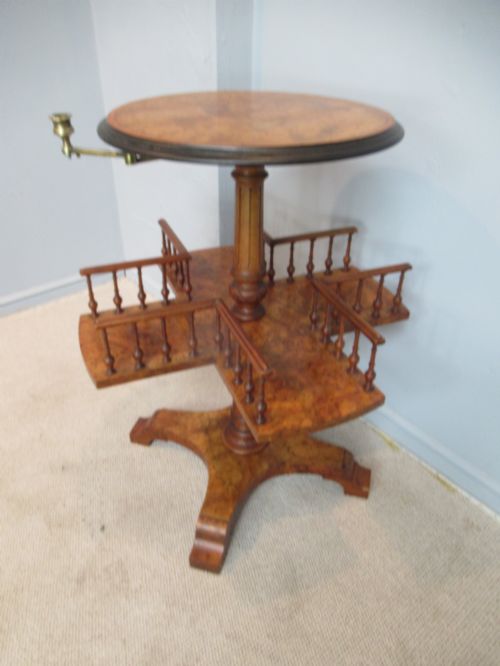
The selections here comprise drum tables, library tables, occasional tables, and revolving bookcases. Mahogany remains the dominant timber, accompanied by rosewood, oak, and burr walnut.
Makers shaped these items for studies, libraries, and principal rooms. Many incorporate drawers or tiered shelves designed for functional storage.
How they were made
Cabinetmakers constructed these tables using solid timbers and decorative veneers such as flame mahogany, burr walnut, and Scandinavian burr root maple over secondary woods. Tops frequently incorporate inset leather writing surfaces.
Revolving mechanisms rely on internal wooden or metal pivots and bearing systems that allow smooth rotation. Bases commonly utilise sturdy tripod legs fitted with brass castors.
Revolving Pedestal Table Retail Price Guide 2026
Typical asking prices for revolving pedestal table among the pieces listed under this phrase on Sellingantiques today, from the lower quarter to the upper quarter. They describe what is for sale here now, not the wider market.
Current listings feature items from the Georgian, Regency, Victorian, and Edwardian periods in mahogany, oak, rosewood, and walnut.
What varies in quality
The distinction between standard and superior pieces rests on the choice of timber and the precision of the turning and carving. Flame veneers and crisp brass inlay indicate higher workshop standards.
Stability in the central pivot and the alignment of drawers reveal the care taken during construction. Well-balanced tripod bases ensure the table remains firm when the top rotates.
The Revolving Pedestal Table Glossary
- Drum table
- A circular library or occasional table with a deep top resembling a drum, often fitted with alternating real and dummy drawers around the perimeter.
- Tripod base
- A support structure comprising three legs radiating from a central pillar, commonly used on small tables and bookcases.
- Lazy Susan
- A revolving tray or tabletop insert placed centrally to allow dishes or items to be easily shared among people seated around the table.
- Bird cage
- A timber pivot mechanism beneath a table top that allows the surface to both tilt and revolve.
- Flame mahogany
- A highly figured veneer cut from the fork of the mahogany tree, prized for its swirling, flame-like grain patterns.
Revolving Pedestal Table: Frequently Asked Questions
Where were revolving pedestal tables placed?
These tables stood in libraries, studies, and drawing rooms where books, writing materials, or serving items needed to be within arm's reach.
Their rotation allowed users to access different compartments or volumes without moving the furniture or walking around the base.
How do I care for a leather top?
Leather inserts benefit from gentle dusting and occasional specialist wax feeding to maintain suppleness and prevent cracking over time.
Direct sunlight and excessive heat should be avoided to protect the pigment and the surrounding timber veneer.
How do I distinguish a Regency table?
Regency pieces often display classical motifs, dark mahogany timbers, and sometimes brass inlay or gilt mounts upon a robust pedestal.
Proportions tend to be clean and architectural, reflecting the design tastes of the early nineteenth century.
Can these tables be used daily?
Sturdily built from dense hardwoods, these items suit everyday placement as writing desks or occasional surfaces in modern rooms.
Regular checks on the central pivot mechanism ensure smooth rotation without placing undue strain on the structural joints.