


Revival Oak Table
Revival oak table pieces bring solid construction and historical revival styles into modern rooms.
Revival Oak Table
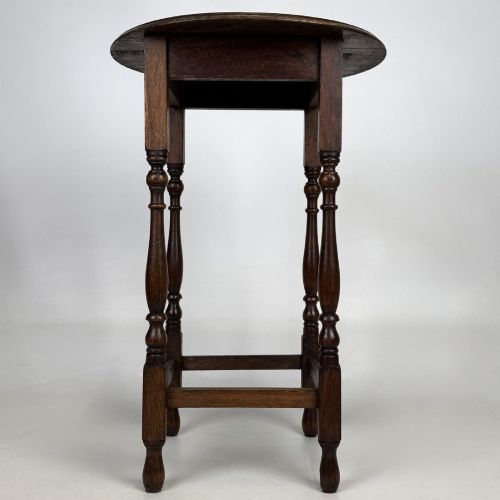
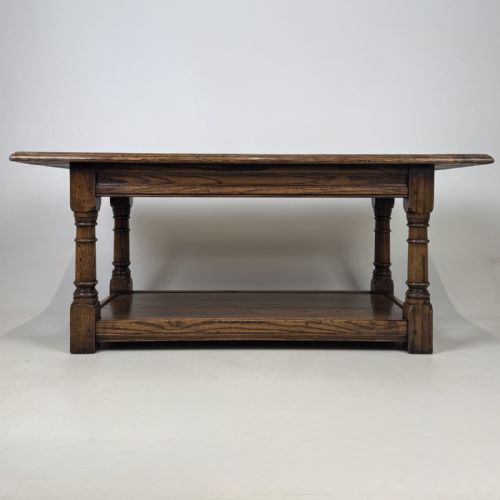
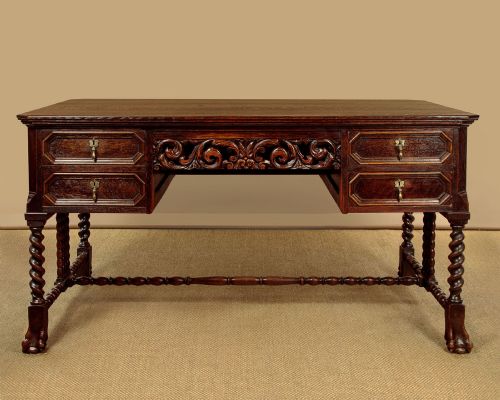
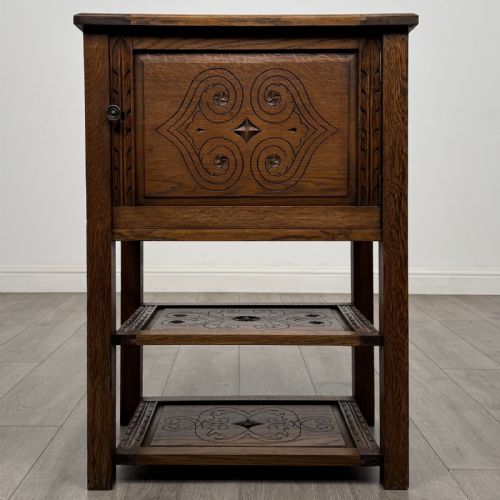
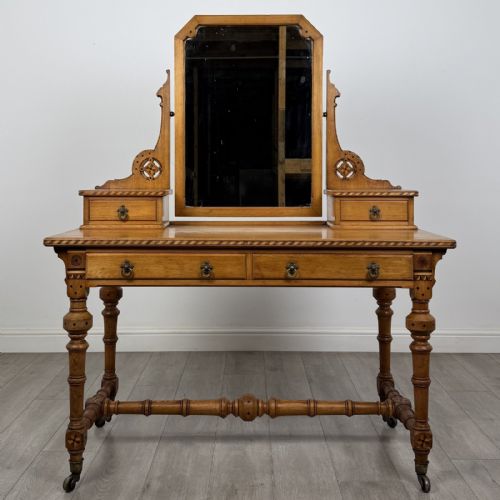
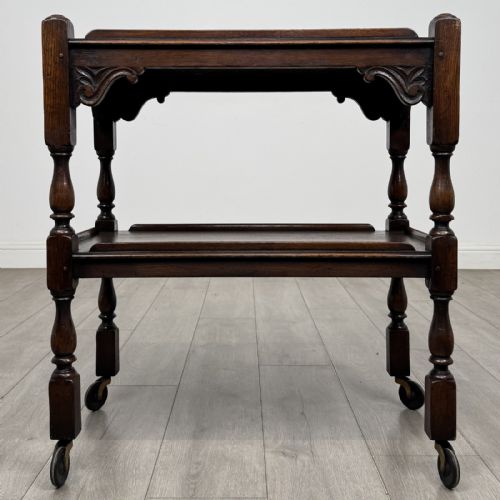
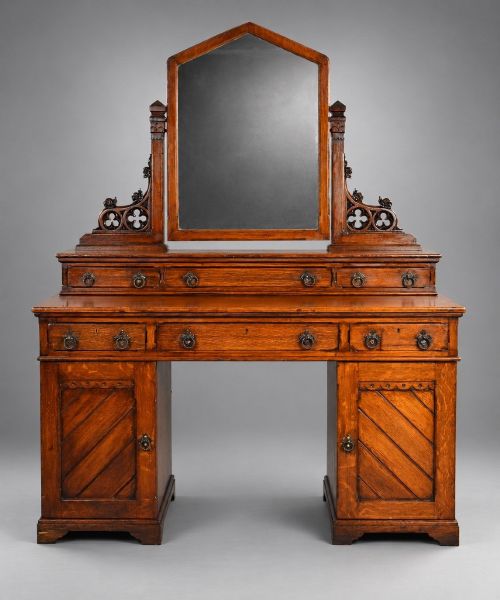
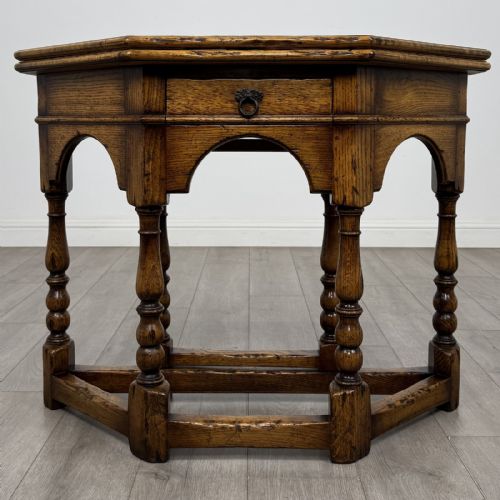
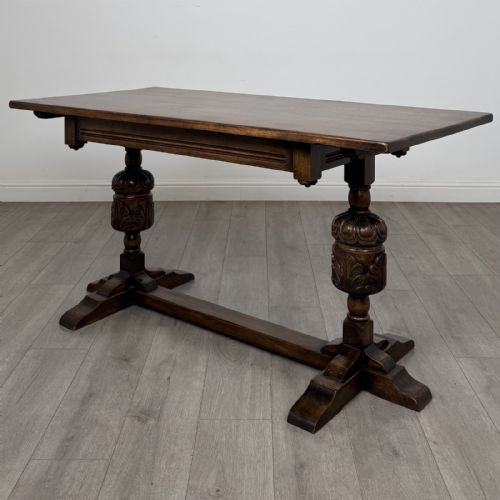
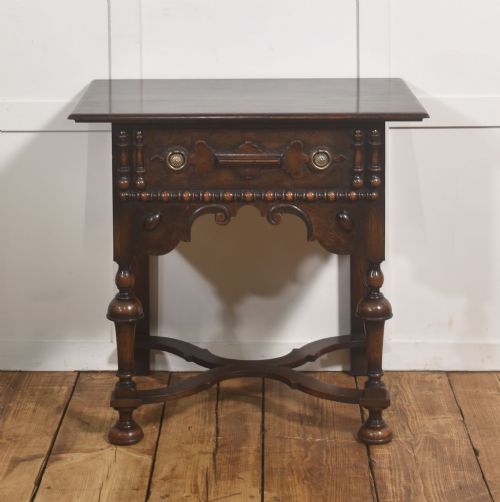
A revival oak table draws upon earlier periods such as the Jacobean, Elizabethan, and Gothic eras, reimagined by makers in the nineteenth and early twentieth centuries. These pieces appear in various forms on this page, ranging from side tables and occasional tables to large refectory dining tables.
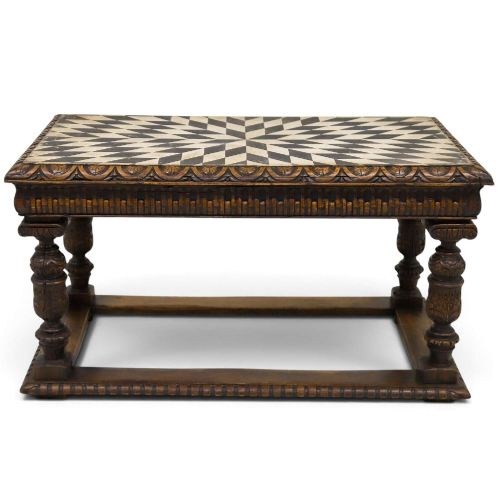
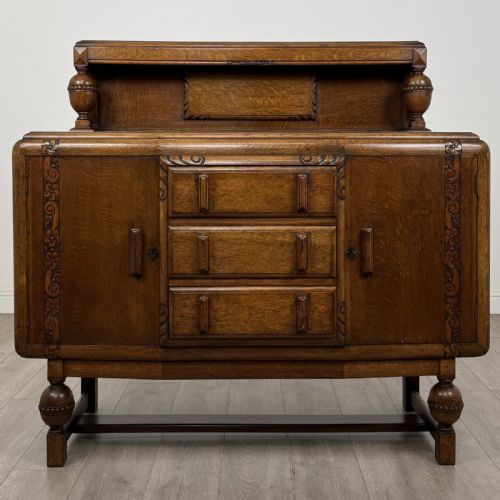
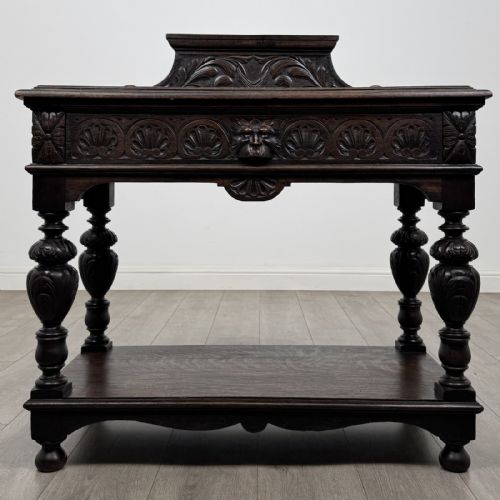
Buyers seeking a revival oak table encounter solid oak construction combined with historical ornamentation like carved panels, linenfold motifs, and turned supports. The designs reflect Victorian, Edwardian, and later interpretations of older English and French furniture traditions.
How they were made
Makers constructed these tables predominantly from solid oak, sometimes utilising brass hardware, iron fittings, or glass components to complete the design. The timber underwent careful seasoning and joining to support heavy carving and functional elements like draw-leaf mechanisms and fold-over tops.
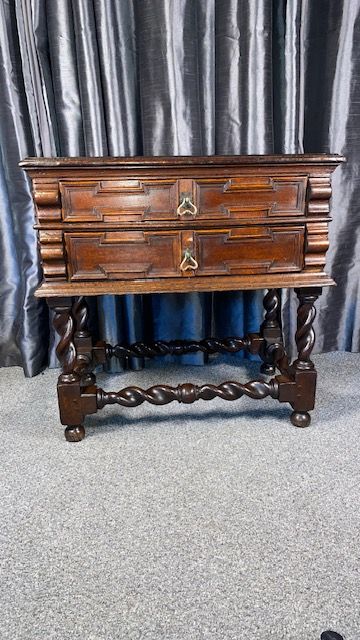
The construction relies on traditional joinery methods suited to heavy wood, paired with decorative carving, turning techniques like barley twist and bobbin legs, and occasional ebonised finishes. Workshops turned to historical pattern books to replicate the dense ornamentation of Jacobean and Gothic prototypes.
Revival Oak Table Retail Price Guide 2026
Typical asking prices for revival oak table among the pieces listed under this phrase on Sellingantiques today, from the lower quarter to the upper quarter. They describe what is for sale here now, not the wider market.
Listings feature periods spanning from the Victorian and Edwardian eras through to the 1930s.
What varies in quality
The standard of a revival oak table rests upon the depth and crispness of the timber carving, alongside the selection of the oak itself. Pieces featuring deeply undercut foliage, green man masks, or crisply rendered linenfold panels demonstrate superior craftsmanship compared to shallow, mechanical stamp work.
Proportion and structural integrity also define the better examples, where sturdy underframing, well-turned legs, and balanced dimensions maintain the historical character. The integration of functional elements, such as smoothly operating drawers or extending leaves, separates standard production from finer cabinet work.
Oetzmann & Co
The Revival Oak Table Glossary
- Jacobean Revival
- A style popular in the nineteenth and early twentieth centuries that copies or adapts the heavy, geometric, and carved furniture forms of the early seventeenth century. It frequently incorporates turned legs and panelled details.
- Barley Twist
- A form of wood turning resembling a spiral rope, popular on the legs and supports of seventeenth-century furniture and widely replicated in Victorian and Edwardian revival pieces.
- Refectory Table
- A long dining table traditionally used in monasteries and large halls, characterised by substantial legs connected by low stretchers. Revival versions scale these proportions for domestic dining spaces.
- Linenfold
- A style of wood carving that mimics folded fabric or linen, commonly used on the panels of cupboards, desks, and tables during the Gothic and revival periods.
- Gateleg Table
- A table with hinged leaves supported by swing-out legs that resemble a gate, allowing the surface area to expand or fold down when not in use.
Revival Oak Table: Frequently Asked Questions
What is a revival oak table?
A revival oak table is a piece of furniture made during the Victorian, Edwardian, or early twentieth-century periods that imitates older historical styles such as Jacobean, Elizabethan, or Gothic. These pieces combine solid oak timber with traditional decorative elements like heavy carving and turned legs.
They offer the robust construction and aesthetic character of antique furniture while fitting into later domestic interiors. The category includes dining tables, side tables, and occasional furniture.
How do I date a revival oak table?
Dating these tables involves examining the timber grain, construction techniques, and hardware used in the piece. Revival furniture from the nineteenth century often shows hand-finished joints and heavier patination, while early twentieth-century examples may display lighter oak finishes.
Comparing the decorative motifs, such as barley twist legs or carved strapwork, to known period styles helps narrow down the decade of manufacture. Makers often incorporated contemporary conveniences like castors or metal hinges alongside historical revival designs.
Where were these tables used?
Historically, revival oak tables served various functions across domestic and institutional settings, from grand dining rooms to studies and halls. Refectory and gateleg versions provided flexible dining space, while smaller side and occasional tables held lamps or books.
In modern homes, they function well in dining areas, living rooms, and hallways as practical surface space. Their sturdy build makes them suitable for daily use while adding historical presence to a room.
How do I care for a revival oak table?
Caring for solid oak involves keeping the timber away from direct heat sources and extreme humidity fluctuations to prevent the wood from splitting. Regular dusting with a soft, dry cloth preserves the finish without requiring heavy polishes.
Applying a traditional beeswax occasionally helps nourish the oak and maintain its natural lustre. Using coasters and mats protects the surface from moisture and heat rings.