


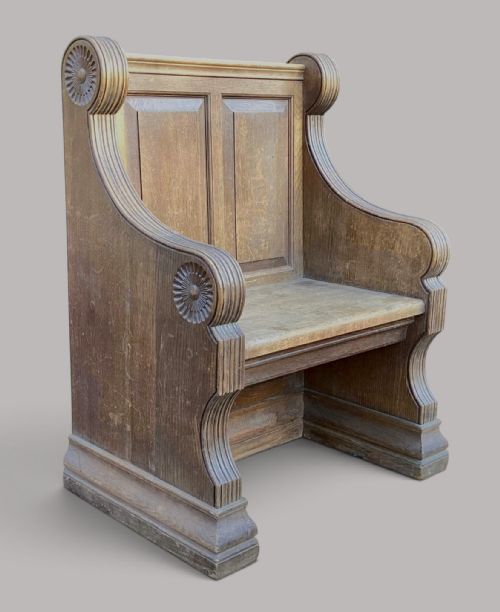
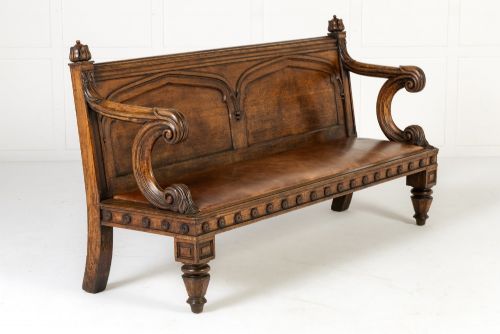

Revival Oak Settle
A revival oak settle brings solid architectural presence to an entrance hall, combining historic motifs with traditional joinery.
Revival Oak Settle
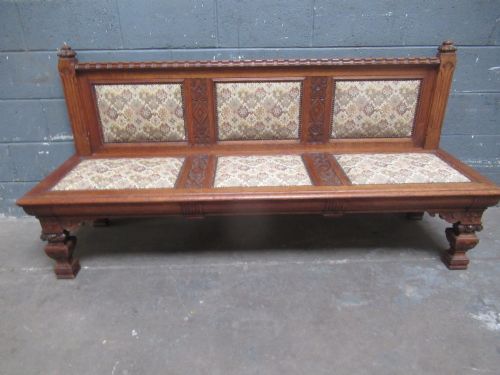
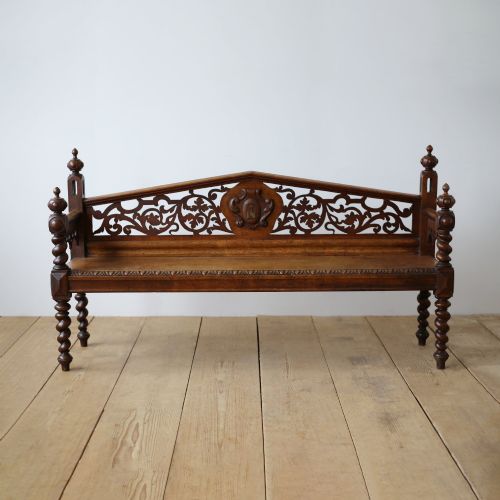
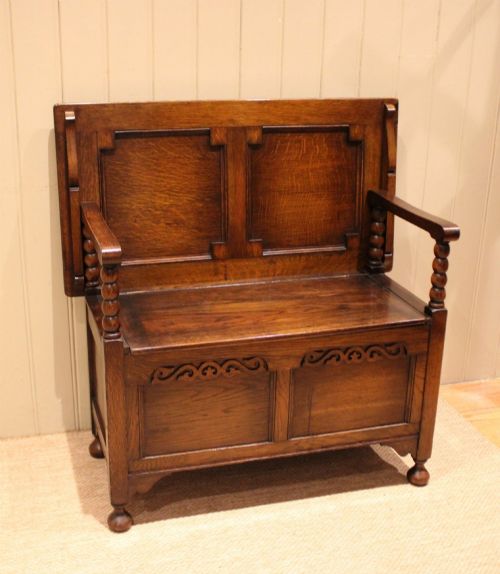
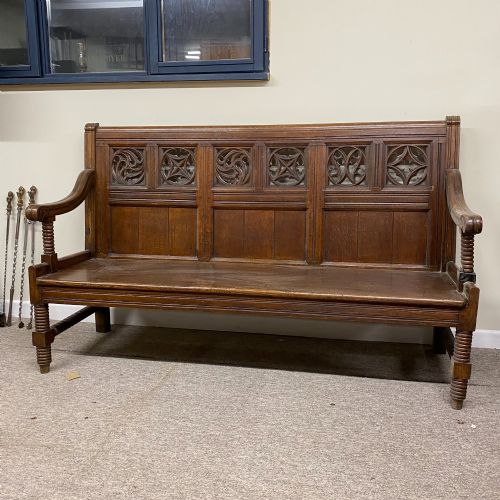
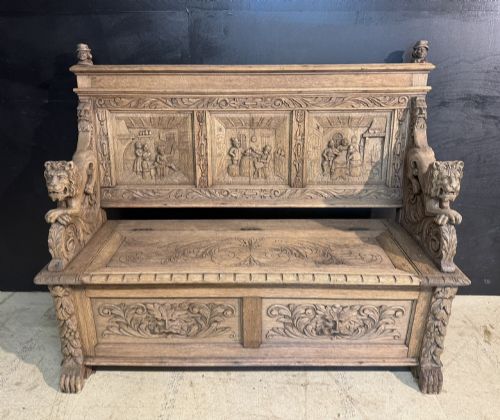
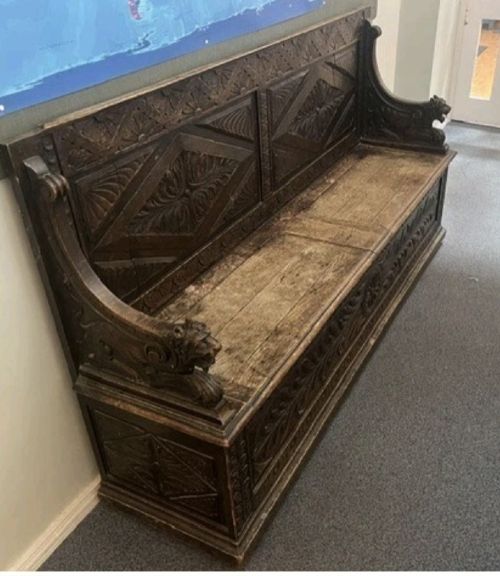
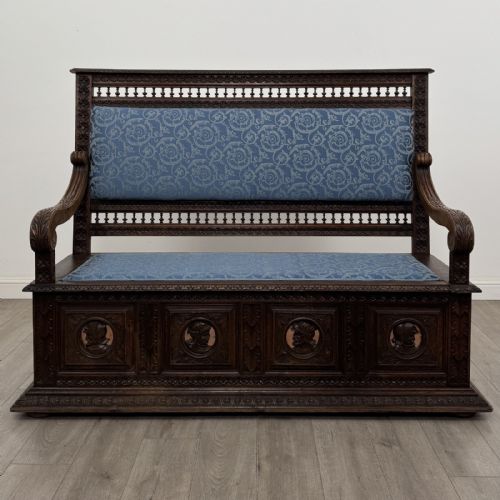
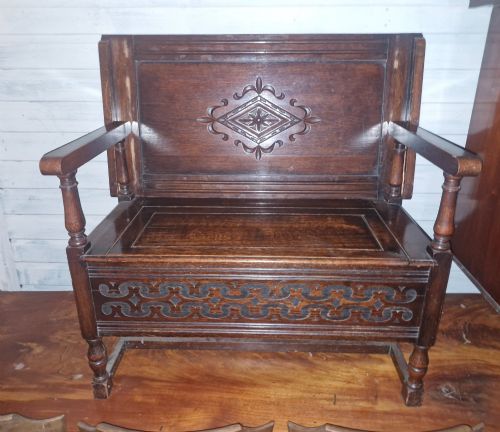
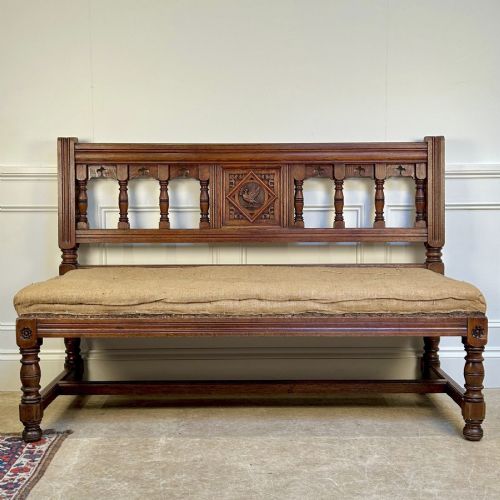
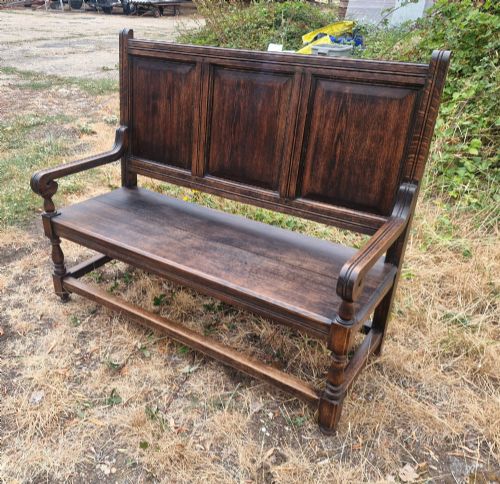
A revival oak settle is a heavy wooden seat built to echo earlier centuries, frequently taking the form of high-backed benches, box settles, or convertible monks benches. These pieces serve as substantial furniture for hallways and reception rooms, offering enclosed storage beneath lift-up lids or fold-over table tops.
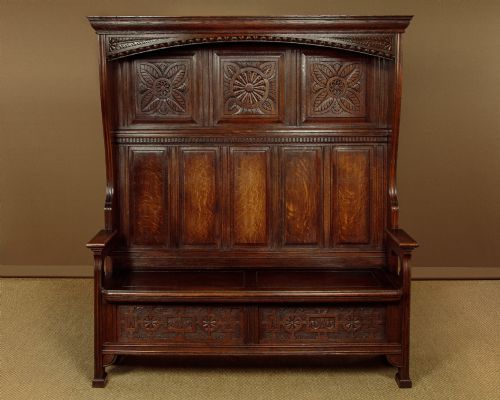
The versions most commonly met on this page date from the nineteenth century into the early twentieth century, spanning Victorian, Edwardian, and specific revival movements. Makers of this period drew heavily on Jacobean, Gothic, and Renaissance styles to create imposing hall seating with deep linenfold or geometric panelling.
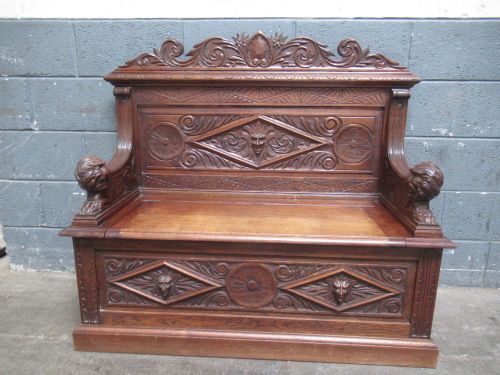
Builders often incorporated figural carvings, such as Green Man masks, alongside canopy tops and architectural frameworks to satisfy Victorian and Edwardian tastes for historicism. Such benches range from simple panelled seats to grand baronial furniture intended to anchor a large hallway.
How they were made
Cabinet makers constructed these settles primarily using solid oak, sometimes combining it with secondary timbers or accents like burr elm to add grain movement to panelled surfaces. Iron hinges, brass fittings, and occasional leather or hessian upholstery completed the functional elements of storage compartments and folding tops.
Construction relied on traditional joinery techniques including mortise and tenon frames, pegged joints, and heavy panelled construction designed to withstand heavy daily use in entrance halls. Carvers then applied deep relief ornament, strapwork, and architectural moulding directly into the solid timber framework.
Revival Oak Settle Retail Price Guide 2026
Typical asking prices for revival oak settle among the pieces listed under this phrase on Sellingantiques today, from the lower quarter to the upper quarter. They describe what is for sale here now, not the wider market.
Many of these hall benches hide secret compartments beneath their lift-up seats, originally designed for stashing muddy boots from unexpected rain showers.
What varies in quality
The depth and crispness of the hand-carving distinguish finer pieces from simpler workshop production, with detailed figures and undercut foliage showing superior craftsmanship. Timber selection also plays a significant role, as dense, well-figured oak with minimal sapwood creates a more unified and durable structure.
Proportion and architectural integrity separate standard utility pieces from exceptional design, particularly in items featuring integrated canopies or complex convertible mechanisms. The quality of the original ironwork and the tightness of the panel joints further determine the overall standard of the construction.
Gillows
The Revival Oak Settle Glossary
- Settle
- A wooden bench with a high back, solid arms, and frequently a box base for storage beneath the seat. This form kept draughts away from people sitting near the hearth.
- Monks Bench
- A convertible piece of furniture featuring a hinged top that folds down to transform the backrest into a table top. It typically includes a box storage compartment underneath the seat.
- Green Man
- A sculptural motif representing a human face surrounded by or sprouting from foliage. This ornamental detail frequently appears on nineteenth-century revival woodwork.
- Jacobean Revival
- A nineteenth-century stylistic movement copying the geometric panelling, heavy proportions, and turned supports characteristic of early seventeenth-century English furniture.
- Box Settle
- A heavy bench design incorporating a lidded box beneath the seat for storing blankets or cloaks. It formed a standard item in traditional entrance halls.
Revival Oak Settle: Frequently Asked Questions
What is a revival oak settle used for?
These pieces function primarily as hallway seating and storage furniture, offering a sturdy bench alongside an enclosed box beneath the lid.
Historically, the high back helped block cold draughts in large entrance spaces while providing a formal greeting place for visitors.
How do I tell Victorian revival oak from older pieces?
Nineteenth-century revival furniture usually displays machine-sawn timber elements behind hand-carved surfaces, alongside standardised hinge hardware and distinct tool marks.
Maker signatures or the specific character of Victorian Gothic and Renaissance revival styles also point directly to the later production dates.
How do I care for antique oak furniture?
Keep these heavy wooden items away from direct heat sources and sudden humidity changes to prevent the solid oak panels from splitting or warping.
Applying a traditional beeswax polish occasionally helps nourish the grain and protects the historic finish from drying out.