


Revival Oak Chest
A revival oak chest brings solid timber storage and historical carving into a room, offering durability alongside centuries-old decorative motifs.
Revival Oak Chest
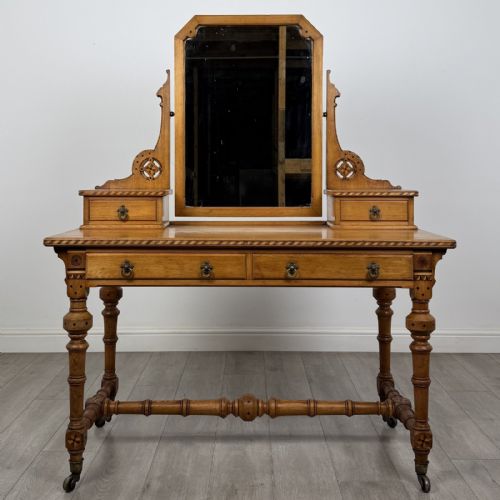
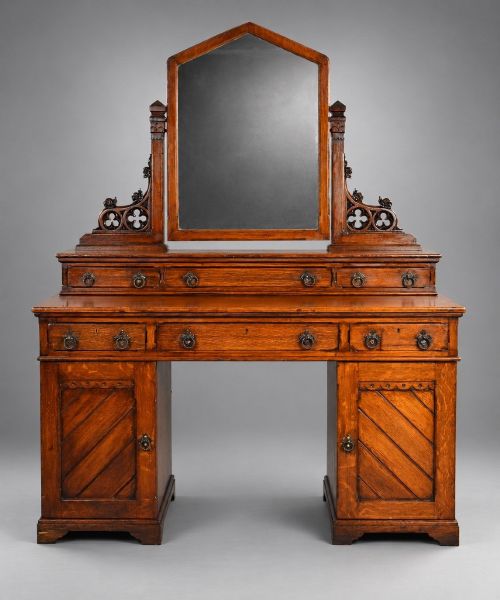
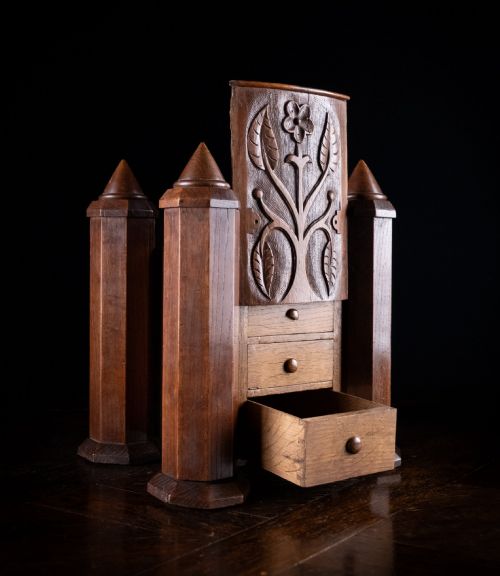
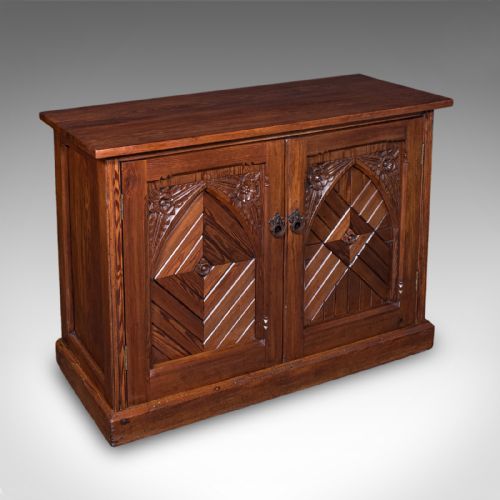
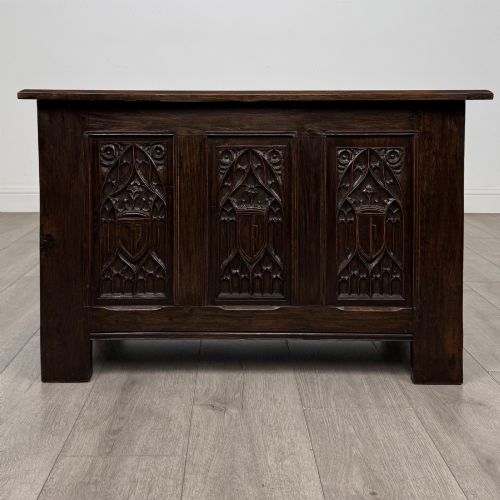
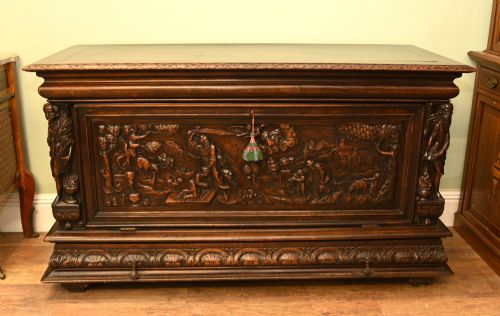
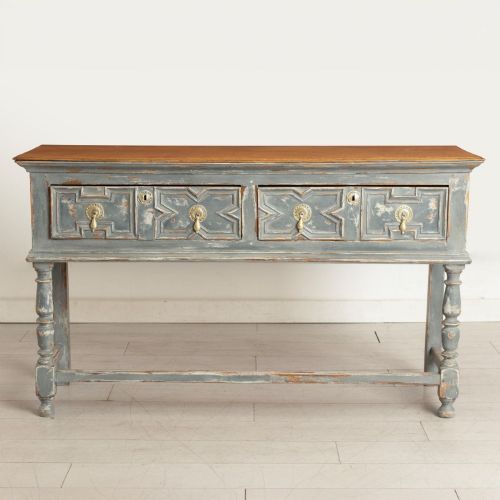
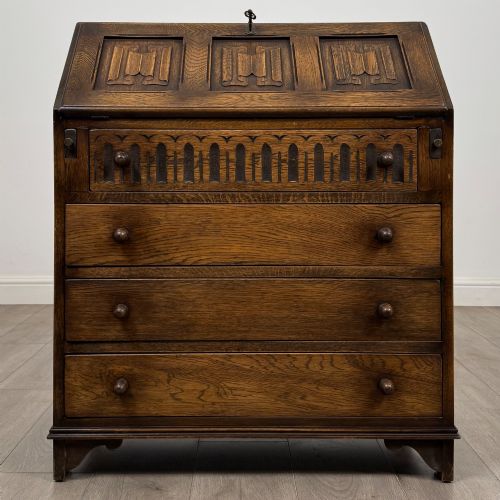
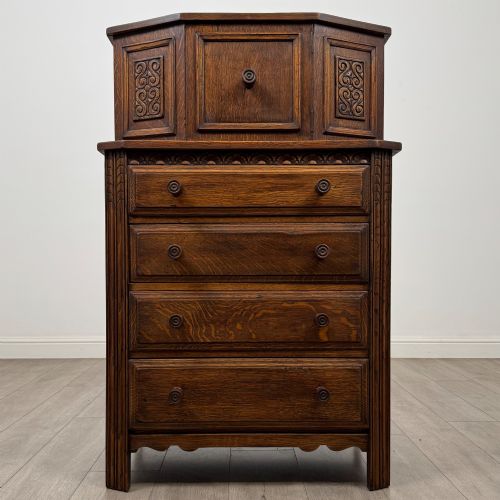
A revival oak chest draws on earlier historical eras, particularly the Tudor, Jacobean, and Gothic periods, to recreate heavy timber forms. Buyers searching for a revival oak chest seek furniture that imitates or adapts antique designs using sturdy timber. The pieces appearing here span the Victorian, Edwardian, and early twentieth century, reflecting a sustained Victorian and Edwardian enthusiasm for older British styles.
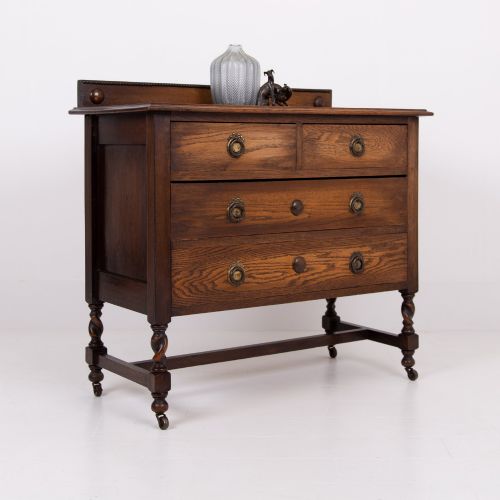
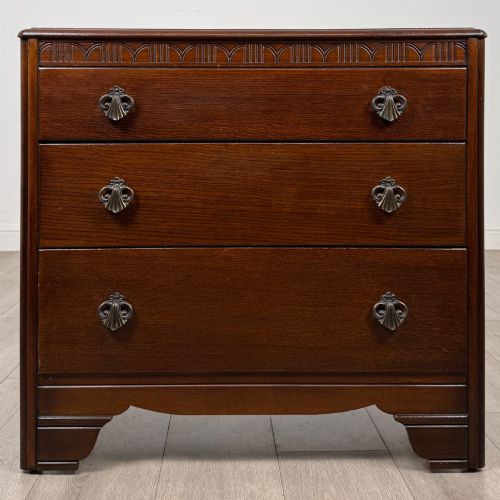
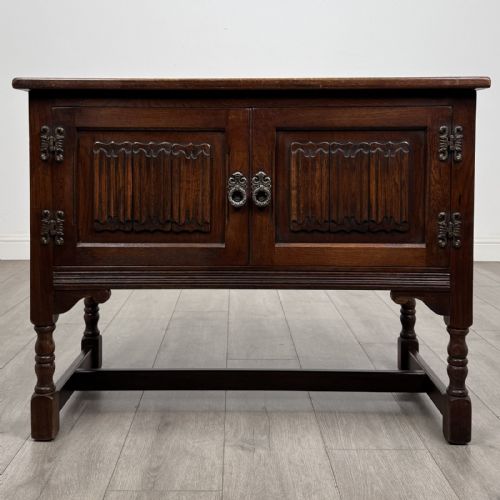
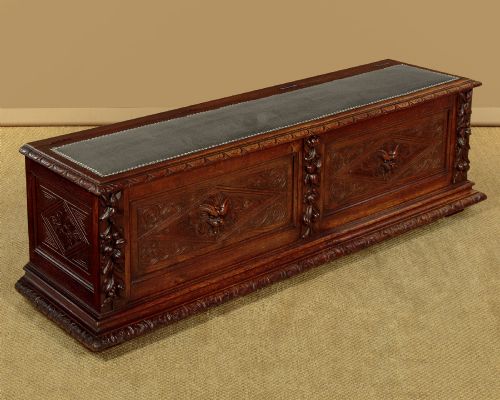
Forms range widely from lift-top coffers and blanket boxes to chests of drawers and hall settles with integrated storage compartments. The version most commonly met on this page is the Edwardian or nineteen-twenties carved oak box or chest, often displaying linenfold panelling or geometric mouldings. These items served practical storage needs in domestic interiors while satisfying a Victorian and Edwardian taste for historical revivalism.
Materials and construction
Makers utilised solid oak as the primary timber, sometimes combining it with walnut, fruitwood, or pollard oak for contrast and visual texture. Brass and iron hardware such as hinges, handles, and lock plates provided functional support and security for heavy lids and doors.
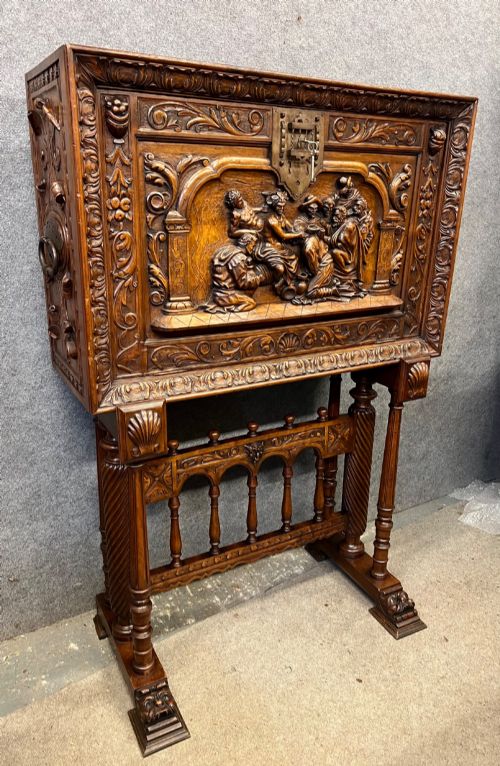
Joinery relied on traditional methods including panel-and-frame construction and mortise and tenon joints to accommodate the natural movement of solid timber. Carving was executed by hand or with mechanical assistance depending on the period, applying motifs like linenfold, Green Man grotesques, and strapwork directly onto the oak panels.
Revival Oak Chest Retail Price Guide 2026
Typical asking prices for revival oak chest among the pieces listed under this phrase on Sellingantiques today, from the lower quarter to the upper quarter. They describe what is for sale here now, not the wider market.
Listings on this page span the Victorian, Edwardian, and nineteen-twenties periods, featuring oak, walnut, brass, and iron materials.
Assessing quality and execution
The standard of a piece rests heavily on the depth and crispness of the carved ornamentation, distinguishing sharp hand-chiselled work from softer, mass-produced pressing. Timber selection also dictates grade, with dense grain and uniform colour showing superior material choice over patched or heavily stained softwoods.
Structural integrity depends on the original joinery remaining tight and true, particularly around hinged lids, drawer runners, and heavy panelled doors. Finer examples retain original brass or iron fittings and interior divisions that show careful attention to internal detail.
Jaycee·Jack Grimble
The Revival Oak Chest Glossary
- Linenfold
- A style of relief carving on wooden panels resembling folded cloth or linen. It appeared frequently on Tudor woodwork and was revived extensively during the nineteenth and early twentieth centuries.
- Green Man
- A sculptural motif depicting a human face disgorged from foliage or made of leaves and vines. Victorian revival cabinet makers used this symbol to evoke medieval woodland folklore.
- Coffer
- A large strongbox or chest traditionally used for storing valuables, linen, or documents. Heavy timber construction and iron reinforcement characterised these utilitarian receptacles.
- Jacobean Revival
- A design movement popular in the nineteenth and early twentieth centuries copying seventeenth-century English furniture. Pieces in this style utilise geometric moulding, heavy turning, and dark-finished oak.
- Pollard Oak
- Timber taken from trees that were pollarded, creating a burr grain with complex patterns. Cabinet makers utilised this prized wood for decorative veneers on high-status boxes and furniture fronts.
Revival Oak Chest: Frequently Asked Questions
How do I date a revival oak chest?
Examination of the internal secondary timbers, construction marks, and hardware helps establish the age of a piece. Revival items generally date from the nineteenth to the mid-twentieth century even when mimicking much older styles.
Secondary clues include the type of screws used, the finish applied to the interior, and the style of the carving which often betrays Victorian or Edwardian execution.
What were these chests originally used for?
Original uses centred around the secure storage of household valuables, heavy woollen blankets, and important documents. Lift-top coffers served multiple domestic purposes including seating when placed in hallways.
In later periods, similar forms functioned as blanket boxes, stationary holders, or decorative focal points in reception rooms and entrance halls.
How do I care for antique oak furniture?
Maintaining solid oak requires placing pieces away from direct heat sources and rapid temperature fluctuations to prevent timber splitting. Regular dusting with a dry lint-free cloth preserves the surface.
Application of traditional wax polish occasionally nourishes the wood and maintains a soft sheen without building up harmful residues on carved details.
Are Jacobean and Gothic revival styles different?
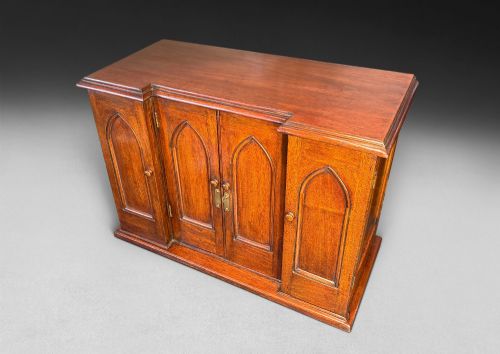
Gothic revival draws on medieval ecclesiastical architecture with pointed arches, tracery, and trefoils. Jacobean revival references seventeenth-century domestic furniture featuring geometric mouldings, strapwork, and turned columns.
Both styles utilised heavy oak timber but applied distinct decorative vocabularies borrowed from different centuries of British design history.