



Revival Dressing Table
A revival dressing table brings together period ornament and functional surfaces, offering generous mirrors and rich timber grains for the bedroom.
Revival Dressing Table
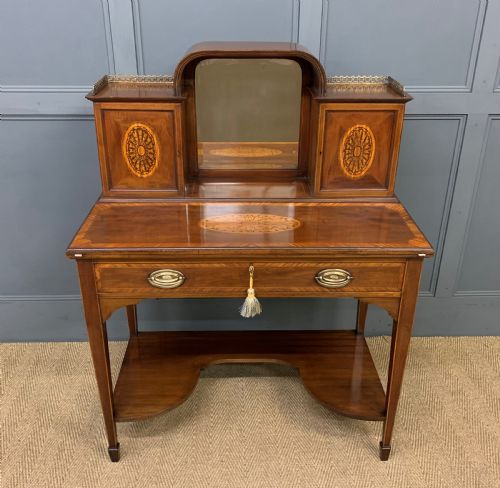
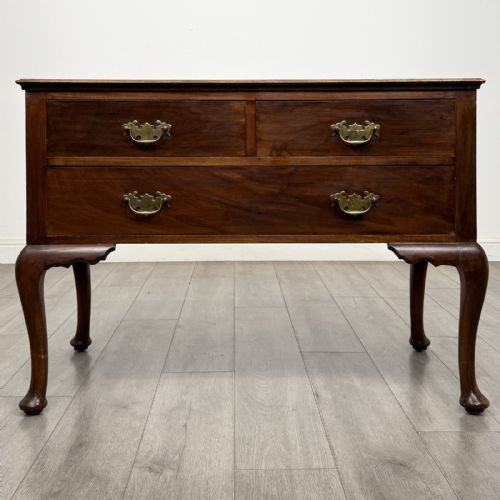
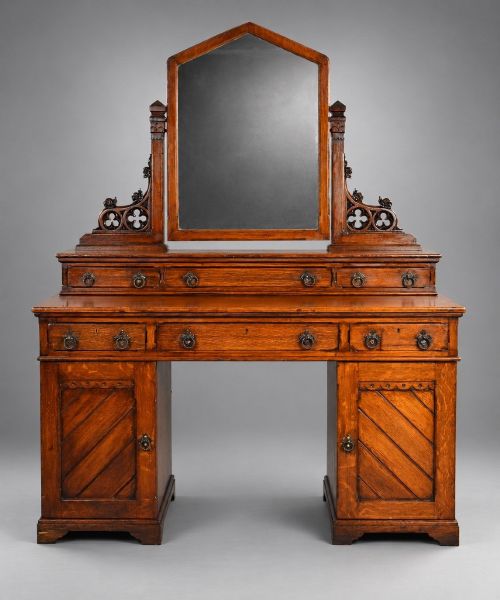
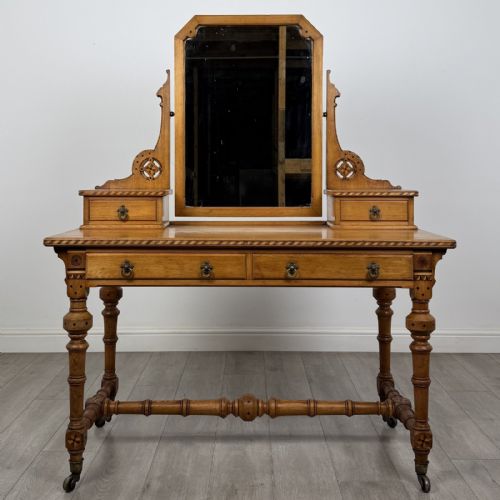
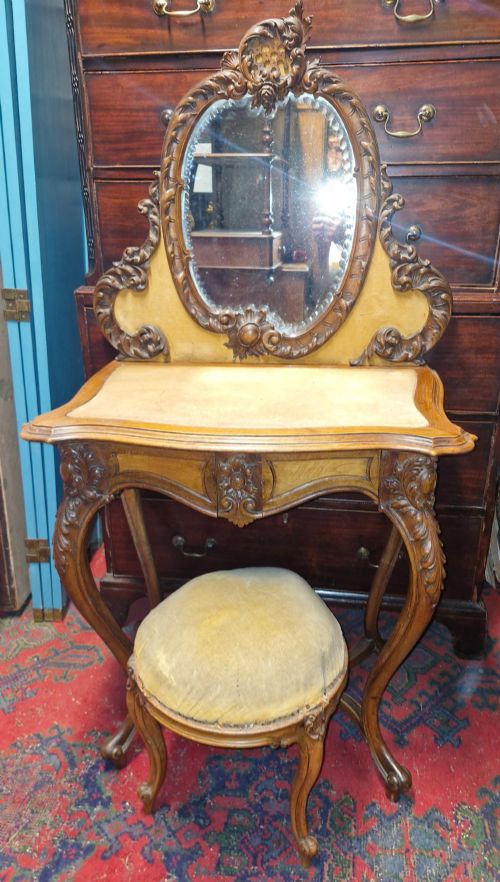
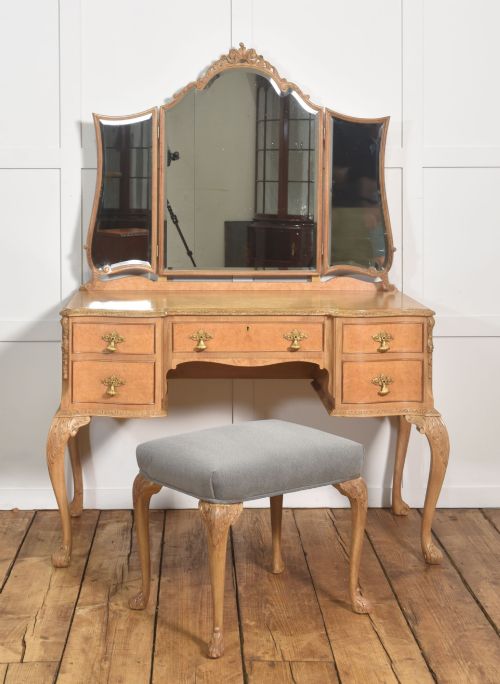
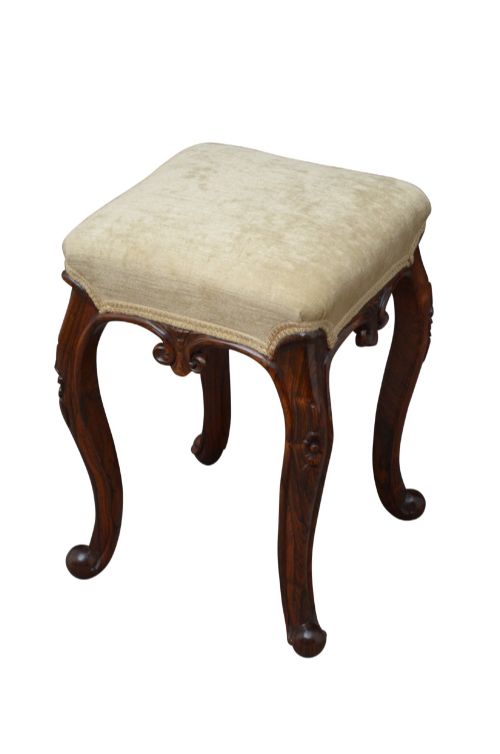
A revival dressing table takes historical forms from Georgian, Victorian, or earlier centuries and reinterprets them with period woods and detailed carving. These pieces often feature swing mirrors, multiple drawers, and matching stools, reflecting the domestic habits of the nineteenth and early twentieth centuries.
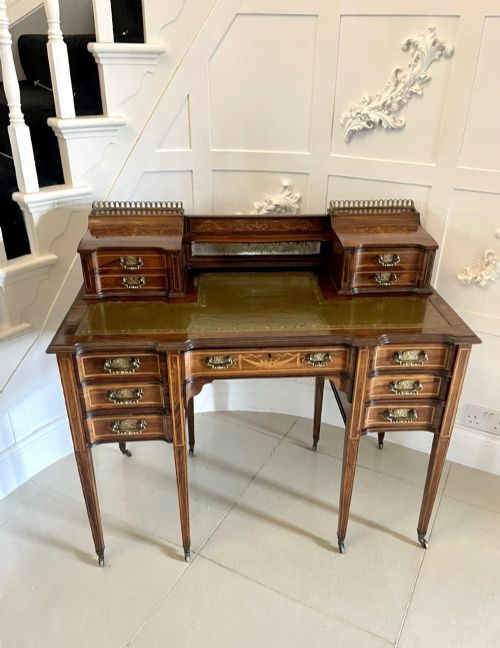
The versions met most frequently on this page date from the Victorian and Edwardian eras, spanning styles from Chippendale and Sheraton revivals to Gothic and Rococo interpretations. Makers utilised mahogany, walnut, satinwood, and oak to build substantial pedestals, kidney-shaped desks, and dressing chests with triple glass plates.
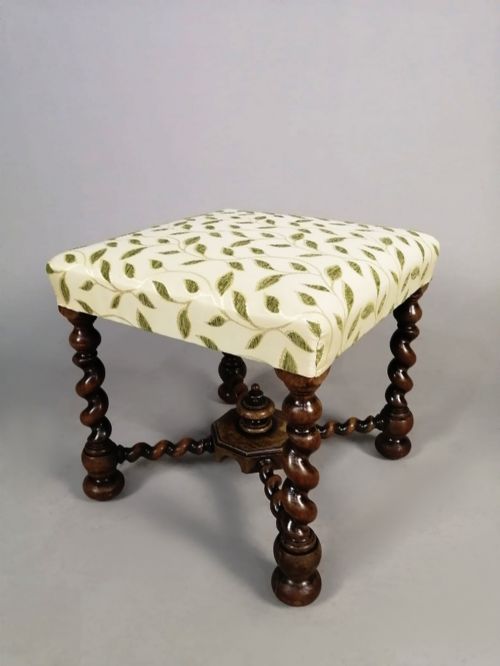
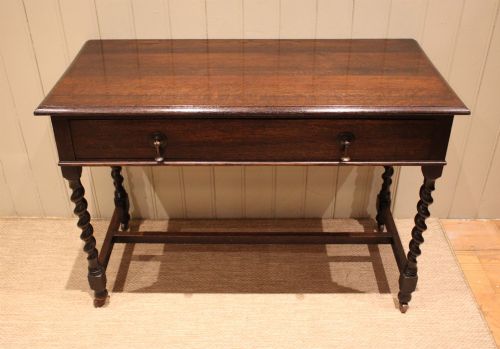
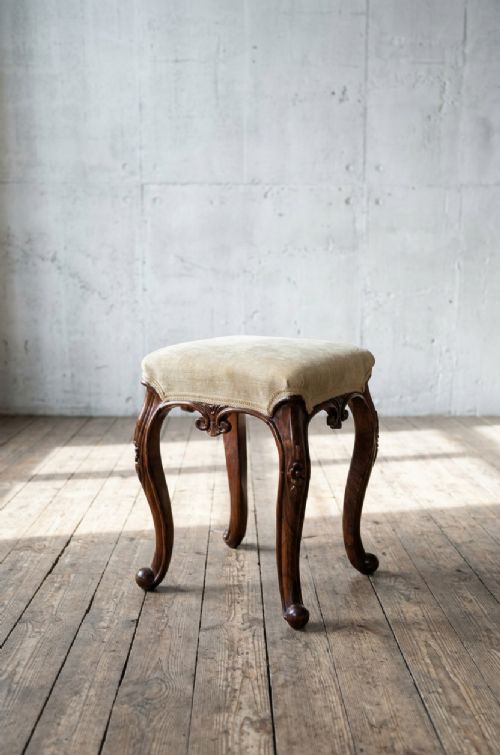
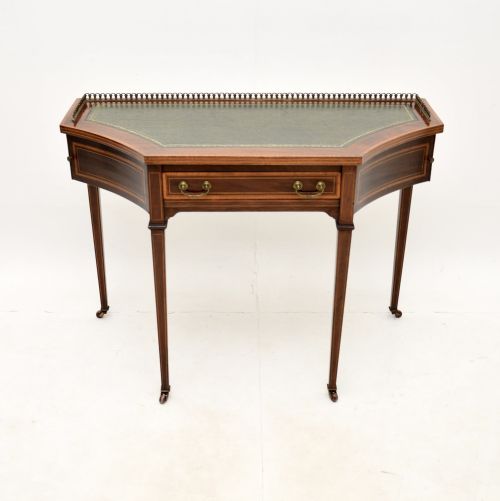
Beyond the core dressing tables, related forms such as console tables, lowboys, and table mirrors appear alongside them, sharing the same stylistic vocabulary and cabinet-making traditions. Each piece demonstrates how late nineteenth and early twentieth-century workshops adapted past aesthetics for contemporary domestic spaces.
Materials and construction
Cabinet makers constructed these pieces using solid timbers and decorative veneers, selecting mahogany, walnut, satinwood, and oak for their grain and durability. Secondary woods formed the drawer linings and internal framing, while brass hardware provided handles, key escutcheons, and structural mounts.
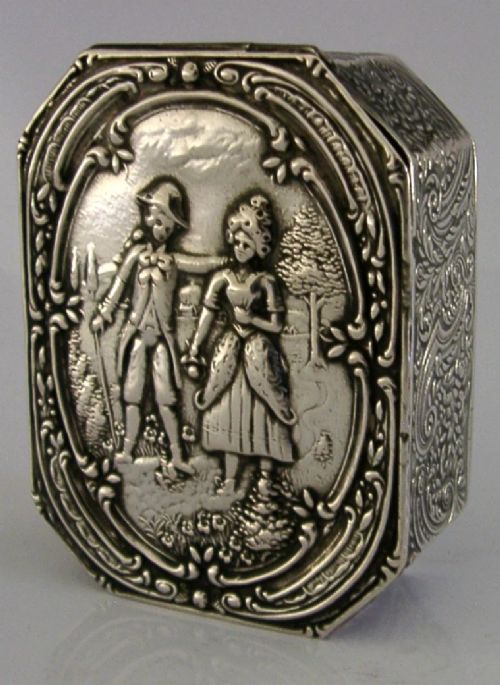
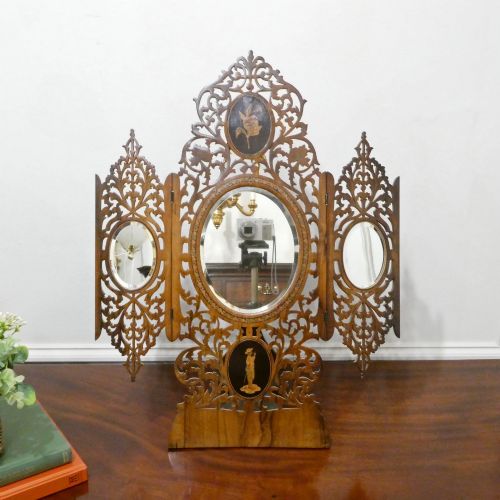
Surfaces received intricate decorative treatments, including marquetry inlay, cross-banding, carved foliage, and fretted scrollwork. Swing mirrors relied on adjustable brass pivots and frames, while occasional pieces incorporated leather writing surfaces, porcelain plaques, or giltwood finishes.
Revival Dressing Table Retail Price Guide 2026
Typical asking prices for revival dressing table among the pieces listed under this phrase on Sellingantiques today, from the lower quarter to the upper quarter. They describe what is for sale here now, not the wider market.
Assessing craftsmanship and finish
Quality rests in the selection of timber veneers, where symmetrical burr walnut or figured mahogany displays deep, unblemished grain across large surfaces. Superior examples demonstrate precise dovetail joints in the drawer construction and crisp, hand-carved detail rather than cast resin ornaments.
The proportion of the mirror frames, the weight of the brass fittings, and the integration of secondary furniture such as matching stools separate standard production from master workshops. Original glass plates, intact leather inserts, and retained maker signatures elevate the standing of a piece.
Charles Bevan·Wylie and Lochhead Glasgow·James Shoolbred of London
The Revival Dressing Table Glossary
- Revival style
- A design movement that borrows decorative motifs and architectural forms from past centuries. It reinterprets historical aesthetics using the manufacturing techniques of the Victorian and Edwardian periods.
- Swing mirror
- A looking glass hung on vertical pivots within a frame, allowing the user to tilt the angle. These mirrors sit on dressing tables or function as standalone tabletop pieces.
- Lowboy
- A small side table with one or more rows of drawers, standing on four legs. This form originated in the early eighteenth century and reappeared in later revival periods.
- Satinwood
- A pale, hard timber with a natural sheen, native to Sri Lanka and India. Cabinet makers used it extensively for inlay, banding, and veneering on high-status furniture.
- Marquetry
- The art of applying pieces of veneer to a structure to form decorative patterns and pictures. Craftsmen used contrasting timbers to create floral or geometric designs on table tops and drawer fronts.
Revival Dressing Table: Frequently Asked Questions
What is a revival dressing table?
A revival dressing table is a nineteenth or early twentieth-century piece built in the historical style of earlier eras like the Georgian or Chippendale periods.
These tables combine traditional forms like pedestal drawers and swing mirrors with the wood veneers and cabinet techniques of the Victorian and Edwardian workshops.
How do I date a dressing table?
Dating relies on examining the construction methods, such as hand-cut versus machine-cut dovetails, and the choice of secondary woods inside the drawers.
Stylistic cues like Edwardian satinwood inlay, Victorian Gothic oak carving, or the specific brass hardware also point to the decade of manufacture.
Are mirrors original to the table?
Many dressing tables retain their original swing mirrors, secured by period brass pivots and matching the wood grain of the base.
Replacement glass or altered mirror frames appear due to the fragile nature of large mirrors over a century of domestic use.
How do I care for antique wood?
Antique mahogany, walnut, and oak require protection from direct sunlight and sudden humidity changes to prevent timber splitting and veneer lifting.
Applying microcrystalline wax periodically preserves the polish and nourishes the dry grain without building up heavy silicone residue.