

Revival Credenza
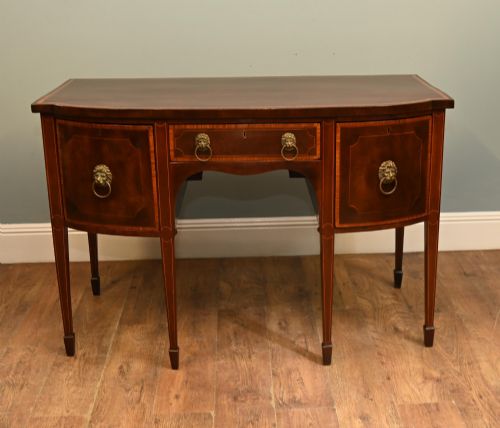
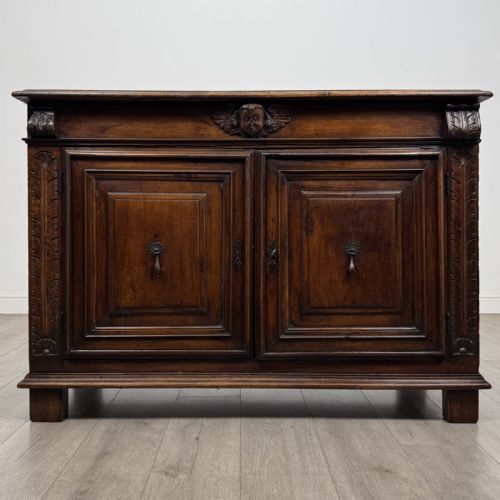
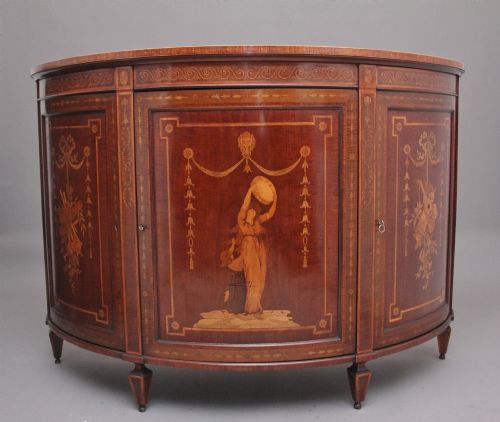
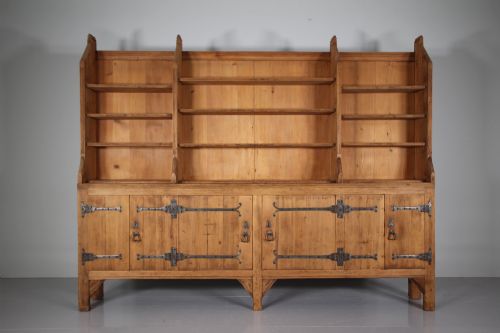
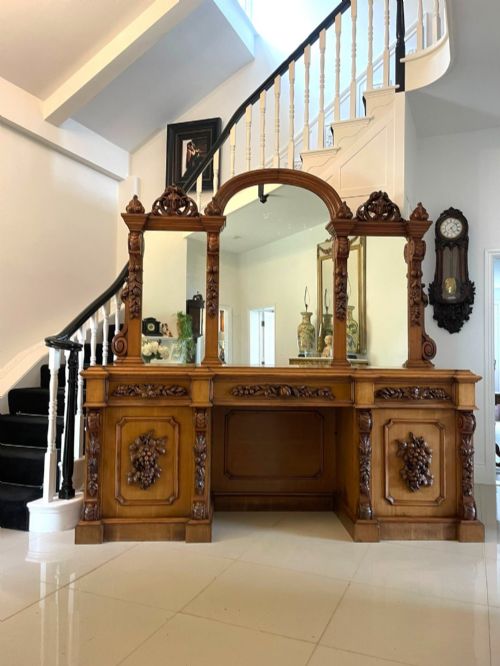
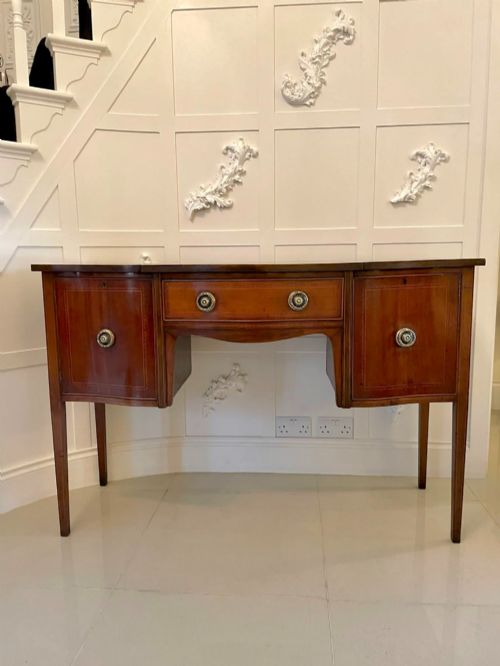
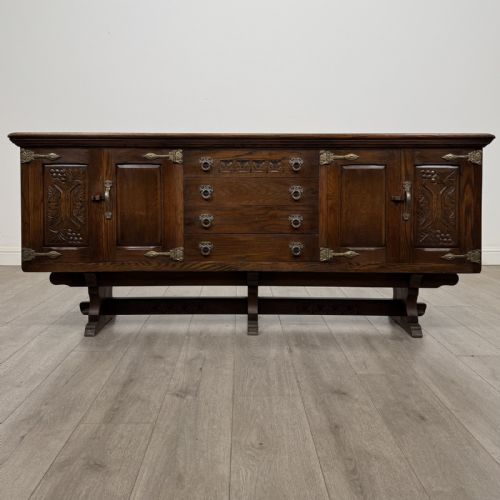
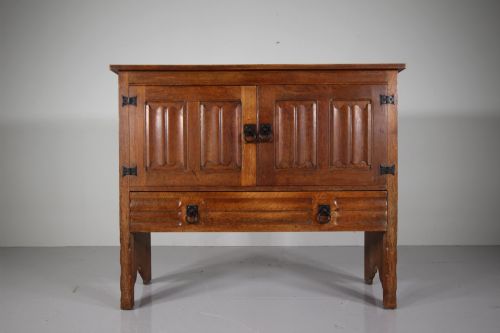
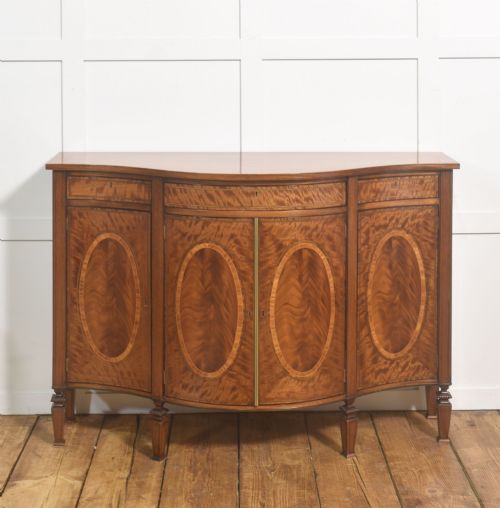
These revival credenza selections bring together sturdy oak, rich mahogany, and decorative inlay from the nineteenth and early twentieth centuries to anchor a dining room or hallway.
Revival Credenza
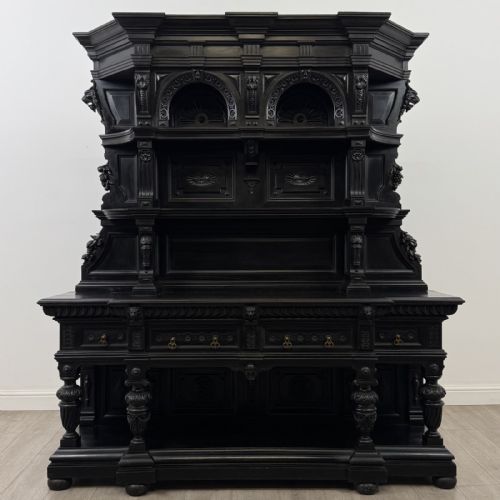
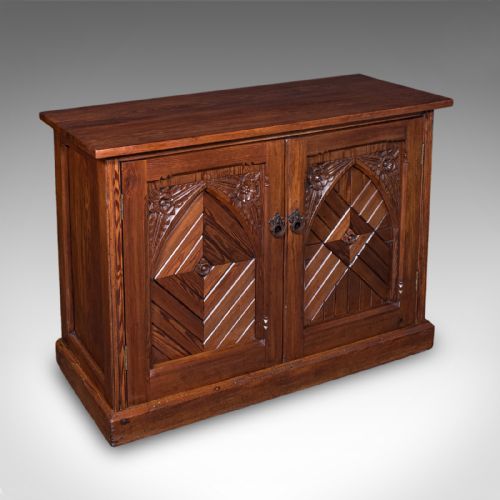
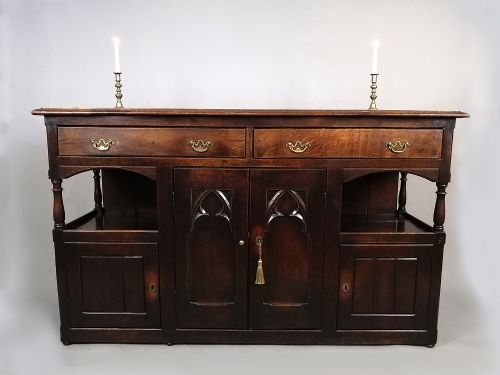
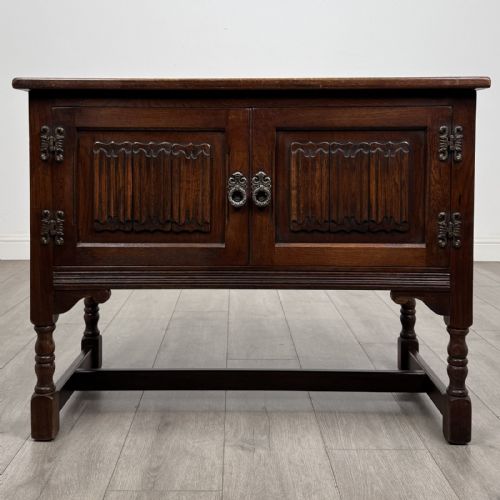
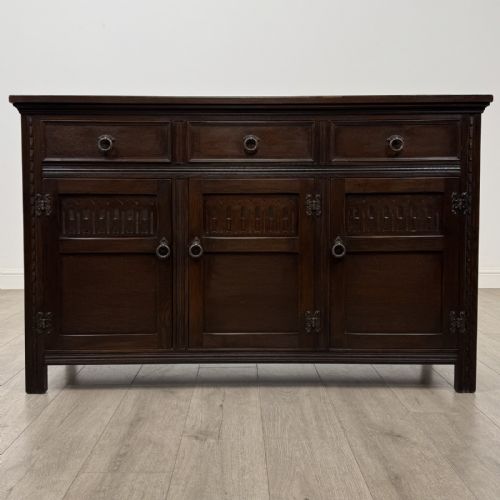
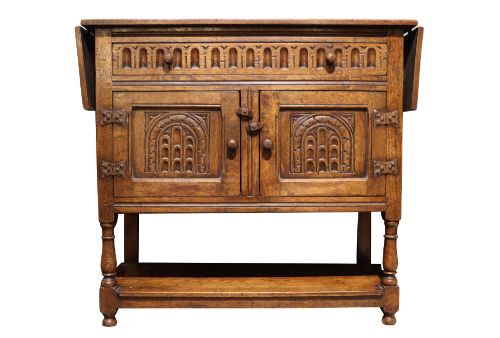
A revival credenza typically manifests as a substantial sideboard, cabinet, or server rooted in historical design movements like Jacobean, Gothic, and Sheraton revival. Buyers searching for this phrase encounter large oak sideboards featuring linenfold panels and barley twist legs, alongside refined Edwardian inlaid mahogany pieces.
The inventory spans the Victorian era through the 1920s, incorporating related forms such as bookcases, cupboards, and chiffoniers. These items serve primarily as grand storage solutions in living spaces and dining rooms, drawing on centuries-old aesthetic traditions adapted for Victorian and Edwardian homes.
How they were made
Construction relies heavily on solid oak, mahogany, and walnut, often enhanced with satinwood inlay, marquetry, and brass hardware. Cabinetmakers utilised traditional joinery techniques to build heavy frames, stretcher bases, and breakfront profiles designed to endure decades of domestic use.
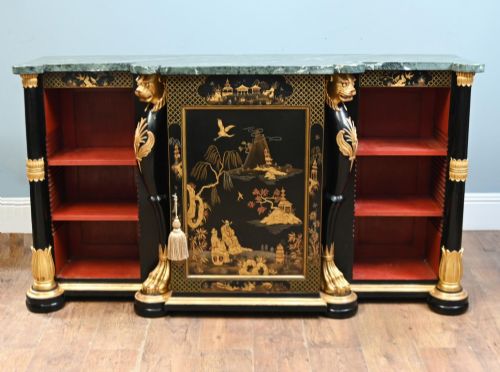
Surface ornamentation defines the visual weight of these items, featuring hand-carved lion masks, green man motifs, and geometric panels. Materials like marble tops, glass doors, and porcelain plaques appear alongside ebonised finishes to elevate the decorative ambition of the furniture.
Revival Credenza Retail Price Guide 2026
Typical asking prices for revival credenza among the pieces listed under this phrase on Sellingantiques today, from the lower quarter to the upper quarter. They describe what is for sale here now, not the wider market.
Materials recorded across the inventory include oak, mahogany, burr walnut, satinwood, marble, and brass.
What varies in quality
The distinction between standard production and exhibition-quality pieces lies in the crispness of the hand-carving and the precision of the marquetry inlay. Subtleties in timber selection, such as burr walnut or figured mahogany, separate basic utility furniture from ambitious architectural statements.
Proportion and structural integrity dictate the standing of a piece within its style, whether it is an unadorned oak cupboard or a large mirror-backed console table. Cohesion in hardware, from brass face handles to ormolu mounts, points directly to the original workshop ambition.
Hewetsons London·Epstein
The Revival Credenza Glossary
- Credenza
- A sideboard or low cabinet for dining rooms, typically featuring cupboards and drawers.
- Linenfold
- A style of wood carving that imitates folded linen, commonly seen on panels from the late nineteenth and early twentieth centuries. This technique creates a textured, fabric-like appearance on solid oak doors.
- Marquetry
- Decorative veneer patterns applied to furniture surfaces using pieces of wood, shell, or ivory. Craftsmen arrange these contrasting materials to form floral or geometric pictures.
- Stretcher base
- A system of horizontal wooden bars connecting the legs of a table or sideboard near the floor. This construction method adds structural rigidity to heavy oak forms.
- Breakfront
- A piece of furniture where the central section projects forward from the flanking outer sections. This architectural arrangement creates depth and shadow on large bookcases and sideboards.
Revival Credenza: Frequently Asked Questions
What is a revival credenza?
A revival credenza is a nineteenth or early twentieth-century storage piece that reinterprets older historical styles like Gothic, Jacobean, or Sheraton design. These items function as heavy sideboards, cabinets, and servers.
They combine historical motifs such as linenfold panels or barley twist legs with the functional storage demands of Victorian and Edwardian homes.
Where should I place one?
These substantial items suit dining rooms, large hallways, or living spaces where they operate as focal points and practical storage. Their broad surfaces and deep cupboards accommodate tableware, books, and household linens.
Care should be taken to measure wall space and ceiling height, particularly for mirror-backed or breakfront variations that dominate a room.
How do I identify the period?
Dating relies on observing the combination of primary timbers, hardware styles, and carved ornamentation. Oak construction with geometric panels often points to Edwardian interpretations of earlier seventeenth-century trends.
Finer mahogany and satinwood pieces with delicate marquetry frequently date to the late nineteenth century or the Edwardian era, reflecting Sheraton revival preferences.
How do I care for the wood?
Maintenance involves keeping wooden surfaces away from direct heat sources and strong sunlight to prevent the timber and veneer from splitting. Regular dusting with a soft, dry cloth preserves the finish without building up residue.
Occasional application of appropriate wax protects antique oak, mahogany, and walnut while maintaining their natural sheen.