


Revival Console Table
A revival console table brings the sculptural presence of historical design into a hallway or drawing room.
Revival Console Table
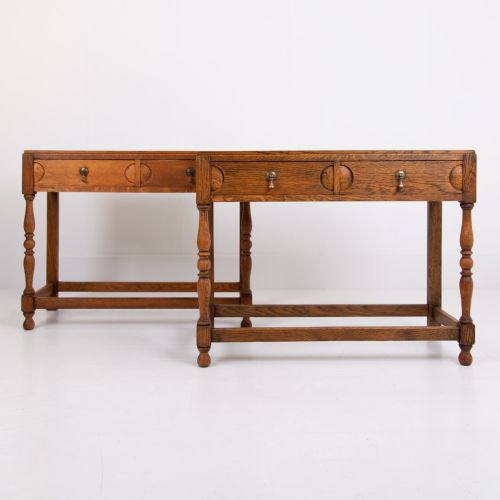
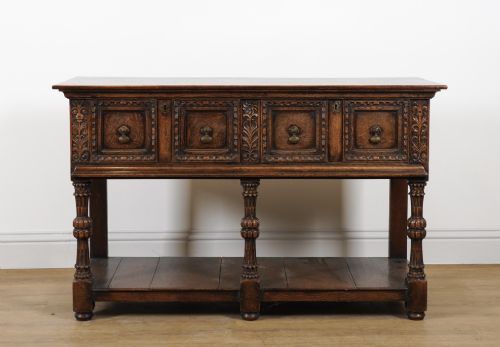
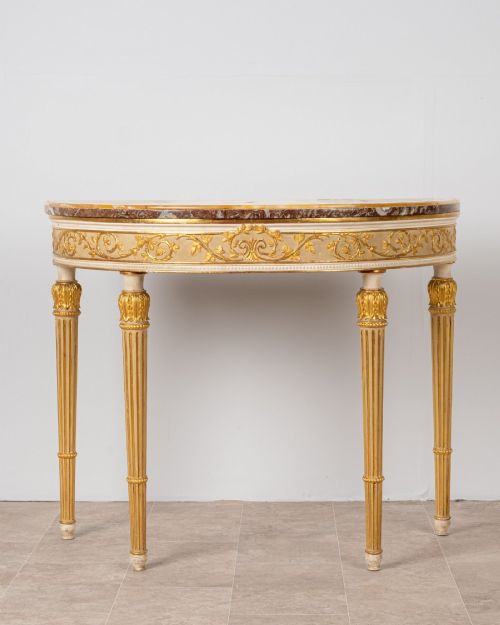
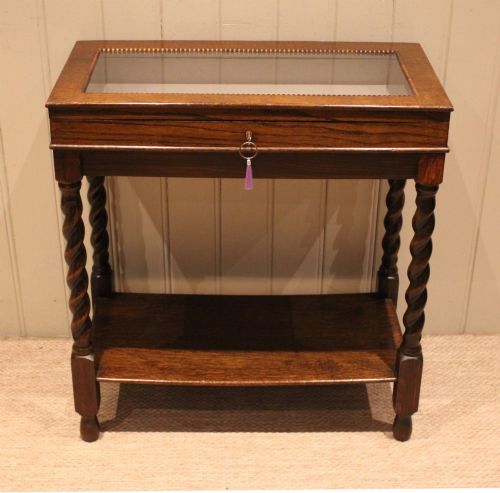
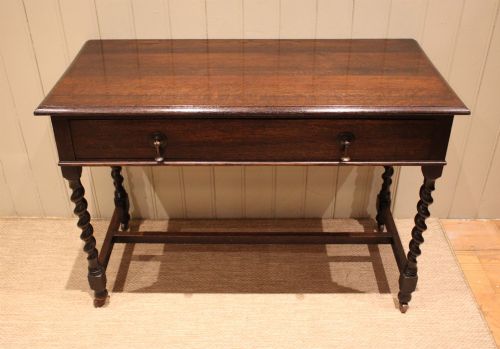
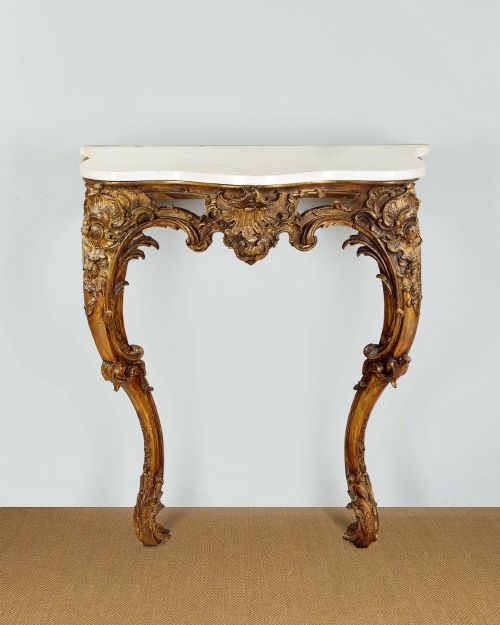
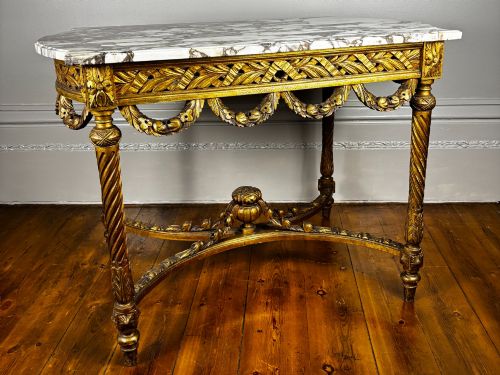
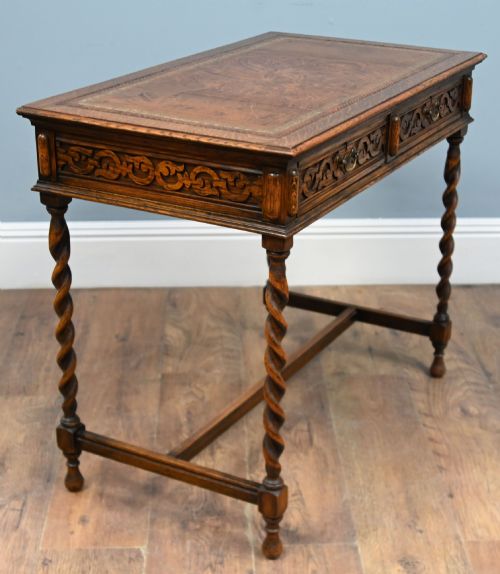
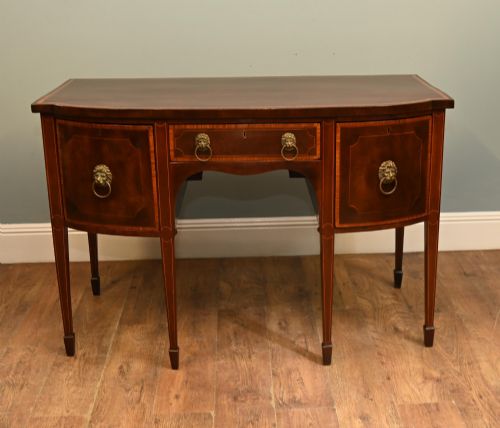
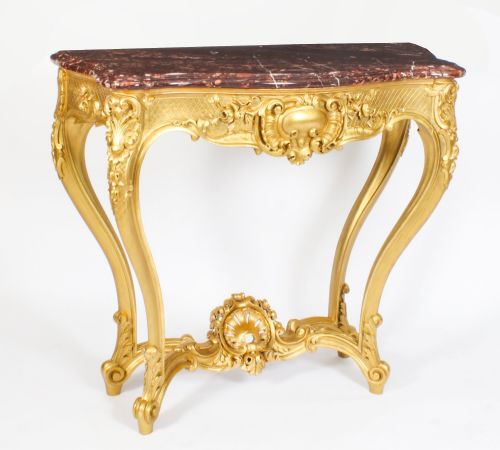
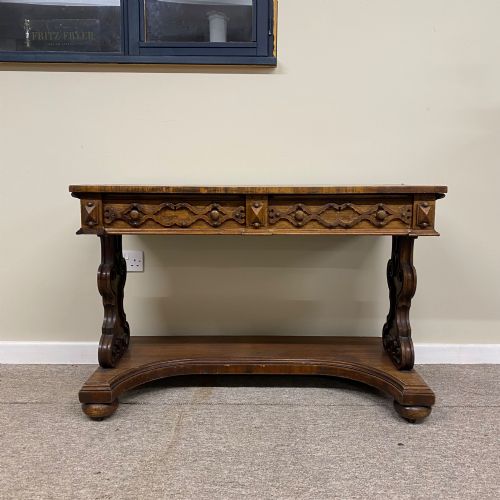
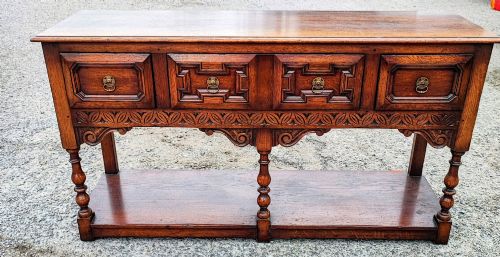
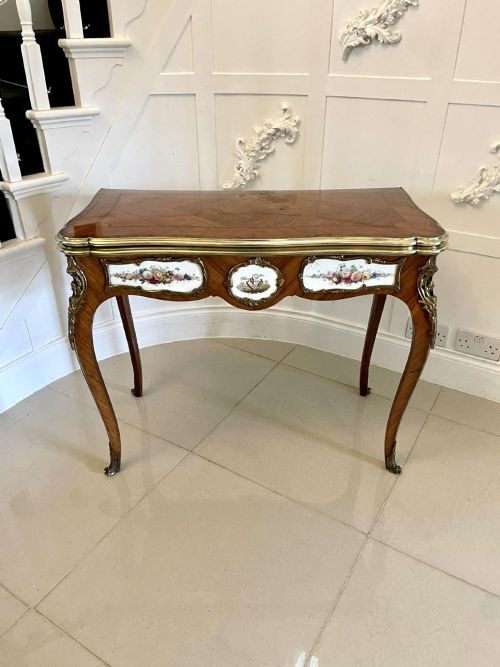
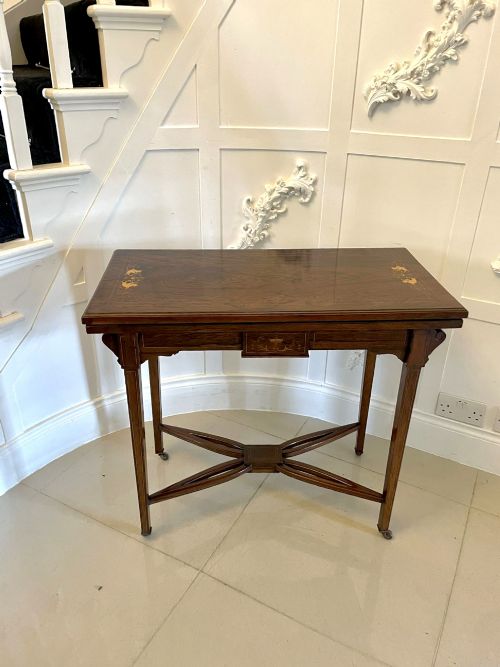
A revival console table adopts historical decorative vocabularies from earlier centuries, reinterpreted by makers working in the Victorian, Edwardian and early twentieth-century periods. When searching for a revival console table, buyers encounter heavily carved oak Gothic and Jacobean expressions alongside lighter inlaid mahogany and giltwood pieces echoing Louis styles.
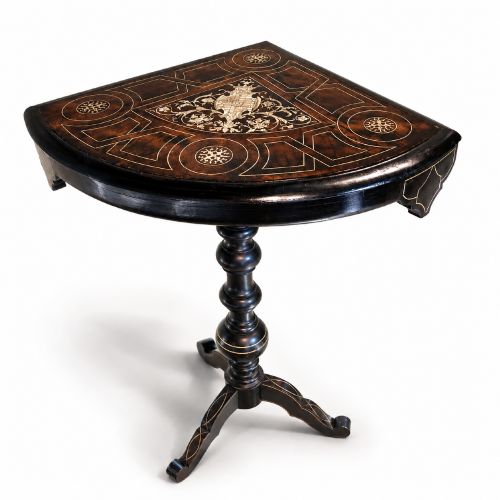
The selection here encompasses side tables, pier tables and console forms adapted for domestic placement, often featuring marble tops or fold-over surfaces. These pieces bridge the gap between architectural gravity and domestic utility, designed to stand against a wall beneath a mirror or art.
Originating across British and continental workshops, these tables demonstrate how historical revivals dominated interior decoration from the nineteenth century onward. The surviving examples rely heavily on period motifs such as barley twist legs, green man carvings and marquetry.
How they were made
Cabinet makers utilised dense hardwoods like oak, mahogany and walnut as structural foundations, frequently applying burr veneers or intricate marquetry to enhance surface texture. Gilding, ormolu mounts and brass details appear on continental and high-style British iterations to catch the light.
Carving was executed by hand, producing deep relief details such as foliage, strapwork and figural masks on drawer fronts and aprons. Marble tops, particularly rouge varieties, were fitted directly to giltwood or walnut frames for a durable, cool-to-the-touch surface.
Joinery techniques reflect traditional workshop practices of the nineteenth and early twentieth centuries, including dovetailed drawer construction and secure tenon joints. Inlaid pieces incorporate finely cut satinwood, boxwood and rosewood stringing into mahogany or satinwood fields.
Revival Console Table Retail Price Guide 2026
Typical asking prices for revival console table among the pieces listed under this phrase on Sellingantiques today, from the lower quarter to the upper quarter. They describe what is for sale here now, not the wider market.
Several oak tables stare back with carved Green Man masks, blending medieval folklore directly into Victorian hallway furniture.
What varies in quality
The distinction between ordinary and exceptional examples rests upon the crispness of the hand-carving and the choice of primary timbers. Deeply undercut foliage and expressive figural work denote a skilled hand, whereas shallow, machine-cut stamping flattens the decorative impact.
Proportion and material integrity dictate the upper tier of the range, seen in harmonious scale, well-figured walnut or mahogany grain and intact marble tops. Lesser examples rely on applied composition ornament rather than solid carved wood or careful veneer selection.
Charles Bevan·Christopher Dresser·Maison Millet·Edward and Roberts·Beresford and Hicks
The Revival Console Table Glossary
- Console table
- A table designed to stand against a wall, frequently fixed to the architectural structure or supported by elaborate front legs. These tables often accompanied matching wall mirrors in formal rooms.
- Giltwood
- Wood that has been coated with fine gold leaf or gilt gesso. It provides a brilliant, reflective surface characteristic of Louis revival furniture.
- Ormolu
- Gilded bronze mounts applied to furniture for decorative enrichment. It is found predominantly on continental pieces inspired by eighteenth-century French designs.
- Marquetry
- The art of applying small pieces of veneer to a structure to form decorative patterns or pictures. Craftsmen used contrasting timbers like satinwood and walnut to achieve tonal depth.
- Barley twist
- A carved wooden leg or column turned in a spiral helix resembling twisted rope. This detail is a hallmark of seventeenth-century style revivals in oak furniture.
- Rouge marble
- A deep red natural limestone with white or grey veining used for decorative table tops. It adds weight and a smooth tactile contrast to carved timber bases.
Revival Console Table: Frequently Asked Questions
Where should I place a console table?
A console table fits naturally in a hallway, entrance vestibule or living room against a flat wall. Placing a mirror or large artwork directly above it completes the traditional arrangement.
Because these tables are shallow by design, they occupy minimal floor space while providing a useful surface for lamps, correspondence or decorative objects.
How do I identify the revival period?
Examine the secondary woods, fixings and overall carving style to determine whether a piece belongs to the Victorian, Edwardian or later periods. Heavier oak construction with dark finishes often points to Victorian Gothic or Jacobean revivals.
Lighter satinwood inlay and refined proportions usually indicate Edwardian production, whereas ebonised finishes and gilt bronze suggest Napoleon III or continental workshop origins.
Are marble top tables difficult to maintain?
Marble tops require simple, gentle care using soft cloths and pH-neutral cleaners to preserve the polished surface. Avoid abrasive scourers and acidic liquids that can etch the stone over time.
The natural weight of the marble slab usually holds it securely in place on top of the wooden base without permanent fixings.
What is the difference between a side table and a console table?
Historically, console tables were designed to be fixed to a wall with front legs providing the primary vertical support. Side tables are free-standing items finished on all sides for placement anywhere in a room.
In modern usage, the terms often overlap, but console tables generally remain narrower and more architectural in their detailing.