

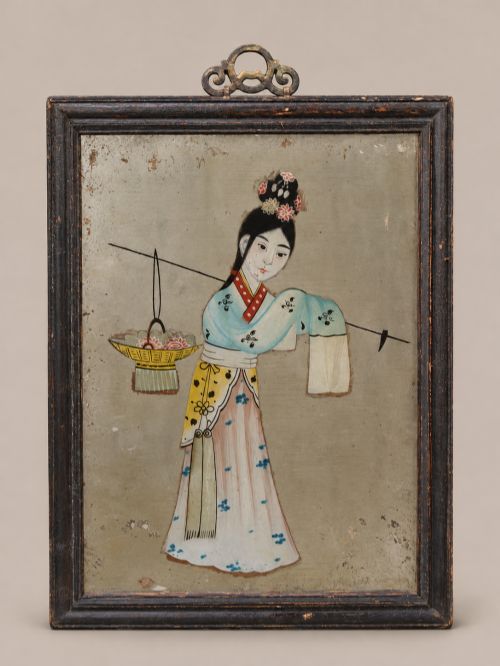
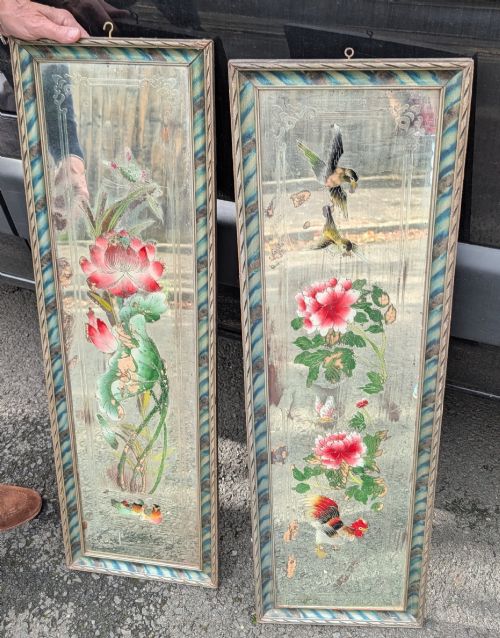
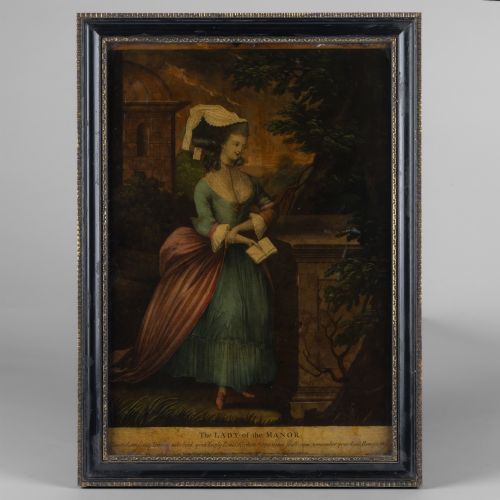
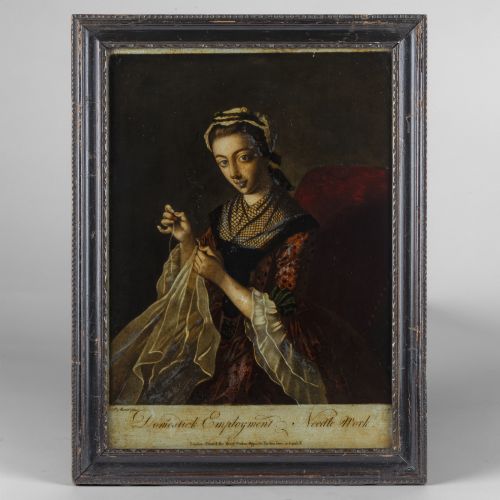

Reverse Glass Wall Art
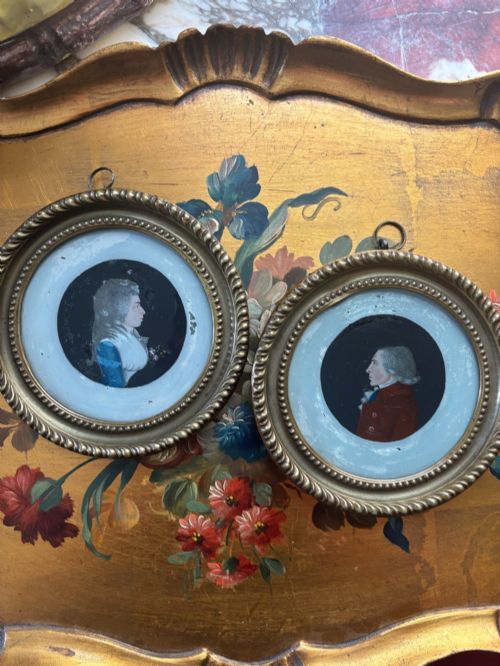
Reverse glass wall art comprises delicate historical pictures and mirrors rendered behind transparent panels, prized for their luminous depth and preserved pigment.
Reverse Glass Wall Art
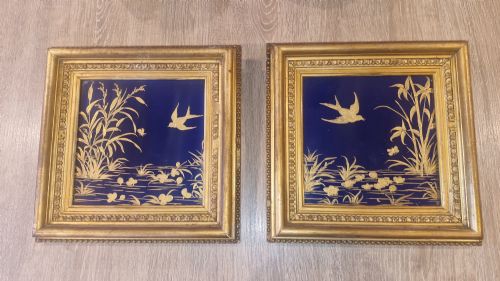
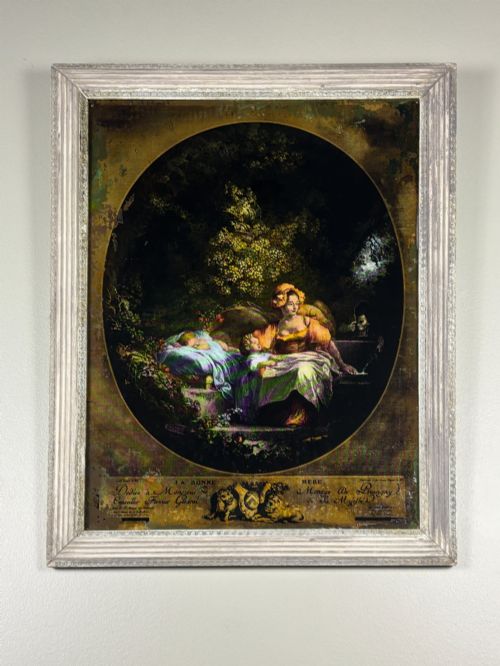
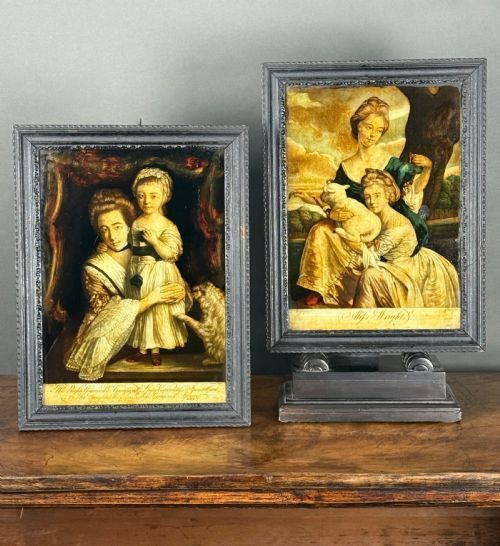
When buyers search for reverse glass wall art, they encounter pieces spanning the Georgian, Victorian, and Edwardian periods, alongside Chinese export items and later commercial signs. The listings here contain everything from formal portraits of royalty to decorative Chinese mirrors and advertising pieces.
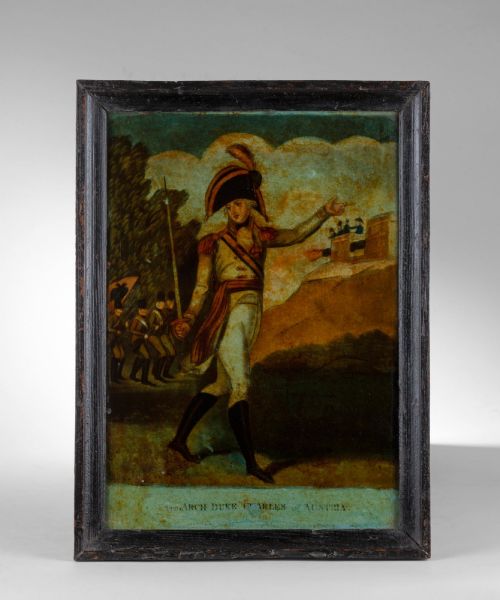
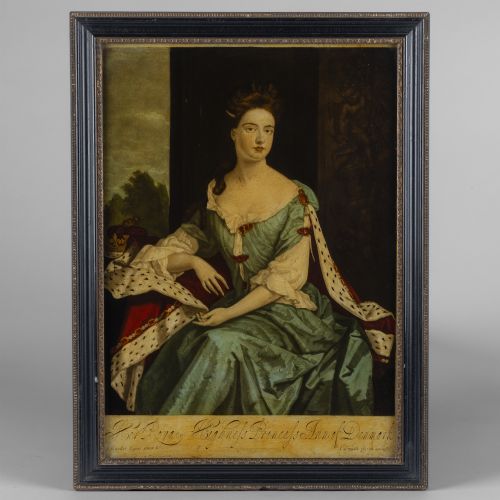
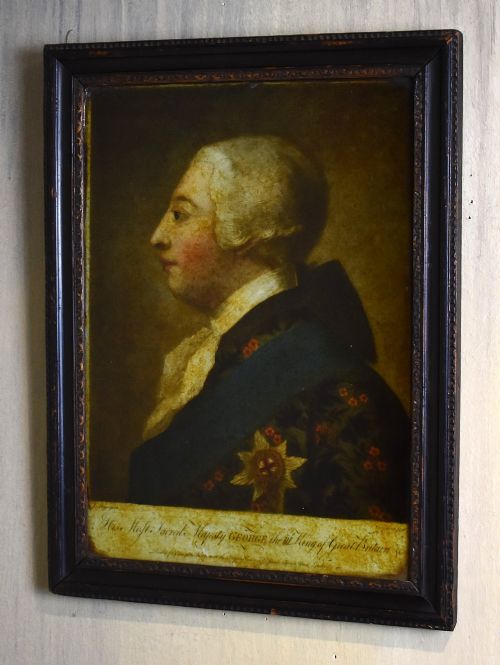
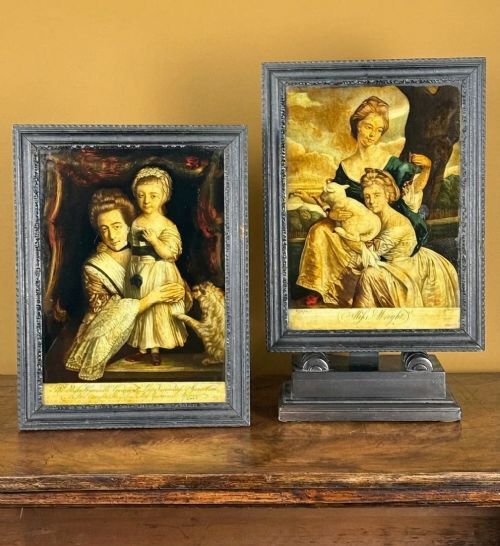
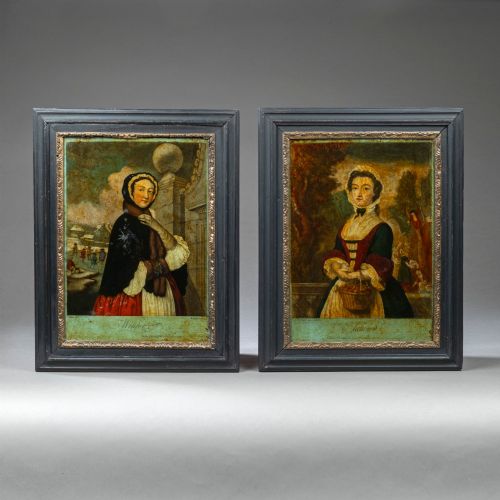
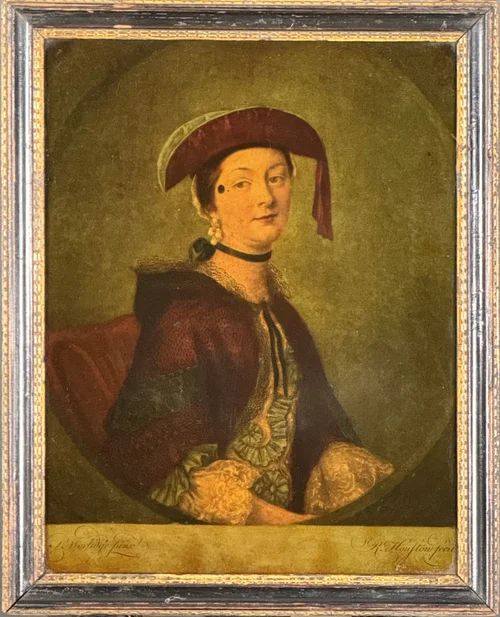
Portraiture dominates the earlier examples, frequently executed as mezzotints or hand-coloured engravings fixed to the glass. Buyers will also find pairs representing seasonal themes, religious figures, and domestic scenes.
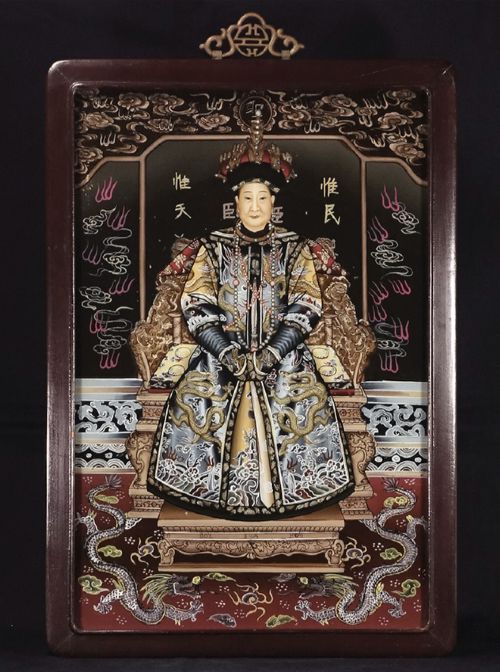
Oriental works form a substantial category, particularly nineteenth-century Chinese paintings depicting dignitaries and empresses. Later twentieth-century examples shift towards double-sided business signs and modernist graphics.
Materials and construction
Reverse Glass Wall Art Retail Price Guide 2026
Typical asking prices for reverse glass wall art among the pieces listed under this phrase on Sellingantiques today, from the lower quarter to the upper quarter. They describe what is for sale here now, not the wider market.
Materials recorded across the current items include hand-brushed oil paint, delicate paper transfers, brass fixtures, and carved giltwood frames.
Factors determining quality
The precision of the initial engraving or brushwork dictates the visual impact of each piece. Superior examples retain crisp detail in the facial expressions and garment folds without pigment flaking away from the glass.
The integrity of the original framing and the survival of the backing boards influence the condition of the fragile painted layer behind the glass. Intact early frames and undisturbed seals preserve the pigment against atmospheric decay.
Richard Purcell·Charles Spooner·Takabatake Kasho·Schweninger·Fletcher
The Reverse Glass Wall Art Glossary
- Mezzotint
- A printmaking process that achieves rich tonal gradations, frequently utilised in eighteenth-century works before being applied to glass. The technique creates smooth transitions between light and shadow.
- Crystoleum
- A Victorian method of applying a coloured paper print face-down onto glass, rendering the paper transparent with oil before hand-colouring. This process produced richly layered portraits popular in the nineteenth century.
- Chinoiserie
- A European artistic style reflecting Chinese motifs and aesthetic traditions, seen in decorative mirrors and framed panels from the Georgian and Victorian eras. These designs often incorporate symmetrical compositions and ornate framing.
- Reverse painting
- The core technique of applying pigments to the back of a glass sheet so the final image is viewed through the transparent front. This method protects the pigment layer from dust and physical contact.
Reverse Glass Wall Art: Frequently Asked Questions
How do I hang reverse glass wall art safely?
These pieces require secure picture hooks fixed directly into solid wall studs rather than lightweight plaster fixings. The weight of the glass and wooden frame demands sturdy support to prevent accidental drops.
Ensure the hanging wire or brackets on the reverse are firmly attached to the original frame rather than relying on historical fixings that may have weakened over time.
Where should I place these pieces at home?
Position them away from direct sunlight and damp environments to protect the fragile pigments and paper backing layers from fading and moisture damage. Interior walls with stable room temperatures suit them best.
Keep them clear of heat sources like radiators, as fluctuating temperatures can cause the glass to expand and stress the historical adhesives and frames.
How do I clean antique glass paintings?
Dust the exterior surface gently with a soft, dry microfibre cloth without applying liquid directly onto the glass. Moisture can seep beneath the frame edges and lift the delicate paint layers.
Avoid using commercial glass cleaners or chemical sprays entirely, as these substances dissolve old varnishes and damage the seals around the panel.
How can I tell a Georgian piece from a Victorian one?
Georgian examples typically feature hand-coloured mezzotint portraits or classical motifs with delicate, restrained framing. The subject matter often includes monarchs or literary figures.
Victorian pieces frequently introduce crystoleum techniques and more vibrant colour palettes, alongside distinctively heavier moulded frames and domestic or romantic themes.