

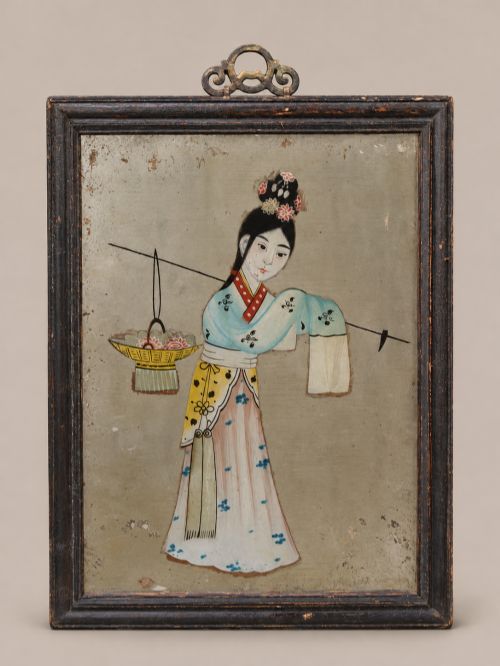
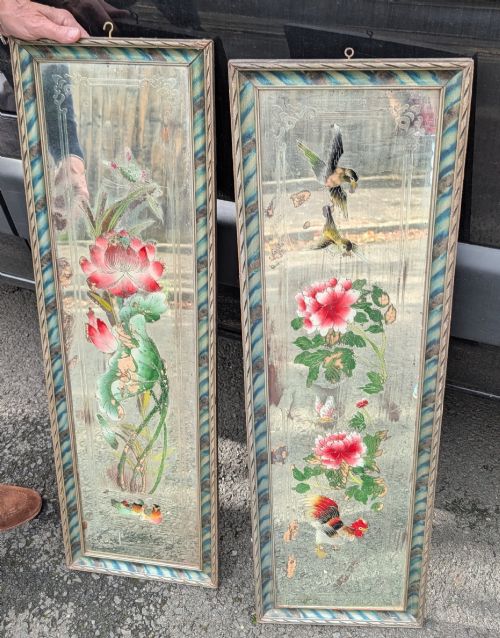
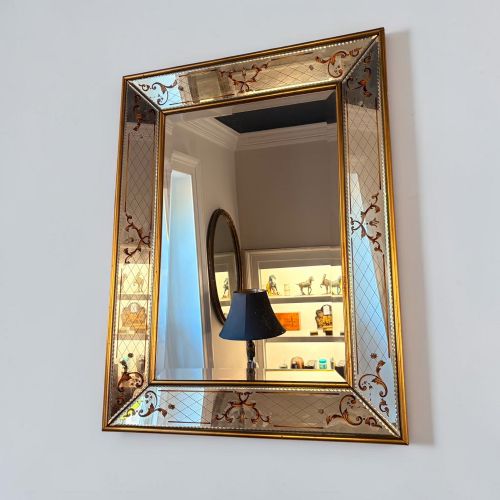
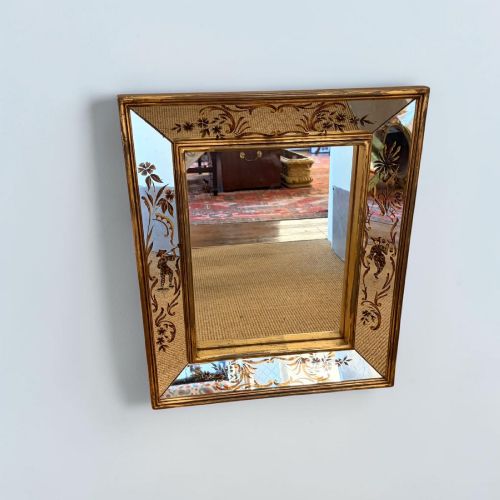
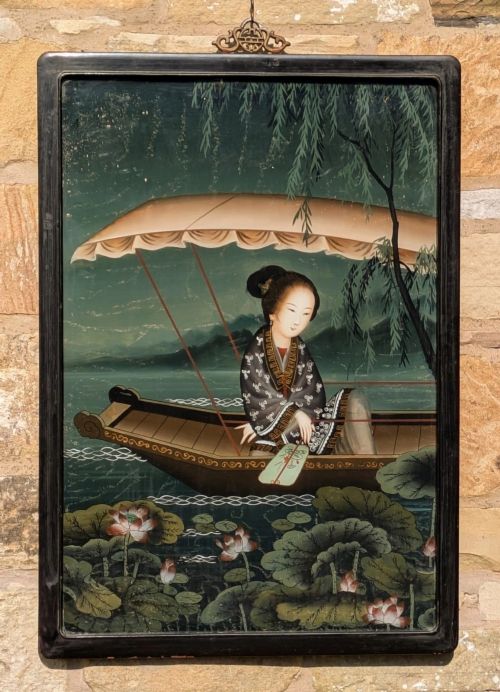


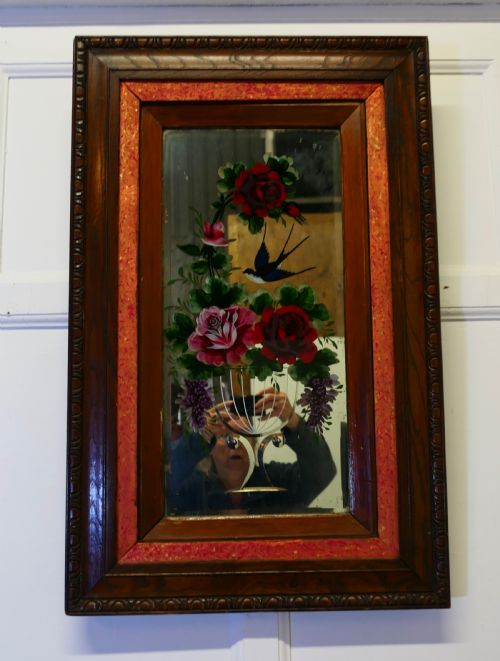


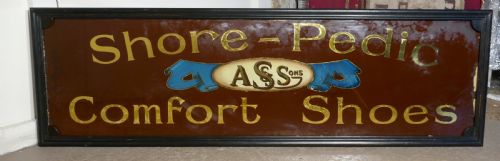
Framed Reverse Painting Mirror
These framed reverse painting mirror pieces combine functional glass with delicate hand-painted artistry, offering a striking historic wall piece for any traditional interior.
Framed Reverse Painting Mirror
A framed reverse painting mirror combines a reflective surface with detailed artwork applied directly to the back of the glass, creating a layered visual depth. Buyers browsing this selection encounter wall-hung designs spanning several distinct eras.
The objects listed range from nineteenth-century Chinese export trade pieces and Regency giltwood pier mirrors to later Edwardian and Victorian examples. These include decorative wall mirrors, advertising signs, and distinct trumeau formats featuring upper glass panels.
Chinoiserie and Venetian styles appear frequently alongside British and American naval themes or commercial shoe shop advertisements. Such variety ensures collectors find both formal decorative furnishings and unusual commercial artefacts.
Materials and Construction
Makers utilised wood, including maple and giltwood frames, to house the delicate glass panels safely. Gold leaf frequently accents the carved wooden mouldings, adding richness to Regency and Victorian formats.
The artwork involves paint applied directly to glass, alongside mirrored glass and etched details. Eglomisé techniques allow artists to combine metallic leaf and pigment on the reverse side before framing.
Framed Reverse Painting Mirror Retail Price Guide 2026
Typical asking prices for framed reverse painting mirror among the pieces listed under this phrase on Sellingantiques today, from the lower quarter to the upper quarter. They describe what is for sale here now, not the wider market.
Current listings feature materials such as glass, wood, paint, gold leaf, giltwood, brass, metal, and mirrored glass across multiple eras.
Assessing Quality and Execution
The refinement of the reverse glass painting separates standard commercial signage from fine artistic works. Subtle brushwork in portraits of dignitaries or intricate Chinese export scenes indicates superior craftsmanship.
Frame construction also dictates overall quality, with carved giltwood and maple housings showing greater artisan effort than simple commercial surrounds. Preserved gold leaf and intact mirrored surfaces maintain the visual impact of each piece.
The Framed Reverse Painting Mirror Glossary
- Eglomisé
- A process of applying cold painting and metallic leaf to the rear face of glass to create a decorative panel. This technique gives the artwork a brilliant, reflective background.
- Trumeau
- A decorative wall mirror featuring an upper panel containing a painting or print above the reflective glass. These were designed to fit between windows in formal rooms.
- Chinoiserie
- European interpretations of Chinese and East Asian artistic traditions, popular in furniture and mirrors. It often depicts figures, pagodas, and landscapes in delicate detail.
- Pier mirror
- A tall mirror designed specifically to hang on the wall space between two windows. They frequently incorporate painted or gilded wooden frames.
- Reverse painting on glass
- An artwork technique where the image is painted directly onto the back of a glass sheet so that it is viewed correctly from the front.
Framed Reverse Painting Mirror: Frequently Asked Questions
How do I hang a heavy framed reverse painting mirror?
These pieces require secure wall fixings suited to their substantial wood and glass weight. Professional mirror hangers utilise appropriate wall anchors to support the frame safely.
Position the mirror at eye level to ensure the reverse painting and reflective glass can be appreciated fully without strain.
Where were these mirrors placed historically?
Regency pier mirrors and trumeau formats traditionally hung between windows to bounce natural light around formal reception rooms. Commercial advertising signs served functional purposes in shoe shops and retail spaces.
Domestic spaces also featured Chinese export and Victorian decorative panels in hallways and parlours as conversation pieces.
How do I clean the glass without damaging the paint?
Apply a mild, ammonia-free glass cleaner to a soft cloth rather than spraying directly onto the surface. Moisture must be kept away from exposed edges where the paint meets the glass.
Gentle dusting of the wooden and giltwood frames preserves the original gold leaf and painted details over time.
How can I tell a nineteenth-century mirror from a later piece?
Nineteenth-century examples often exhibit hand-carved giltwood frames, older float or cylinder glass, and hand-painted export scenes with natural pigment ageing. Edwardian and later pieces may show machine-cut components or different framing standards.
Examining the backing boards and joinery helps confirm the period of manufacture alongside stylistic cues.