
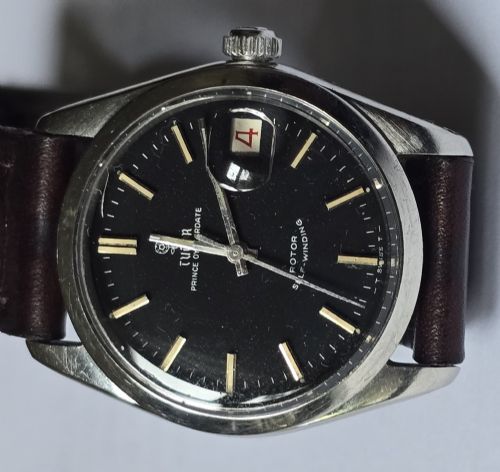
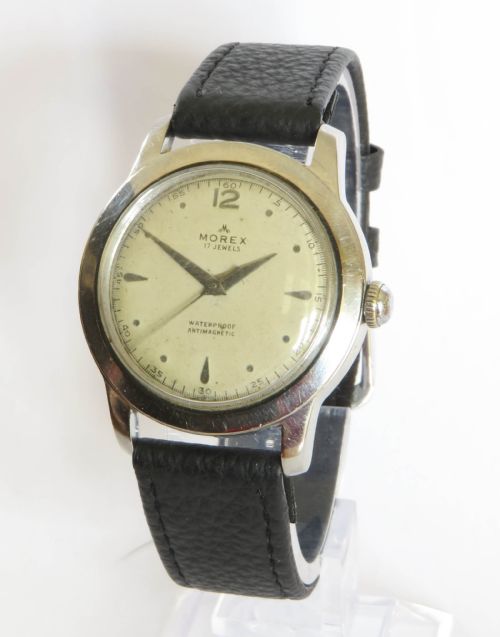
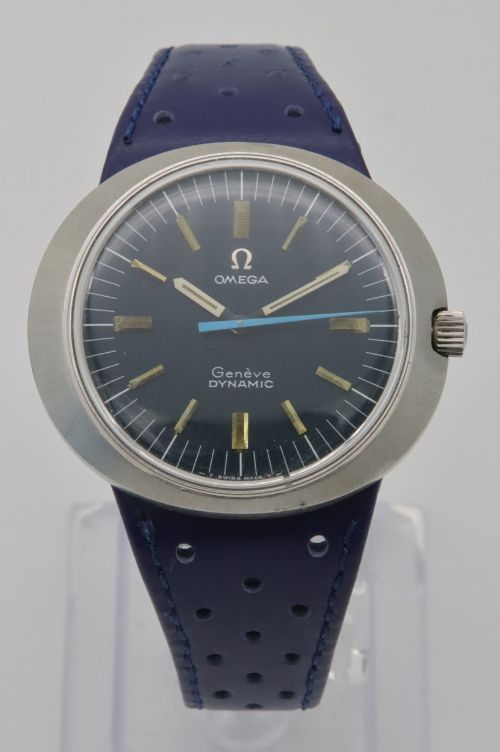
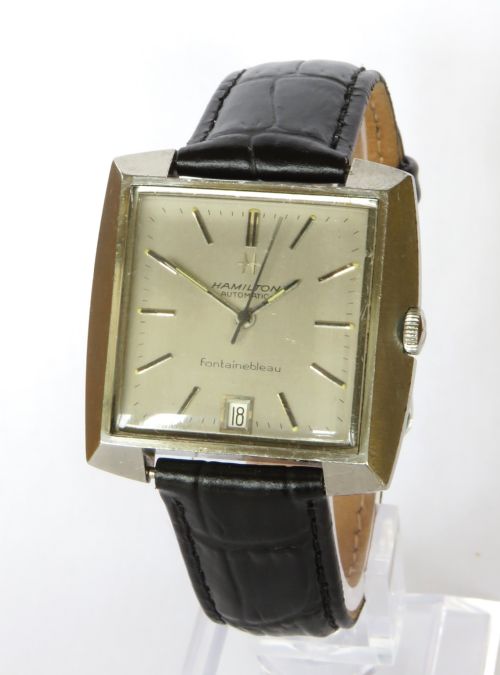
Retro Swiss Wristwatch
A retro swiss wristwatch brings mid-century horology to the wrist, offering mechanical precision housed in distinctive mid-century modern design.
Retro Swiss Wristwatch
A retro swiss wristwatch spans decades of mid-century horology, encompassing designs from the 1930s through to the 1970s. These timepieces capture the evolution of mechanical watchmaking during periods shaped by modernism and mid-century design principles.
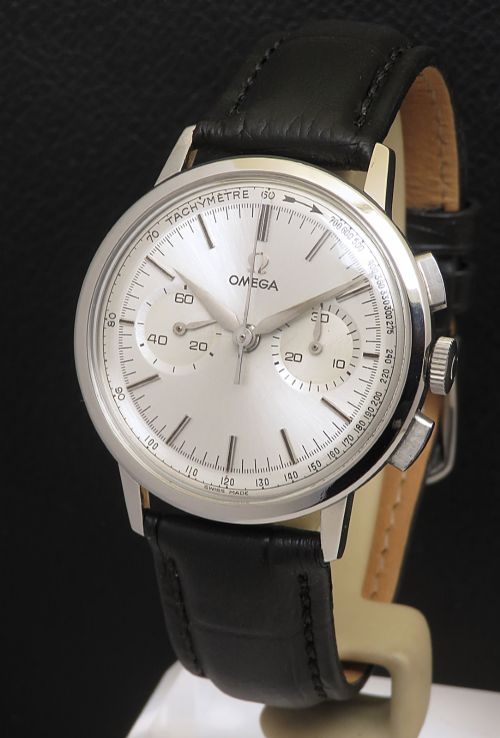
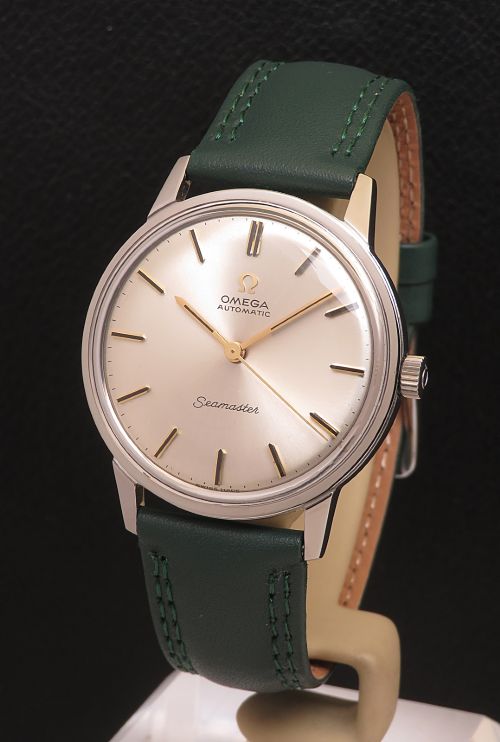
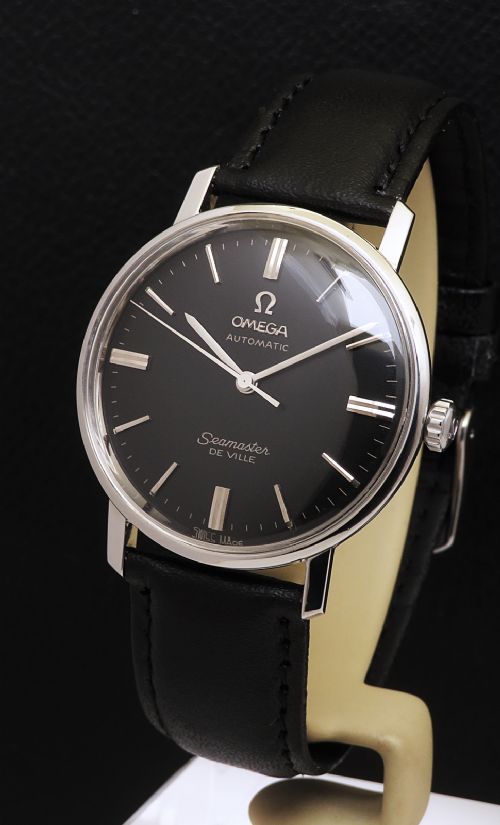
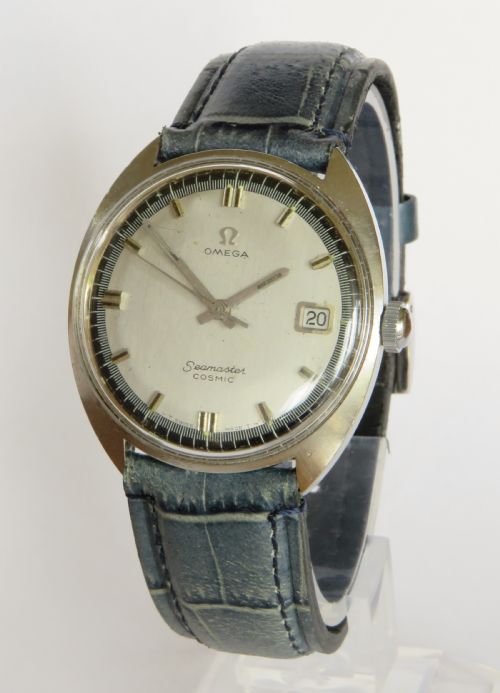
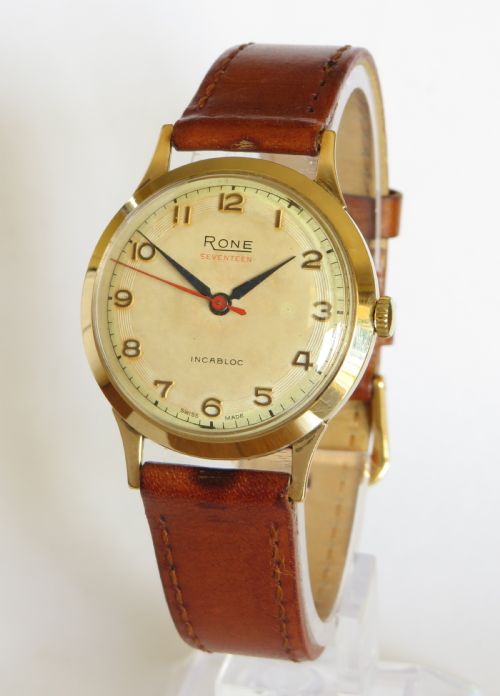
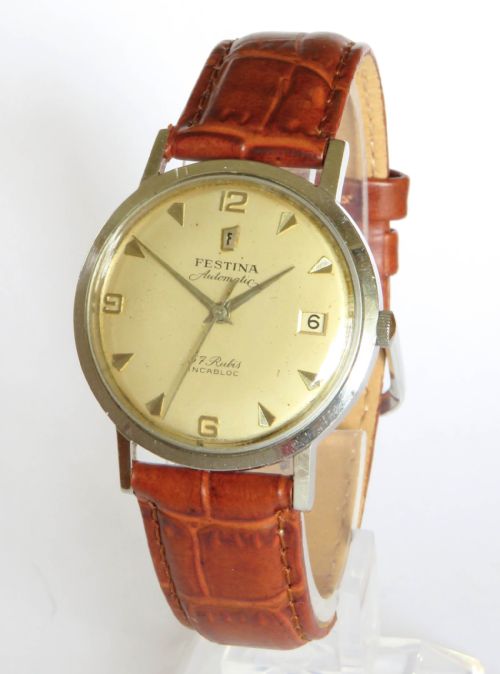
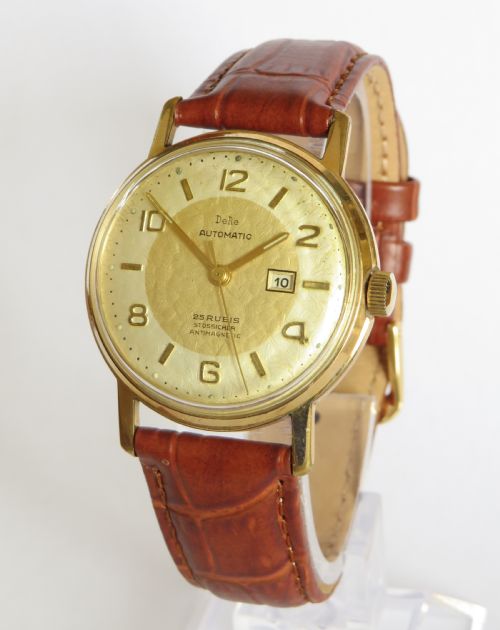
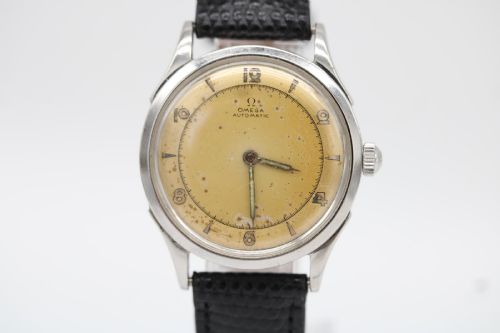
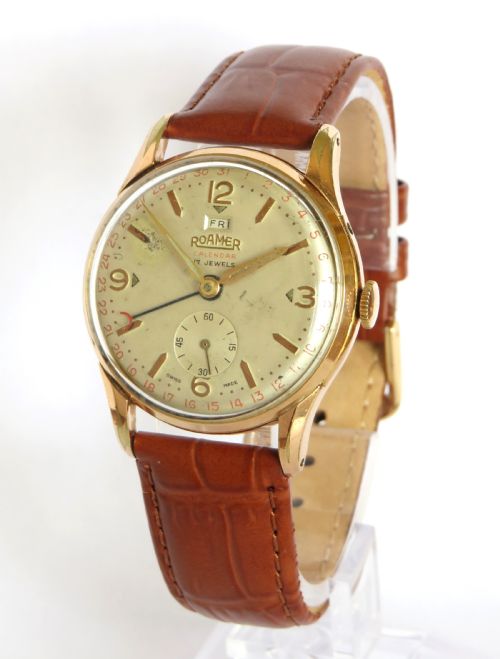
Most pieces encountered on this page originate from the 1950s and 1960s, reflecting a prolific era for Swiss manufacturers. Gents automatic and manual wind wristwatches dominate the selection, alongside specialised calendar and chronograph models.
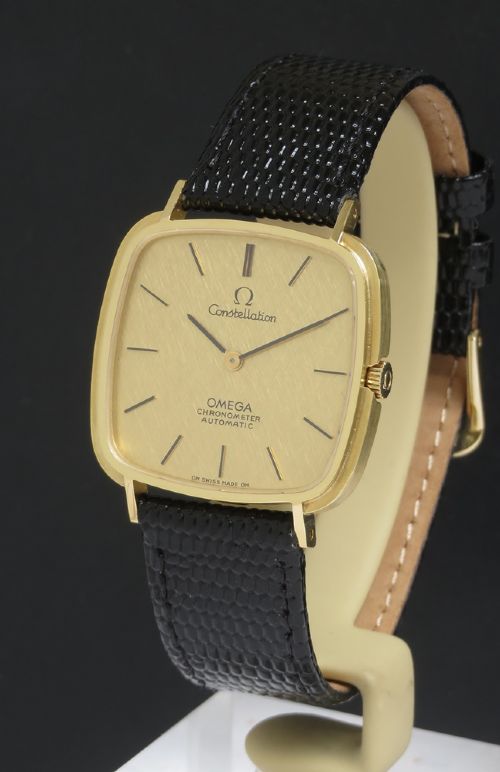
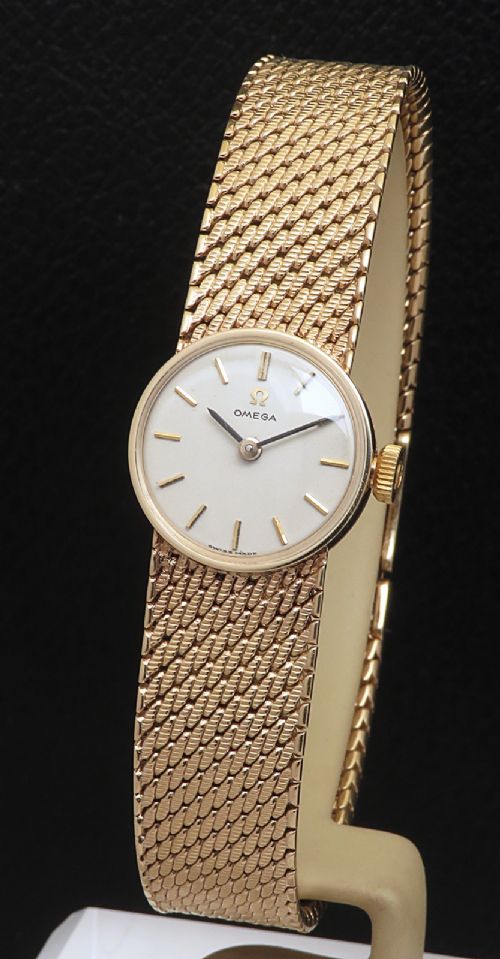
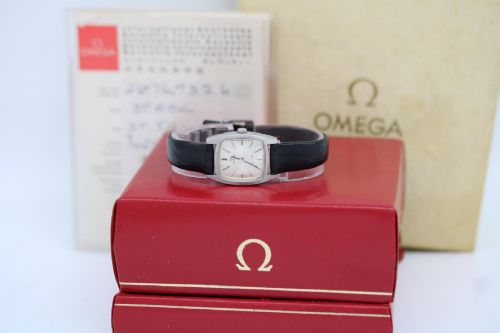
Beyond standard gentlemans models, the inventory includes ladies dress pieces and cocktail watches set in precious metals. Forms range from round dress cases to cushion shapes and distinctive geometric lines characteristic of 1970s modern styles.
Materials and Construction
Cases are formed from stainless steel, gold plate, or solid metals including nine-carat and eighteen-carat gold, occasionally accented with diamonds. Dials are protected by glass, acrylic, or acrylic glass crystals, fitted with leather straps or matching metal bracelets.
Movements rely on traditional mechanical engineering, utilising manual wind mechanisms and automatic systems such as bumper movements. Swiss workshops employed precise gear trains and jewel bearings to ensure reliable timekeeping across decades of daily wear.
Distinctions in Quality
The standard of a retro swiss wristwatch depends upon the integrity of the movement and the preservation of the exterior. Original components, factory dials, and proper mechanical servicing separate everyday survivors from museum-grade specimens.
Material choice dictates tier, with solid gold and white gold cocktail pieces occupying the upper echelon compared to gold-plated counterparts. Accompanying original boxes, papers, and manufacturer documentation elevate the completeness and historical standing of a timepiece.
Omega·Tudor·Montilier·Hamilton·Rone·Festina·Roamer·Bulova·Tissot·Cyma·Wittnauer·Longines·Certina·Avia·Baume·Ensign·Lanco
The Retro Swiss Wristwatch Glossary
- Automatic
- A self-winding mechanical movement that uses the natural motion of the wearer's wrist to tension the mainspring. This mechanism removes the need for daily manual winding.
- Chronometer
- A high-precision watch that has been tested and certified to meet strict accuracy standards over various temperatures and positions. These movements represent the pinnacle of mechanical reliability.
- Calibre
- The specific internal movement designation used by a manufacturer to identify a particular watch movement design. Collectors reference the calibre to understand the technical lineage of a piece.
- Bumper
- An early form of automatic movement where the rotor swings back and forth against internal springs rather than rotating fully 360 degrees. This distinct motion can be felt lightly on the wrist.
- Oysterdate
- A trademarked waterproof case design paired with a date display function popularized by mid-century Swiss makers. It combines robust weather protection with daily calendar utility.
Retro Swiss Wristwatch: Frequently Asked Questions
How do I wind an automatic watch?
Automatic watches wind themselves through the movement of your arm during regular daily wear. If the watch has stopped entirely, give the crown a few gentle turns to jumpstart the internal mechanism before wearing it.
Avoid overwinding vintage automatic pieces, as their internal components respond best to natural motion once running.
What is a bumper movement?
A bumper movement is an early automatic design where an oscillating weight swings through a limited arc, bouncing against internal springs. You can feel a gentle tap on your wrist as the weight moves.
This distinct mechanical action characterises watches produced during the middle decades of the twentieth century.
How do I care for a vintage leather strap?
Keep vintage leather straps away from water and excessive moisture to prevent cracking and discoloration over time. Remove the watch before swimming or bathing to preserve the material.
Treat the leather occasionally with specialised conditioner to maintain flexibility and extend its lifespan.
Are these watches waterproof?
Vintage timepieces should generally be treated as water-resistant rather than waterproof due to the age of their original seals and gaskets. Even models marked as water-resistant originally can suffer moisture damage today.
Protect the watch from rain, splashes, and humidity to ensure the dial and movement remain safe.