



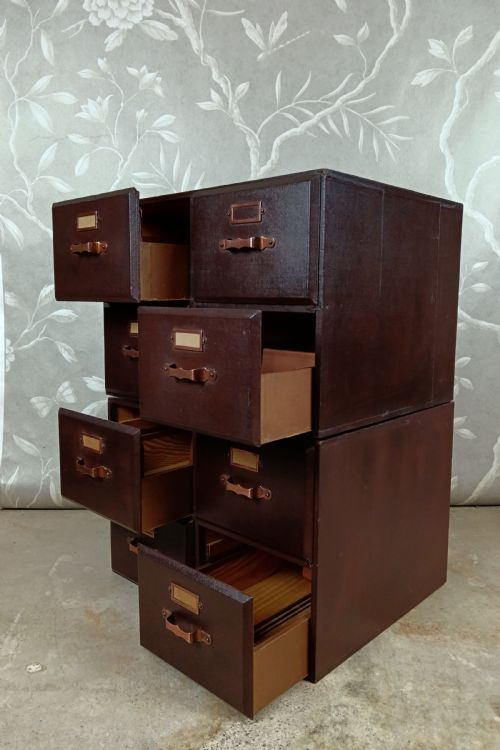


Retro Office Filing Cabinet
A retro office filing cabinet brings robust commercial utility and rich timber grain straight into a modern workspace.
Retro Office Filing Cabinet
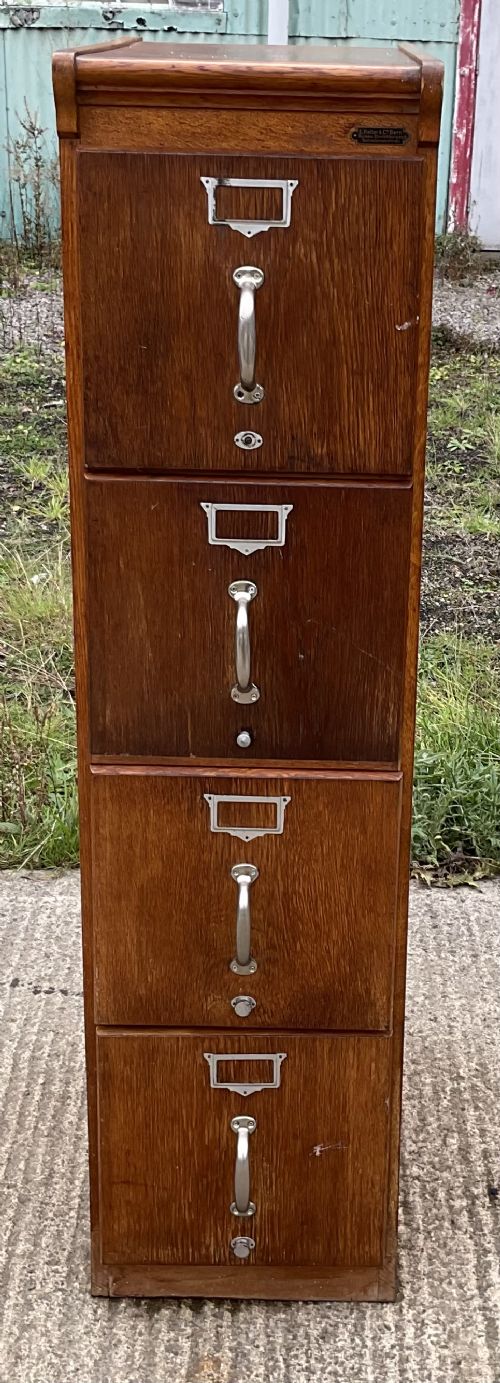
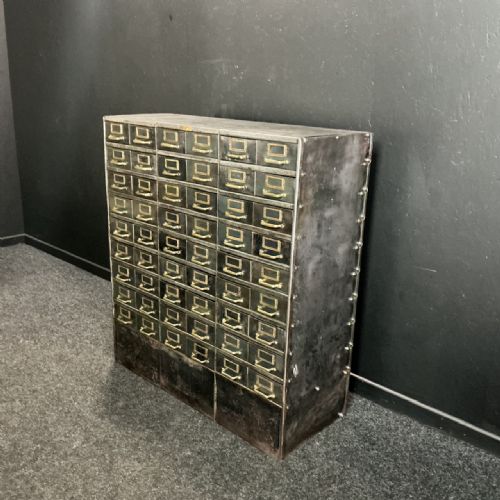
A retro office filing cabinet offers practical storage solutions drawn from early twentieth-century commerce and industrial workspaces. Buyers seeking these items will encounter pieces designed for organised record keeping, such as vertical filing cabinets and multi-drawer storage banks.
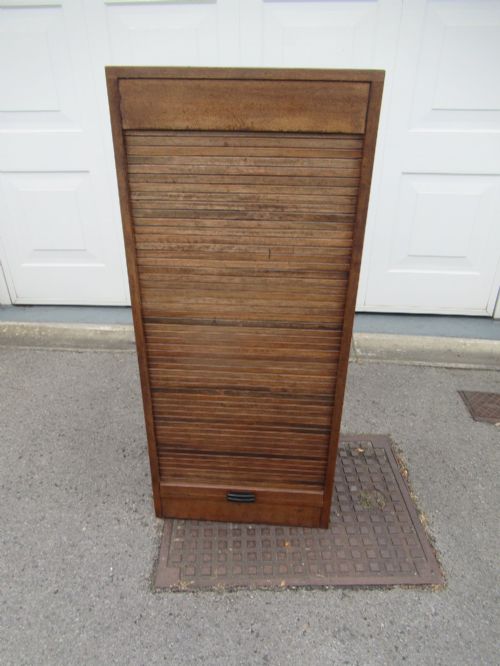
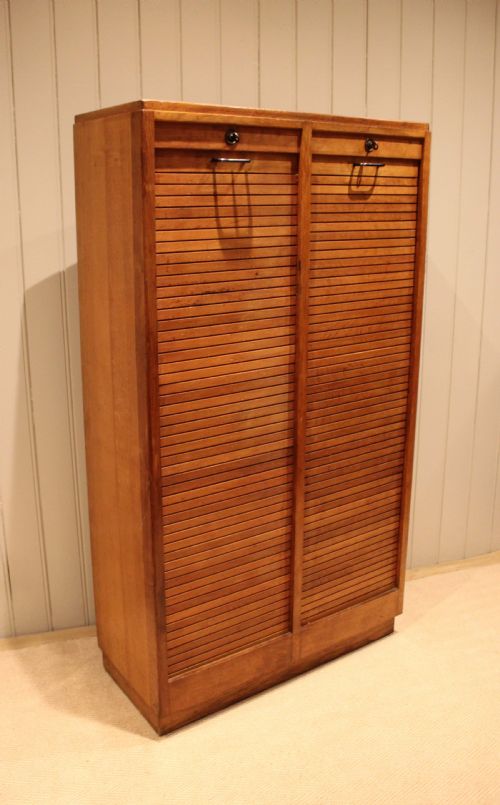
The selections available on this page lean heavily towards oak construction, featuring tambour shutters and plan chest formats. These sturdy office fittings reflect the functional demands of Edwardian and mid-century working environments.
Most examples hail from the 1900s through to the 1940s, encompassing styles like Art Deco, French Utility, and Industrial. Their robust proportions and honest construction make them enduringly popular for contemporary interiors.
Materials and Construction
Makers relied predominantly on solid oak and mahogany to build these storage units, pairing dense hardwoods with supportive internal frames. Metal and steel elements appear in structural brackets and handles, adding industrial resilience.
Flexible tambour fronts utilise individual wooden slats mounted on canvas backings, allowing smooth movement around curved tracks. Brass hardware, including label holders and pull handles, provides durable finishing touches to drawers and doors.
Retro Office Filing Cabinet Retail Price Guide 2026
Typical asking prices for retro office filing cabinet among the pieces listed under this phrase on Sellingantiques today, from the lower quarter to the upper quarter. They describe what is for sale here now, not the wider market.
The listings span from 1900 to the 1940s, dominated by oak timber and tambour front mechanisms.
Assessing Quality
Quality rests in the precision of the joinery and the smooth operation of mechanical elements like tambour doors and deep drawers. Superior pieces exhibit tight wood joints and well-fitted internal shelving rather than loose tolerances.
The choice of primary timber also dictates the character of the piece, with richly figured oak and select mahogany commanding greater attention than utility-grade softwoods. Intricate hardware and intact original canvas backing on tambour shutters elevate the standard of manufacture.
The Retro Office Filing Cabinet Glossary
- Tambour
- A flexible shutter made of narrow slats of wood glued to canvas or linen, allowing the door to slide open around a curve. This clever mechanism hides office clutter while saving floor space.
- Plan Chest
- A wide, shallow chest of drawers specifically designed for storing large sheets of paper, architectural plans, or maps flat. These pieces often feature numerous low-profile drawers.
- Edwardian
- Pertaining to the reign of King Edward VII, spanning from 1901 to 1910, noted for furniture that retained robust proportions while lightening slightly from Victorian heaviness.
- Industrial
- A style derived from factories, warehouses, and offices of the early twentieth century, prioritising utilitarian function, raw metals, and rugged timbers over decorative flourish.
Retro Office Filing Cabinet: Frequently Asked Questions
How do I operate a tambour door?
Tambour doors slide horizontally or vertically along hidden grooves cut into the cabinet frame. The individual wooden slats flex around corners to reveal the interior shelving.
Keep the tracks clean of dust to ensure the mechanism glides smoothly without catching.
Can these cabinets hold modern paper sizes?
Many vintage filing cabinets and card catalogue sets were built for older paper dimensions or specific index cards. It is wise to measure your intended storage items against the internal drawer dimensions before purchase.
Adjustable internal shelving often provides flexibility for modern files and books.
How do I care for oak office furniture?
Maintain the timber by applying a natural beeswax polish occasionally to nourish the grain and protect the surface from drying out. Avoid placing these cabinets in direct sunlight or near heat sources.
Use a soft, dry cloth for regular dusting of louvres, tambour fronts, and brass pulls.
What is the difference between a plan chest and a filing cabinet?
A plan chest consists of wide, shallow drawers stacked to hold large flat documents like maps or blueprints. A filing cabinet typically stands taller with vertical drawers or tambour doors designed for standing folders.
Both formats originated in commercial offices to keep workspace documents organised.