
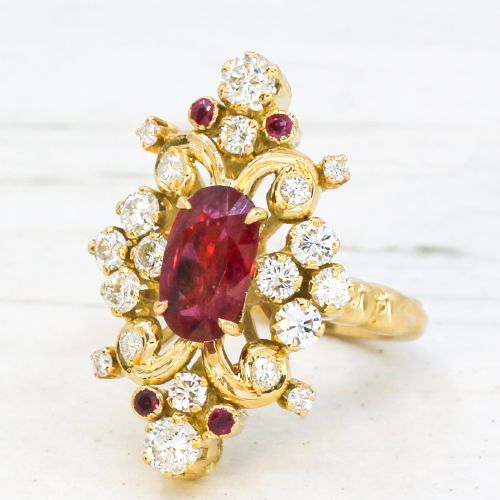
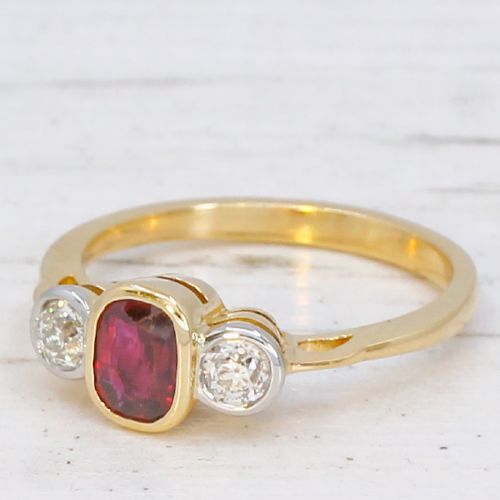


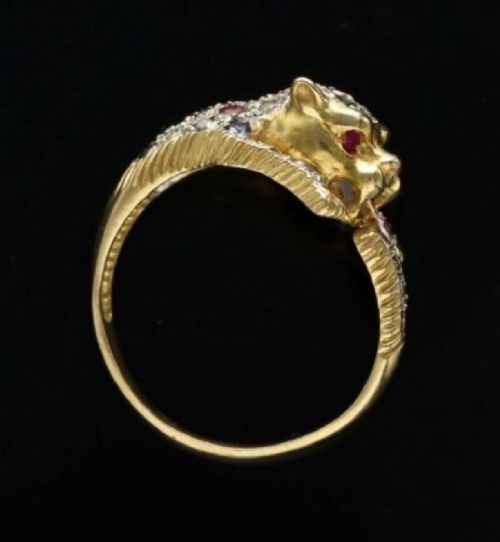
Retro Gold Ruby Ring
A retro gold ruby ring brings bold mid-century design and vibrant colour to the hand.
Retro Gold Ruby Ring
A retro gold ruby ring captures the confident and sculptural aesthetic popular from the nineteen forties through the nineteen sixties. These pieces often take the form of substantial cocktail rings, tank rings, and geometric clusters designed to command attention.
The materials reflect the tastes of the mid-century period, combining rich yellow gold, eighteen carat white gold, and occasionally twenty-two carat gold with striking red rubies and brilliant diamonds. While the majority of examples stem from the nineteen forties and fifties, occasional Edwardian and nineteen-sixties pieces also appear.
Buyers encounter various structural forms ranging from smooth bombé curves and architectural tank settings to intricate lattice patterns and animal motifs. Each design choice highlights the central red gemstones against polished precious metal.
How they were made
Goldsmiths utilised heavy castings of eighteen carat yellow and white gold to build the foundational architecture of these substantial rings. This generous use of metal provides the weight and structural integrity necessary for bold cocktail and tank designs.
Gemstones are securely claw set or flush mounted into the metal framework, frequently accompanied by brilliant or old cut diamonds. The combination of faceted rubies and contrasting diamond accents creates depth within the dense gold settings.
The inventory spans the Edwardian era through the nineteen forties, fifties, and nineteen-sixties modernist movements.
What varies in quality
The distinction between average and exceptional pieces lies in the origin and treatment of the gemstones, particularly when unheated Burmese rubies are present. Superior examples display vivid natural colour saturation paired with fine diamond clarity.
Execution of the metalwork defines the craftsmanship, with master workshops delivering clean geometric lines in tank styles and smooth volumetric curves in bombé rings. Heavier gold weight and signed mountings elevate the standing of a piece.
Kutchinsky
The Retro Gold Ruby Ring Glossary
- Tank ring
- A bold, architectural ring style originating in the nineteen forties, characterised by heavy metal planes resembling military vehicle treads. These chunky designs often combine yellow gold with platinum and pavé set diamonds.
- Bombé ring
- A swelling, dome shaped ring profile popular during the mid-century era that curves outward from the finger. This rounded volume allows rubies and diamonds to catch the light from multiple angles.
- Cocktail ring
- A large, showy ring designed to be noticed during evening social events. They typically feature prominent central rubies surrounded by clusters of smaller diamonds.
- Old cut diamond
- A precursor to the modern brilliant cut featuring smaller tables, higher crowns, and larger culets. These stones exhibit a softer, warmer scintillation under candlelight.
- Unheated ruby
- A natural gemstone that has undergone no thermal enhancement to improve its colour or clarity. Such stones are prized by collectors for their untampered geological origin.
Retro Gold Ruby Ring: Frequently Asked Questions
What defines a retro gold ruby ring?
These rings are defined by their bold mid-century architecture, heavy gold content, and prominent red gemstone focal points. They frequently utilise geometric tank styles or swelling bombé curves.
The aesthetic departs from delicate Edwardian work in favour of substantial proportions and dramatic visual weight. Yellow and white gold form the chassis for vibrant rubies and sparkling diamond accents.
How do I care for my ring?
Daily maintenance involves gentle cleaning with warm soapy water and a soft brush to remove oils from the ruby and diamond facets. Regular inspection of the claw settings ensures the stones remain secure within the heavy gold mounts.
Storing the piece separately prevents the harder diamonds from scratching the softer gold surfaces or adjacent gems. Professional checks every few years help maintain the structural integrity of vintage mountings.
Are synthetic rubies common in these?
Mid-century pieces occasionally incorporate synthetic rubies created through flame fusion or flux methods. These laboratory grown stones share the exact chemical and physical properties of natural corundum.
Jewellery makers utilised them alongside natural diamonds during periods when fine mined stones were scarce. Gemological testing distinguishes natural origin from synthetic growth.
How do I date a retro ring?
Dating relies on stylistic markers such as tank construction, asymmetrical modernist lattice work, or characteristic bombé contours. Hallmarks and maker stamps stamped into the inner shank provide official assay office symbols and years.
Cut styles of the accompanying diamonds and rubies also offer chronological clues. Edwardian antecedents display lighter filigree, whereas nineteen-fifties examples favour solid, volumetric gold.