
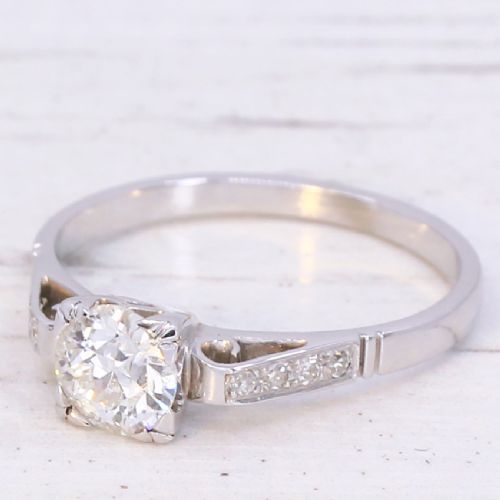
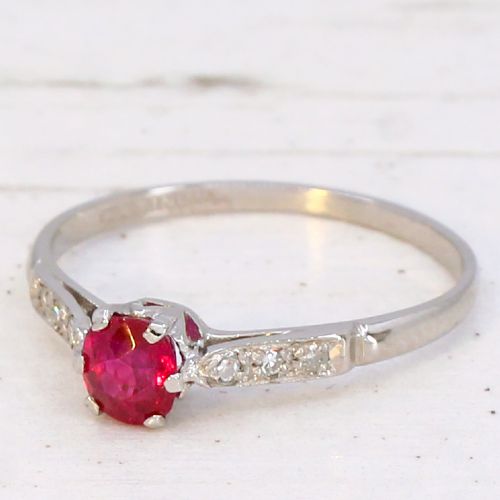
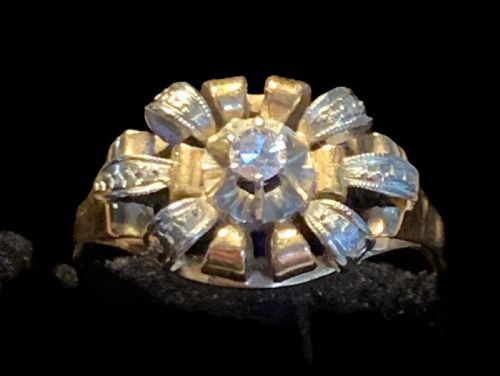


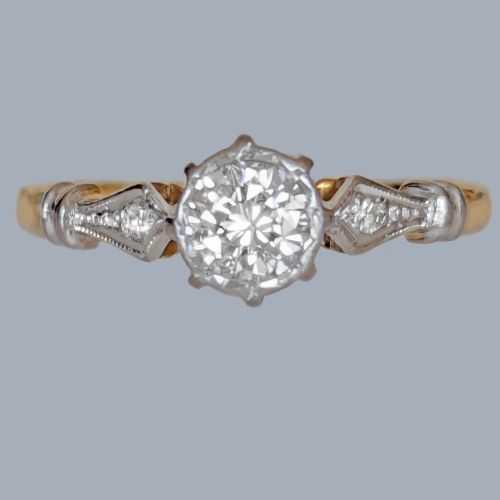


Retro Diamond Solitaire
These pieces of retro diamond solitaire jewellery bring together mid-century styles and older diamond cuts in rings designed for daily wear.
Retro Diamond Solitaire
A retro diamond solitaire typically centres on a single prominent stone set within a ring mounting originating from the 1920s through to the 1960s. These pieces span distinct periods including Art Deco, the 1940s retro era, and mid-century modern design, capturing shifting aesthetic preferences across decades.
The selections encountered here most frequently include engagement rings and fine dress rings featuring old cut, transitional cut, or old European cut diamonds. Settings vary from straightforward metal bands to detailed mountings incorporating secondary stones or enamel work.
Makers and designers from France and Britain produced these rings in platinum alongside various tones of gold, ranging from traditional yellow to white and rose variations. The resulting inventory reflects the wearable artistry of the mid-twentieth century.
Materials and Construction Methods
Craftsmen utilised durable precious metals such as platinum and 18ct gold, often combining white and yellow metals within a single mounting to highlight the central diamond. Shank designs range from standard polished bands to textured forms like bamboo shaping.
Central stones were shaped by hand during periods when old cut, transitional, and rose cut diamonds were standard, giving each gem distinct facets compared to modern brilliant cuts. Secondary details, including small rubies, sapphires, pearls, or enamel panels, were integrated into specific Art Deco and retro mountings.
The listings span five distinct decades from the 1920s to the 1960s, utilising platinum, yellow gold, white gold, and rose gold.
Evaluating Quality and Execution
The distinction between tiers rests upon the optical performance and proportions of the central diamond, alongside the complexity of the surrounding metalwork. Superior examples display harmonious integration between the stone and the mounting.
The weight, clarity grade, and colour distribution of the diamond dictate the upper echelon of these items. Expert metal manipulation, seen in French platinum and gold work, further elevates the piece.
Giboulet
The Retro Diamond Solitaire Glossary
- Old Cut Diamond
- A diamond cut by hand before modern machinery standardised facet proportions, typically featuring a smaller table and a higher crown. These stones exhibit a warm, deep luminescence under candle or incandescent light.
- Transitional Cut
- A diamond faceting style bridging old cut stones and modern brilliant cuts, dating primarily from the mid-twentieth century. It retains a chunky profile while beginning to adopt standardised modern geometry.
- Solitaire
- A piece of jewellery featuring a single gemstone, most commonly a diamond mounted on its own. This setting style directs visual attention entirely to the central stone.
- Art Deco
- A design style spanning the 1920s and 1930s characterised by geometric symmetry, clean lines, and architectural forms. Jewellery from this period often pairs diamonds with platinum or white gold.
- Platinum
- A dense, silvery-white precious metal prized for its strength and secure setting capabilities. It allows for delicate claw work without risking stone loss.
Retro Diamond Solitaire: Frequently Asked Questions
What is a retro diamond solitaire?
A retro diamond solitaire is a ring featuring a single diamond mounted in a style typical of the mid-twentieth century, spanning periods from the 1920s to the 1960s.
These pieces combine older diamond cutting styles with the metalwork aesthetics of Art Deco and post-war design eras.
How do old cut diamonds differ from modern ones?
Old cut diamonds were shaped by hand rather than by automated laser technology, resulting in smaller tables and wider facets. This gives them a softer, candlelit sparkle rather than the intense white brilliance of modern stones.
Each old cut diamond possesses unique proportions reflecting the hand of its original cutter.
How can I tell the period of a ring?
Dating relies on stylistic clues such as geometric Art Deco motifs, the heavy yellow and rose gold styling of 1940s retro pieces, or the clean lines of mid-century design. Stone cuts and metal purity stamps also provide concrete evidence of the era of manufacture.