

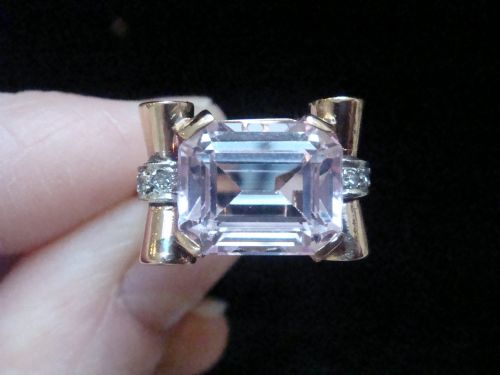


Retro Diamond Cocktail Ring
A retro diamond cocktail ring makes a bold statement with substantial stones and sculptural gold work designed to catch the eye.
Retro Diamond Cocktail Ring
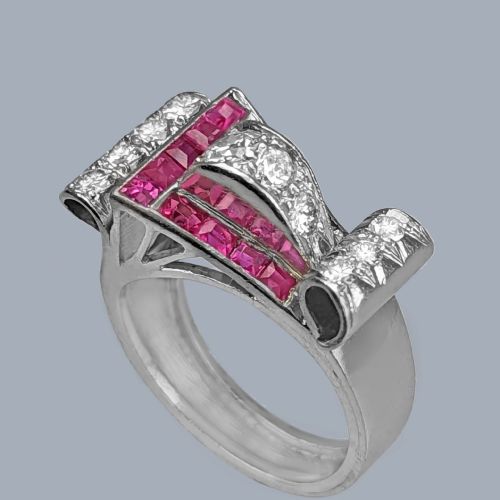
A retro diamond cocktail ring combines substantial central gemstones with architectural metalwork originating primarily from the mid-twentieth century. The selection spans robust mid-century designs, structural tank forms, and sweeping scroll panels characteristic of the nineteen-forties and fifties.
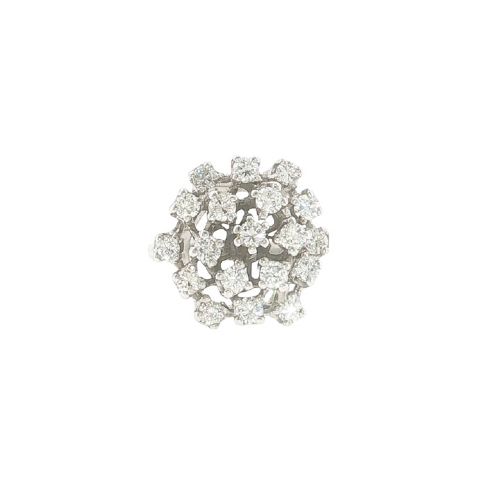
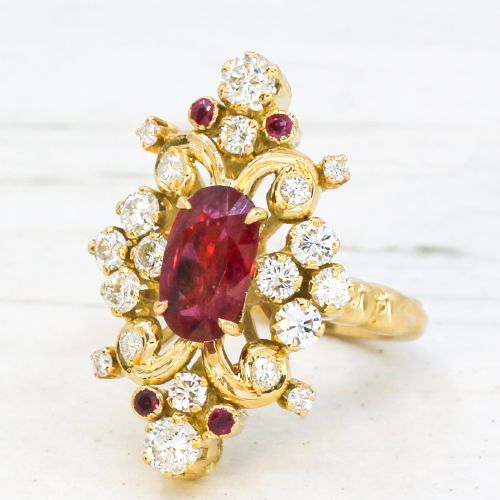
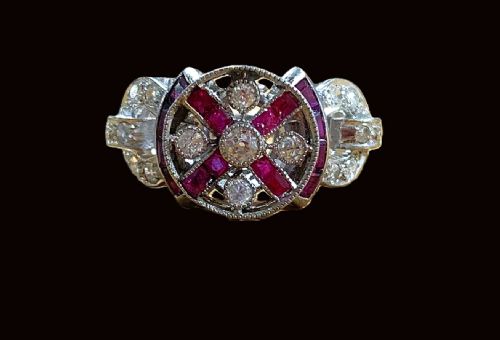
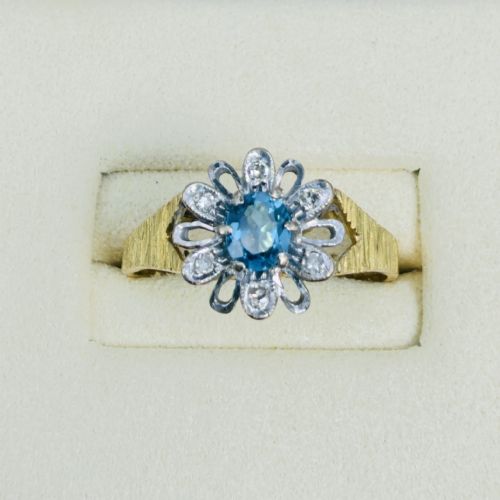
Midsized cluster configurations and high-domed cocktail shapes dominate the available selection, often pairing diamonds with deep-hued sapphires, aquamarines, or rubies. These pieces reflect the post-war shift toward expressive, large-scale jewellery intended for evening wear.
Origins stretch from British workshops to French ateliers and American studios, showing diverse influences from late art deco geometry to modernist fluidity. Buyers encounter both platinum settings and warm yellow or white gold structures housing old cut, brilliant cut, and transitional cut diamonds.
How They Were Made
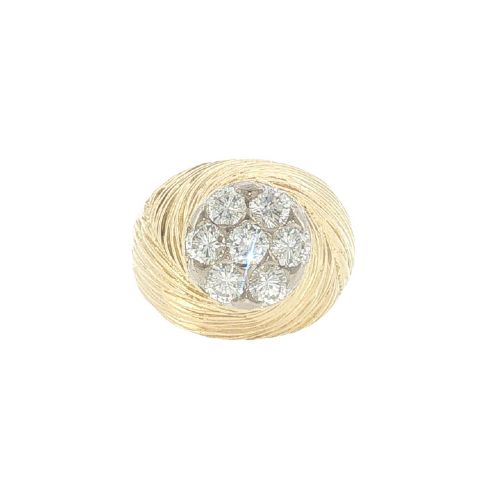
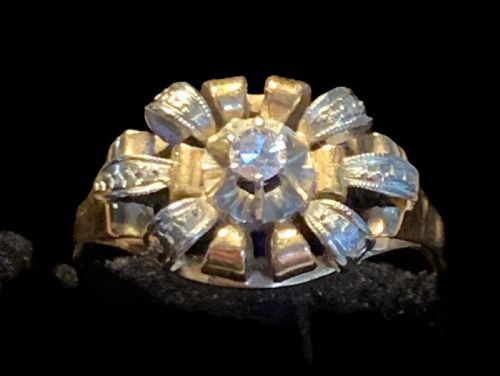
Artisans built these rings using heavy gauges of platinum and eighteen-carat or fourteen-carat gold to support oversized centre stones without bending. The metal was frequently worked into bold dimensional shapes, including ridged tank motifs and curved bombe profiles.
Gemstones were secured using grain settings, illusion plates, and heavy claw mounts designed to emphasise the visual weight of the face. Many examples integrate calibré-cut accent stones or sweeping diamond shoulders that frame central aquamarines, tourmalines, and Ceylon sapphires.
Retro Diamond Cocktail Ring Retail Price Guide 2026
Typical asking prices for retro diamond cocktail ring among the pieces listed under this phrase on Sellingantiques today, from the lower quarter to the upper quarter. They describe what is for sale here now, not the wider market.
Several rings conceal massive aquamarines and star sapphires exceeding thirty carats beneath their bold mid-century facades.
What Varies in Quality
The distinction between tiers rests upon the natural origin and saturation of the accompanying coloured stones, such as unheated rubies or large star sapphires. Heavier gold weights and substantial platinum structures also indicate higher production ambition.
Execution of complex geometry, such as symmetrical scroll panels and tightly paved diamond clusters, separates standard workshop output from exceptional designer pieces. The integrity of the original claw work and the crispness of the metal ridges dictate the lasting refinement of each ring.
Kutchinsky
The Retro Diamond Cocktail Ring Glossary
- Tank ring
- A heavy, angular style named for its resemblance to military treads, popular during the nineteen-forties. These pieces utilise flat planes of gold and stepped shoulders.
- Bombé ring
- A design characterised by a strongly domed or rounded profile that swells outward from the finger. The curved surface allows multiple small diamonds and coloured gems to catch the light from varied angles.
- Calibré cut
- Small gemstones shaped specifically to fit tightly together within a geometric channel or border. This technique creates continuous lines of colour alongside diamond pavé.
- Cluster ring
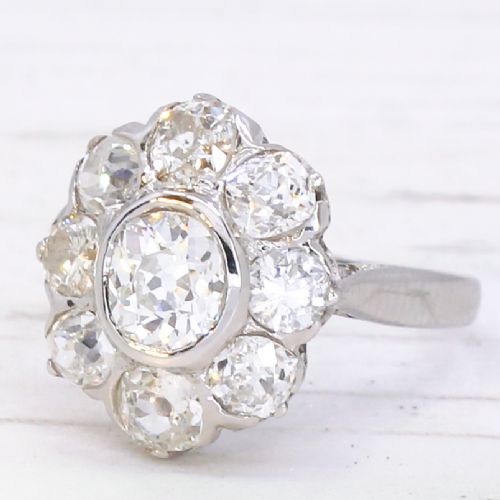
- A central gemstone surrounded by an orderly border of smaller diamonds or contrasting coloured stones. This arrangement maximises visual impact and perceived gemstone spread.
Retro Diamond Cocktail Ring: Frequently Asked Questions
How do I wear a cocktail ring daily?
These prominent statement pieces require care due to their elevated settings and large central aquamarines or sapphires. Reserve them for occasions where heavy manual tasks are absent to protect the prongs.
Pair them simply to let the sculptural gold work and diamond clusters remain the focal point of the hand. Regular professional checks ensure the heavy stones stay secure within their original mountings.
What defines the retro jewellery era?
The aesthetic spans the nineteen-forties and nineteen-fifties, defined by heavy gold usage, geometric ribbons, and three-dimensional floral or scroll motifs. Platinum returned to favour alongside warm yellow and white gold after wartime restrictions eased.
Stones grew larger and more daring, mixing deep blue sapphires and aquamarines with bright diamonds. This period embraced volume and architectural presence over delicate Edwardian wirework.
How do I identify a tank ring?
Tank styles feature broad, flat planes of gold or platinum that mimic military machinery and heavy treads. Stepped shoulders and thick ridged bands give these pieces an unmistakable architectural weight.
Diamonds and rubies are often flush-set or mounted in central raised blocks surrounded by heavy gadrooning. This geometric construction makes them heavier and more rigid than standard dress rings.
Are coloured stones natural in these rings?
Many listings feature untreated sapphires, rubies, and aquamarines originating from sources like Ceylon or Burma. Gemstone grading follows historical standards of the mid-century period.
Inclusions and natural colour zoning are common characteristics that confirm the age and origin of these vintage gems. Documentation often highlights unheated stones and high carat weights.