





Retro Cocktail Cart
A retro cocktail cart brings instant glamour to entertaining, pairing polished chrome and glass with ingenious mobility for serving drinks in style.
Retro Cocktail Cart
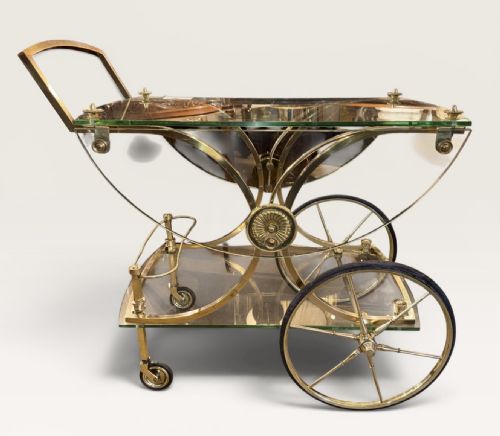
When you search for a retro cocktail cart, you encounter an array of drinks trolleys, hostess trolleys, and bar carts designed for home entertaining. These pieces span the early twentieth century, drawing principally on Art Deco and Mid-Century aesthetics from British and French makers.
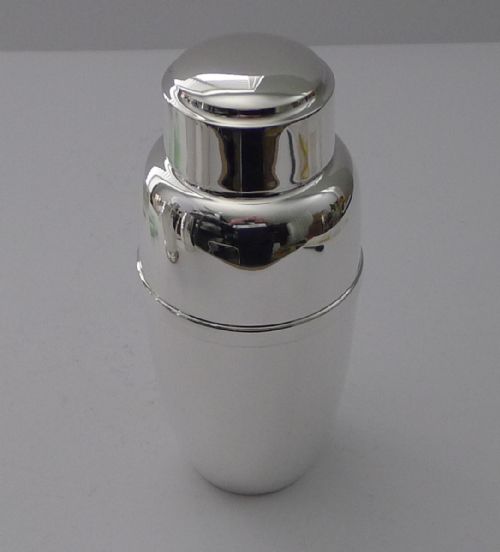
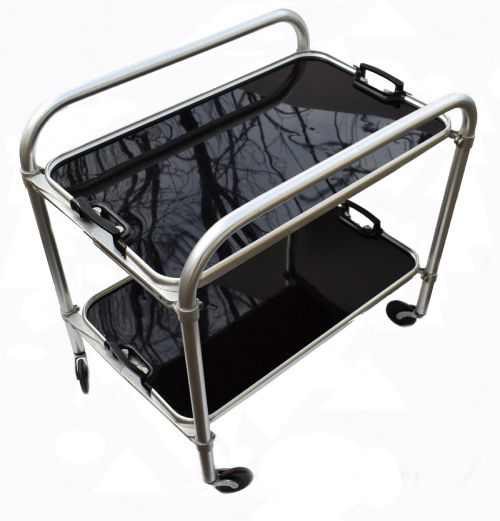
The most common forms on this page are drinks trolleys featuring multiple tiers, often constructed with materials like chrome, wood, and glass. Alongside mobile carts, the selection includes related barware such as silver-plated cocktail shakers and serving trays.
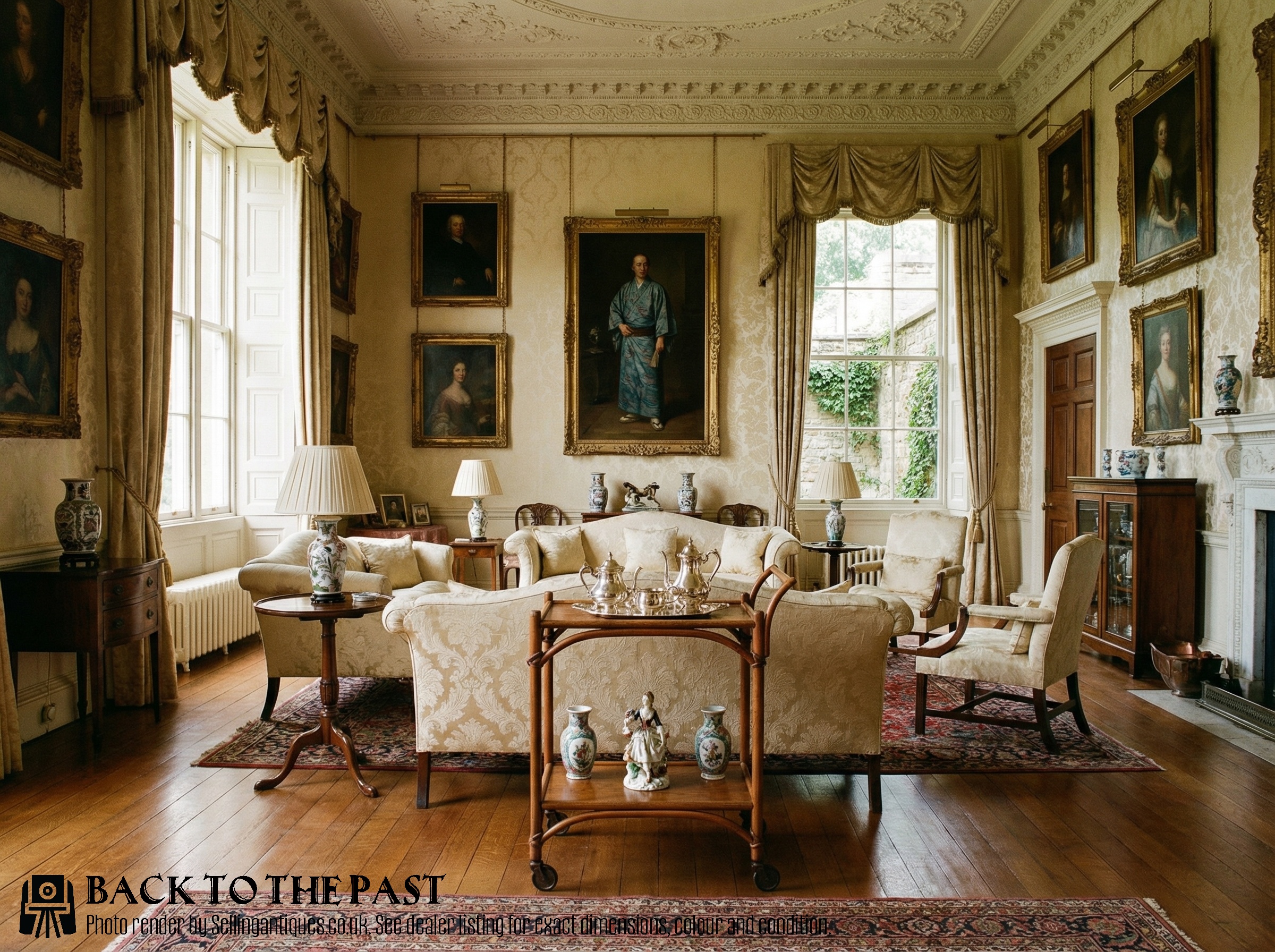
Origins range from English workshops to French designers, with periods stretching from the 1920s through to the 1960s. Buyers will find both streamlined modernist chrome frames and warmer cane-bound beech or walnut structures.
Construction and materials
Metalwork forms the structural backbone of many pieces, utilising chrome, brass, and aluminum to achieve sleek, reflective surfaces. Glass panels and cobalt blue mirror glass are frequently set into these metal or wooden frames for serving surfaces.
Woodworking traditions also play a substantial role, employing walnut, beech, and cane binding to create textured, organic forms. Silver plating is standard for the accompanying cocktail shakers and trays, providing a durable and lustrous finish.
Materials recorded across the inventory include glass, silver plate, chrome, metal, wood, cork, brass, and plastic.
Judging quality and execution
Quality rests in the integrity of the materials and the precision of the assembly, from securely bound cane to tightly joined metalwork. Pieces originating from named makers or established silversmiths exhibit superior finishing on handles, rims, and joints.
The choice of secondary materials, such as heavy silver plating over base metal or the inclusion of cobalt blue mirror glass, elevates a piece. Structural stability in multi-tiered trolleys and carts distinguishes everyday utilitarian items from finer examples.
Maison Bagues·Sudre·J. B. Chatterley & Sons·James Dixon & Sons·Lusty of Leicester·C S Green & Co.·Gaskell & Chambers
The Retro Cocktail Cart Glossary
- Art Deco
- A design style characterised by sleek geometric shapes, streamlined forms, and modern industrial materials popular in the 1920s and 1930s.
- Hostess Trolley
- A mobile serving cart equipped with multiple tiers or shelves designed specifically for transporting drinks and glassware.
- Silver Plate
- A thin layer of silver applied to a base metal core, commonly used for cocktail shakers and trays to give the appearance of solid silver.
- Modernist
- An aesthetic movement prioritising function, clean lines, and the honest display of materials over ornate historical decoration.
- Barware
- Equipment and utensils used for mixing and serving drinks, including shakers, trays, and novelty cocktail sticks.
Retro Cocktail Cart: Frequently Asked Questions
What is the difference between a drinks trolley and a bar cart?
Drinks trolleys and bar carts both serve the primary function of mobile hospitality, though terminology often depends on origin and period. Trolleys frequently emphasise tiered shelving and wheel mobility for moving refreshments across rooms.
Bar carts often share similar metal and glass construction but may feature specialised bottle rings or handle configurations tailored for cocktail preparation.
How do I identify an Art Deco trolley?
Art Deco trolleys are defined by geometric symmetry, clean lines, and the use of modern industrial materials like chrome and aluminium. They frequently incorporate stepped designs and contrasting glass surfaces.
Earlier Victorian styles relied on heavy carved wood, whereas Art Deco embraced the machine age with reflective metallic finishes and unadorned structural honesty.
What materials were used for vintage cocktail shakers?
Vintage cocktail shakers on this page are predominantly constructed from silver-plated metal, sometimes paired with glass bodies or cobalt blue inserts. Makers utilised silver plating to provide a bright, reflective finish suitable for formal entertaining.
These shakers often bear the marks of established silversmiths and manufacturing firms active during the 1930s and 1940s.
How do I care for a chrome and glass trolley?
Chrome and glass surfaces require gentle cleaning with non-abrasive cloths and mild glass cleaner to preserve the reflective metallic sheen. Avoid harsh chemical scouring pads that can scratch the chrome plating or dull the glass.
For wooden or cane elements, a soft dry cloth is sufficient to maintain the natural grain and prevent moisture damage.