
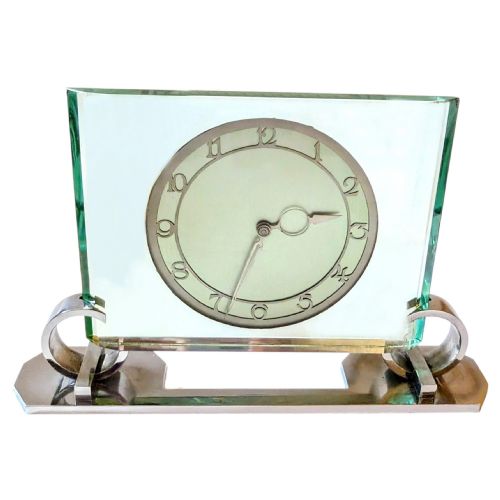


Retro Chrome Desk Clock
A retro chrome desk clock brings striking industrial gleam and geometric form to a workspace.
Retro Chrome Desk Clock
When you search for a retro chrome desk clock, you find heavy metal timepieces that span from the 1920s through the 1950s. Most examples encountered here belong to the Art Deco period, featuring clean lines and polished metal finishes designed for desktops and mantelpieces.
These objects range from straightforward wind-up timekeepers to complex novelty pieces incorporating moving ships, promotional advertising, or calendar functions. English makers predominate, alongside continental European workshops producing similar modernist designs.
Construction and materials
Makers built these desk clocks using polished chrome plating over base metals, often combining the shiny metallic surfaces with contrasting materials like dark bakelite, mirrored glass, marble, or wood veneer. Dials frequently sit behind protective glass panels within geometric cases.
Movements varied from standard eight-day spring mechanisms to electric systems and early electro-mechanical designs. Cabinets relied on heavy castings and architectural shapes typical of early twentieth-century industrial manufacture.
Listings span four distinct decades from the 1920s to the 1950s, utilising chrome, glass, wood veneer, and marble.
Assessing quality
Quality rests on the weight of the metal casing, the complexity of the movement, and the integrity of the materials used in the housing. Pieces featuring combined media such as marble bases or intricate bakelite mouldings sit higher in the range than plain metal housings.
The presence of specialised functions, such as rotating indicator drums, Westminster chimes, or promotional garage branding, separates standard timekeepers from exceptional collector pieces.
Smiths Clockmakers·Vitascope Isle Of Man·A.L. Davenport·Bayard·Blangy·Kienzle
The Retro Chrome Desk Clock Glossary
- Art Deco
- A design style prevalent in the 1920s and 1930s characterised by geometric shapes, streamlined forms, and modern industrial materials.
- Bakelite
- An early form of synthetic thermosetting plastic frequently moulded into dark, glossy clock cases during the interwar years.
- Wind up
- A mechanical movement powered by a mainspring that requires periodic manual tightening with a key or attached winder.
- Mantel clock
- A portable clock designed to sit on a fireplace mantel or desk, typically larger than a pocket travel alarm.
Retro Chrome Desk Clock: Frequently Asked Questions
How do I wind an 8 day clock?
An eight-day movement requires a key or integrated winder to tension the mainspring roughly once a week to maintain accurate timekeeping.
Take care not to over-wind the mechanism when resistance is felt at the end of the spring travel.
Were these clocks used in offices?
Many of these pieces served as desk accessories in professional offices, domestic studies, and commercial workspaces during the mid-twentieth century.
Promotional examples were also produced for automotive garages and industrial businesses for counter display.
How do I clean chrome and bakelite?
Chrome surfaces benefit from gentle wiping with a soft dry cloth to preserve the metallic shine without abrasive polishes.
Bakelite cases require mild soapy water on a damp cloth, avoiding harsh chemical solvents that can damage the vintage plastic.
What is a mystery clock?
A mystery clock is a novelty timepiece where the mechanism driving the hands is concealed or appears unusual, such as floating indicators.
These decorative pieces relied on clever internal gearing to create an optical illusion for the viewer.