




Retro Brass Clock
A retro brass clock brings mid-century or art deco design into a room while keeping reliable time on a desk or mantel.
Retro Brass Clock
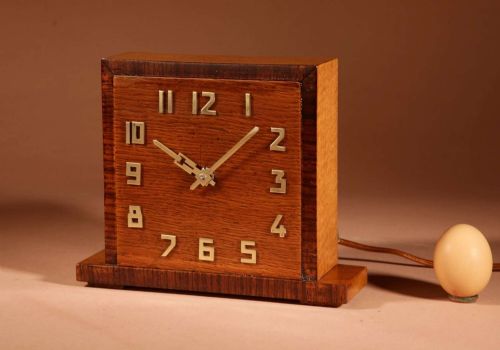
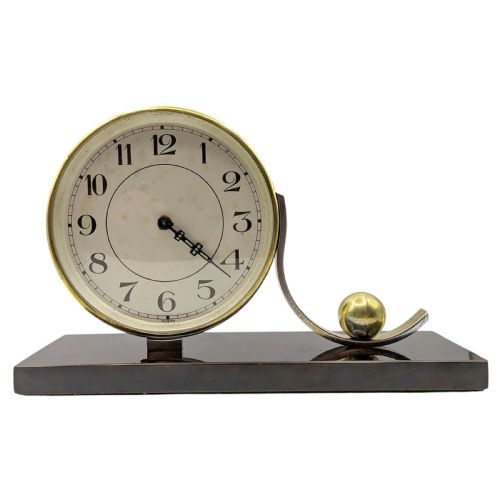
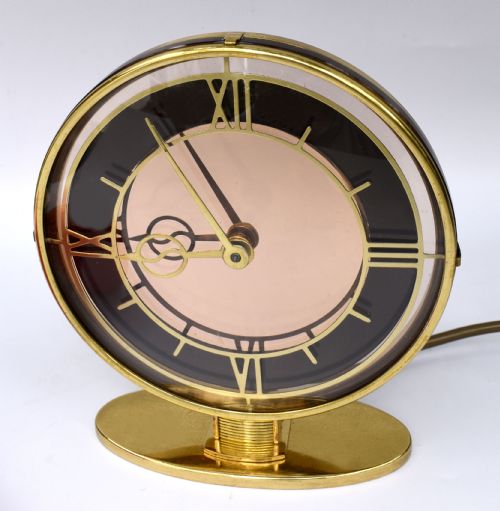
A retro brass clock encompasses functional timepieces spanning the 1920s to the 1960s, drawing heavily on art deco and mid-century modern aesthetics. These pieces serve as practical desk, mantel, wall, or table clocks.
The selection ranges from military pieces like RAF officers' mess clocks to elegant domestic items featuring brass, gilt brass, and mirrored glass. Buyers will frequently encounter compact desk clocks and striking mantel clocks.
Makers represented include prominent firms such as Jaeger-LeCoultre, Smiths, and Kienzle, alongside specialised pieces from Amsterdam school and Venetian workshops. Each reflects the design sensibilities of its specific decade.
Materials and construction
Brass and gilt brass form the structural core of many casings, paired frequently with glass dials and mirrored surfaces. Wood elements such as oak, rosewood, walnut, elm, and burr walnut appear extensively in mantel and desk housings.
Certain designs incorporate alternative industrial materials like bakelite for bases alongside nickel plating. Movements vary from mechanical 30-hour and 8-day systems to early electrical and electro-mechanical wind mechanisms.
Listings span the 1920s to the 1960s, featuring art deco and mid-century styles constructed from brass, glass, oak, and bakelite.
Factors of quality
Quality differentiates through the complexity of the movement and the reputation of the maker, such as multi-jewelled mechanisms by Jaeger-LeCoultre compared to standard utilitarian clocks. Signed dials and specialised complications like alarm functions or world time indicators elevate a piece.
Material selection and craftsmanship also drive distinction, moving from simple metal casings to intricate combinations of burr walnut, rosewood, mirrored glass, and finely cast gilt brass.
Imhof·ZENITH·ELLIOTT of LONDON·Jaeger LeCoultre·Kienzle
The Retro Brass Clock Glossary
- Bakelite
- An early synthetic plastic commonly used for clock bases in the art deco period. It offers a smooth, durable finish.
- Mantel clock
- A decorative clock designed to sit on the shelf above a fireplace. These domestic timepieces often incorporate wood and brass.
- Gilt brass
- Brass coated with a thin layer of gold or gold-coloured finish. This treatment provides a bright, reflective surface.
- Bulkhead clock
- A rugged timepiece originally mounted on the walls of ships. These utilitarian clocks often feature robust metal housings.
- Mechanical wind
- A clock movement powered by a mainspring that requires manual winding with a key or crown. Many vintage models rely on this traditional system.
Retro Brass Clock: Frequently Asked Questions
How do I wind a mechanical desk clock?
Most mechanical models utilise a key or a crown to tension the internal mainspring by hand.
Care should be taken not to overwind the mechanism, as this can damage the spring over time.
Where should I place a mantel clock?
These timepieces suit flat surfaces such as mantels, sideboards, and office desks.
Ensure the location is stable and away from excessive moisture or direct heat sources.
How do I date an art deco clock?
Dating relies on stylistic markers such as geometric forms, mirrored glass, and materials like bakelite.
Maker signatures and patent marks stamped on the movement or dial also help narrow the period.
Are these clocks suitable for daily use?
Many vintage models function reliably for daily timekeeping once serviced.
Some specialised mechanisms, such as 30-hour or 8-day movements, simply require regular winding routines.