





Retro Bar Accessories
Retro bar accessories bring period style to entertaining, offering practical elegance through cocktail shakers, novelty stick sets, and soda syphons.
Retro Bar Accessories
Retro bar accessories encompass the essential metallic and glass equipment used for mixing drinks and serving guests during the earlier decades of the twentieth century. When searching for retro bar accessories, buyers encounter everything from cocktail shakers to soda syphons and serving trays. The selections span major design movements such as Art Deco and Mid-Century Modern.
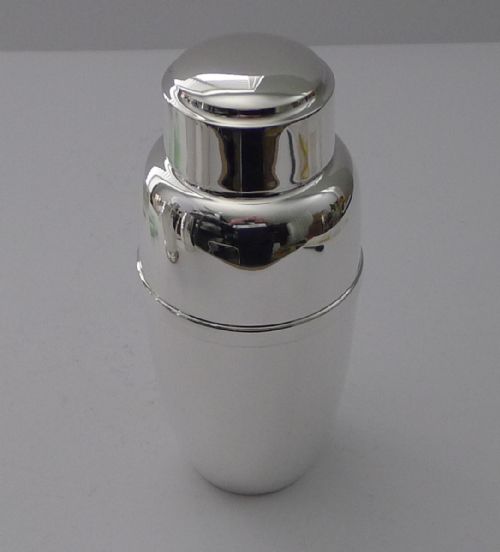
The dominant forms on this page include silver-plated cocktail shakers and novelty cocktail stick sets featuring figural holders. These items originate from English, French, Swiss, and German workshops active between the 1920s and the 1960s. Each piece reflects the social habits of twentieth-century cocktail culture.
Materials and construction
Manufacturers built these objects using combinations of silver plate, electroplated nickel silver, chrome, and metal foundations paired with contrasting elements of glass, wood, and early plastics. Many cocktail shakers incorporate internal mechanisms like rolling mixer recipes or integral lemon squeezers formed from the primary metal body. Novelty items often combine moulded Bakelite with polished chrome to create distinct figural holders for individual cocktail sticks.
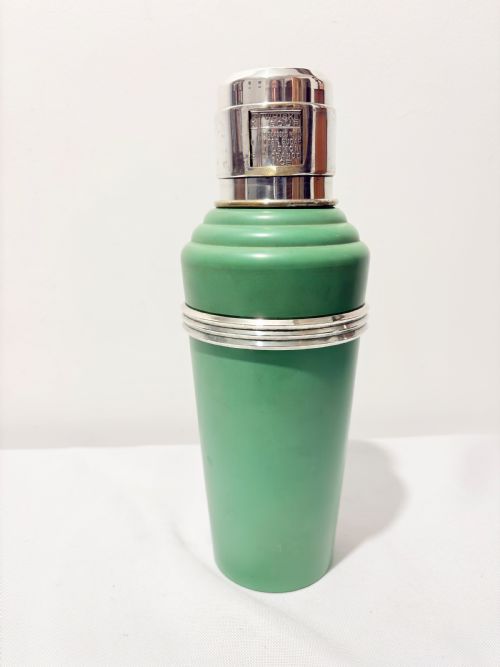
Makers shaped the metallic components through spinning, stamping, and silver plating before applying detailed cast mounts for handles and novelty figures. Glass bodies were frequently fluted or coloured in shades like green and fitted with metal collars and pouring spouts. The construction balances structural durability with polished decorative appeal suitable for domestic entertaining.
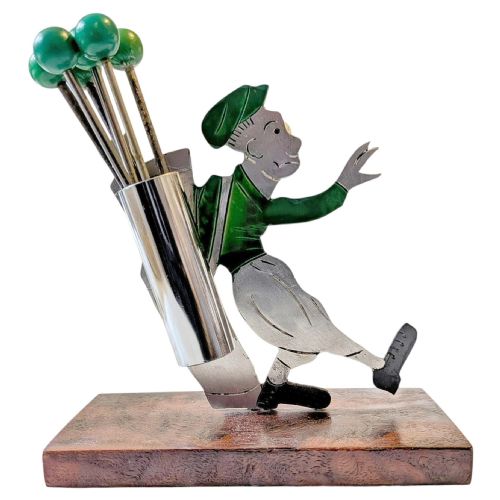
Some French cocktail stick sets depict a comical golfer with his caddy, proving that mid-century hosts enjoyed a sporting chuckle with their evening dry martini.
Assessing quality and manufacture
Quality in these objects rests upon the weight of the metal base, the crispness of the casting in novelty figures, and the integrity of the silver plating. Superior shakers exhibit balanced proportions, secure fitting lids, and clear maker stamps or hallmarks from established silversmiths.
Sudre·J. B. Chatterley & Sons·James Dixon & Sons·William Suckling·C S Green & Co.·Gaskell & Chambers·Lutz & Weiss
The Retro Bar Accessories Glossary
- Silver plate
- A thin layer of silver applied to a base metal core such as nickel silver or copper. This technique allowed manufacturers to produce lustrous tableware at a lower cost than solid silver.
- Bakelite
- An early form of synthetic thermosetting plastic prized for its durability and rich colour range. It appears frequently in handles, bases, and novelty bar items.
- Soda syphon
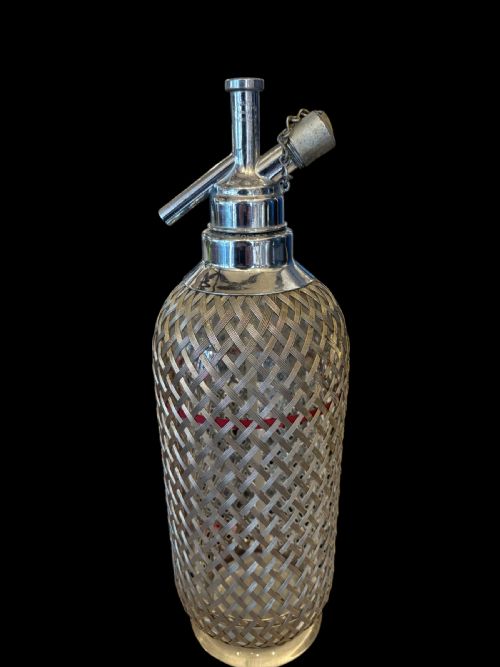
- A pressurized bottle designed to dispense carbonated water through a siphon tube. These vessels often feature wire mesh coverings or glass bodies.
- Cocktail shaker
- A specialised container used to mix beverages by shaking with ice. Period examples often include built-in strainers and recipe indicators.
Retro Bar Accessories: Frequently Asked Questions
How do I clean silver-plated barware?
Clean silver plate gently using a soft cloth and a non-abrasive silver polish formulated to protect thin metal layers. Avoid harsh chemical immersion that can strip the plating.
Wash glass components separately in warm soapy water and dry thoroughly to prevent water spots on the metal mounts.
Are vintage cocktail shakers still usable?
Many vintage shakers remain functional for mixing drinks provided the internal seals and metal surfaces are clean and intact. Check that lids and caps remove smoothly before use.
Hand wash only to preserve the historic finish and avoid placing plated items in a modern dishwasher.
What is Bakelite and how do I identify it?
Bakelite is a dense early plastic developed in the early twentieth century that does not melt when exposed to heat. It often exhibits deep, opaque coloration in shades of green, black, or brown.
Collectors sometimes use specialised testing cloths or warm water tests to confirm the material composition.
How can I date my bar accessories?
Dating relies on maker marks, patent numbers, and stylistic cues associated with Art Deco or Mid-Century Modern design periods. Material choices like early plastics also help narrow the production decade.
Consulting manufacturer stamps on the base of metal shakers provides the most reliable chronological indicator.