



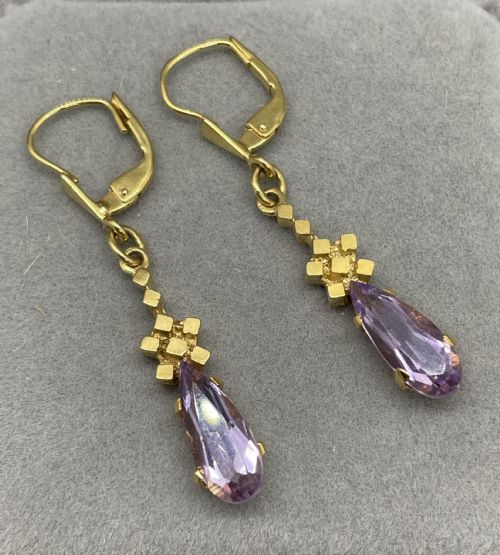

Retro Amethyst Jewellery
These retro amethyst jewellery pieces bring bold purple stones and heavy metalwork together, offering a striking statement for everyday wear.
Retro Amethyst Jewellery
You are most likely to meet gold settings in both nine-carat and fourteen-carat purity, alongside silver examples and distinctive Mexican modernist silver work. The stones themselves range from massive step-cut amethysts exceeding twenty-eight carats to paste substitutes and accent gems like diamonds, emeralds, sapphires, and garnets.
How they were made
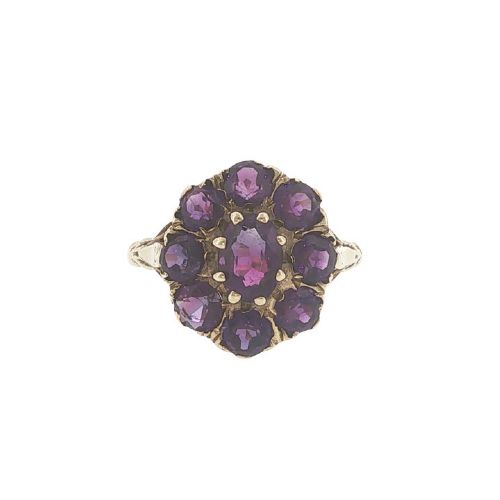
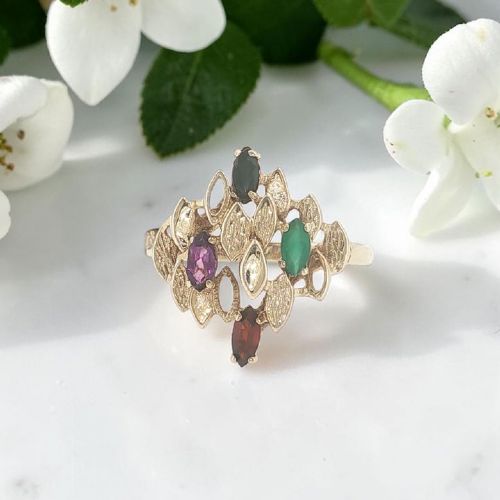
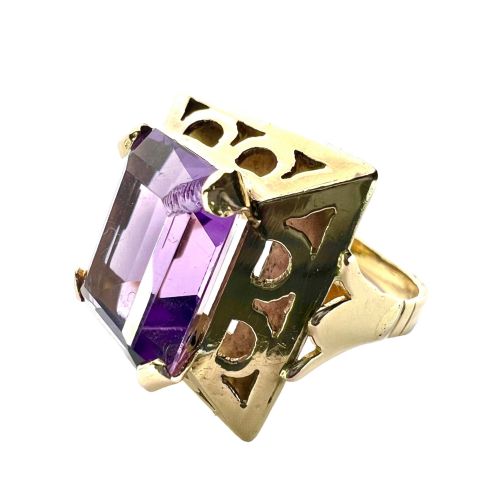
The construction relies heavily on cast and fabricated yellow gold, particularly in fourteen-carat and nine-carat weights, designed to support large central stones securely. Settings often employ robust cluster and spray formations that give the metalwork a sculptural presence.
Makers combine natural quartz with diamonds, emeralds, sapphires, and garnets, alongside glass paste for coloured sparkle. Silver is also utilised, notably in Mexican modernist brooches that showcase hand-worked metal alongside the purple gems.
Retro Amethyst Jewellery Retail Price Guide 2026
Typical asking prices for retro amethyst jewellery among the pieces listed under this phrase on Sellingantiques today, from the lower quarter to the upper quarter. They describe what is for sale here now, not the wider market.
Some stones tip the scales at over twenty-eight carats, ensuring your hand gets a proper workout.
What varies in quality
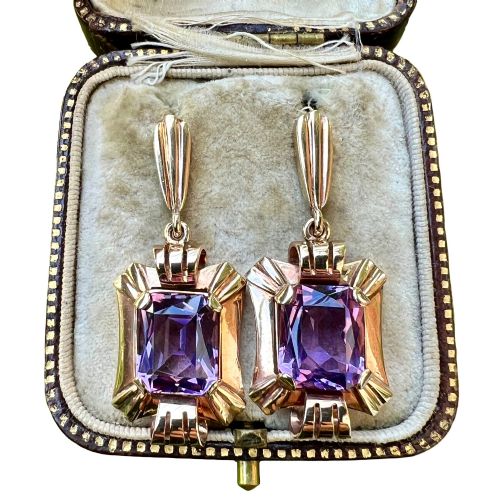
Quality separates pieces by the sheer scale and cut of the central amethyst, where massive step-cut stones command attention through depth and clarity rather than subtle sparkle. The weight and thickness of the gold settings also distinguish substantial dress rings from lighter mounts.
The integration of secondary stones, such as diamonds or contrasting gems like emeralds and sapphires, elevates the design complexity. Finer craftsmanship shows in the balanced proportions of heavy clusters, spray brooches, and substantial drop earrings.
Beto
The Retro Amethyst Jewellery Glossary
- Step-cut
- A gemstone cutting style featuring broad, flat facets arranged in parallel rows, commonly used on large amethysts to emphasise deep purple colour. This cut showcases the internal clarity of the quartz.
- Cluster ring
- A ring design featuring a prominent central stone surrounded by a tight grouping of smaller gems or diamonds. This style maximises visual impact on the hand.
- Paste
- A form of dense, lead-grade glass hand-cut and polished to imitate genuine gemstones. Historic paste pieces possess their own distinct collectable value.
- Spray brooch
- A decorative pin shaped like a floral spray or bursting geometric arrangement, popular in mid-century design. These pieces often feature central stones with radiating metal elements.
- Mexican modernist
- A distinct design movement utilising sterling silver and native stones to create bold, sculptural wearable art. Pieces often reflect indigenous motifs and heavy hand-wrought construction.
Retro Amethyst Jewellery: Frequently Asked Questions
What periods do these pieces come from?
The selection spans the 1940s retro era through to the 1950s, 1960s, and later twentieth-century examples up to 1975. You will also find pieces referencing Edwardian styles alongside Mexican modernist creations.
Each period brings distinct metal weights and design motifs, from chunky 1940s gold work to later mid-century cocktail styling.
Are the amethysts natural or synthetic?
The stones include natural quartz varieties alongside glass paste substitutes designed to mimic the appearance of genuine amethyst. Listings specify when paste or alternate materials are present in the piece.
Examining the stone under magnification reveals natural inclusions or the bubbles typical of historic glass paste.
How do I wear a cocktail ring?
Cocktail rings and large dress rings are designed for prominent wear on the hand, often featuring stones exceeding twenty carats. Their substantial scale makes them ideal as standalone statement pieces for evening or special daytime use.
Pair them with simpler attire to let the heavy gold settings and deep purple quartz take centre stage.
What metals are used in these settings?
Settings primarily utilise nine-carat and fourteen-carat yellow gold, alongside eighteen-carat gold and sterling silver. The choice of metal often reflects the manufacturing traditions of the period, from mid-century European goldwork to Mexican silver.
Heavier gold weights provide the structural support necessary for massive step-cut quartz and cluster formations.