



Restoration Walnut Furniture
Restoration walnut furniture brings the deep, tactile warmth of the seventeenth century into a room through rich timbers and disciplined craftsmanship.
Restoration Walnut Furniture
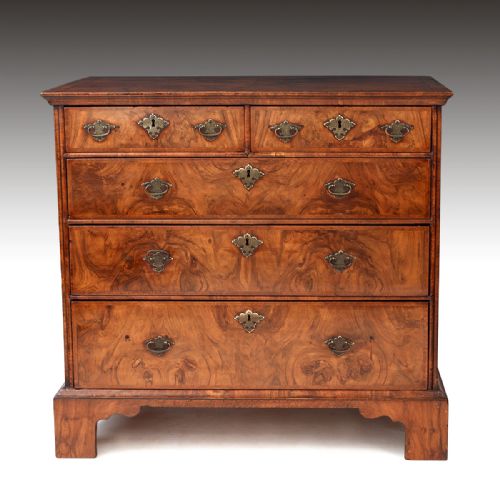
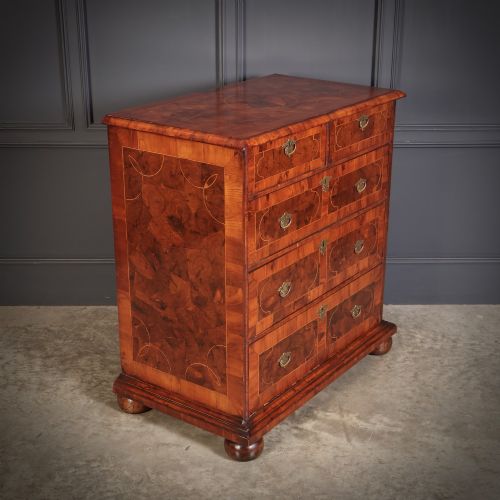
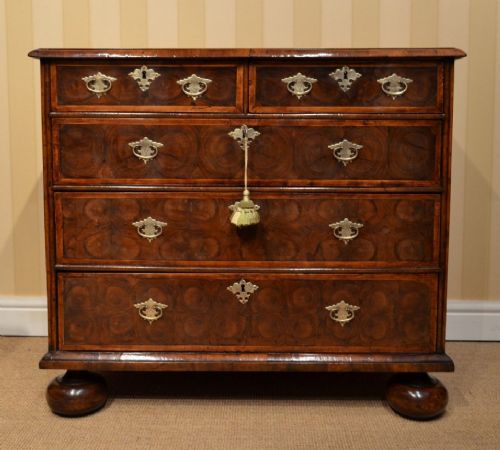
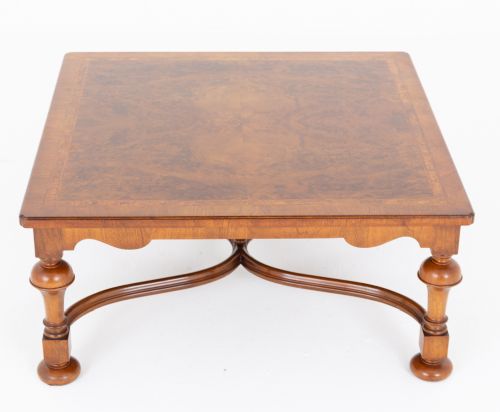
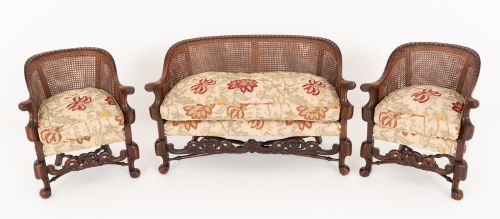
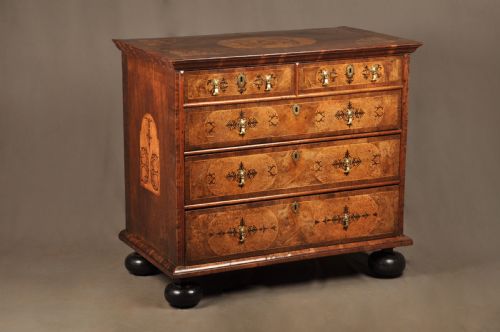
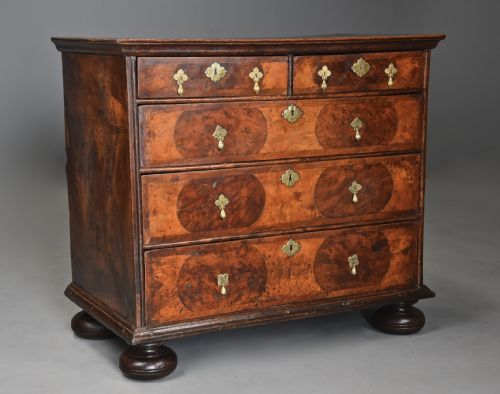
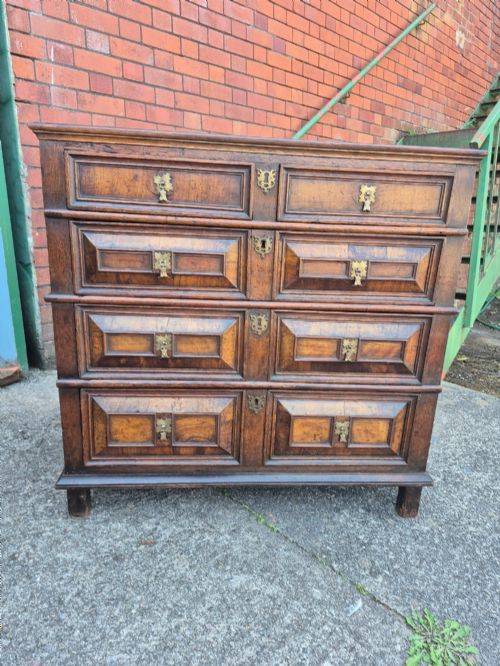
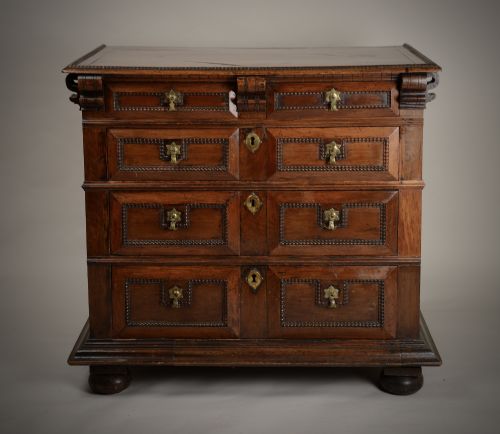
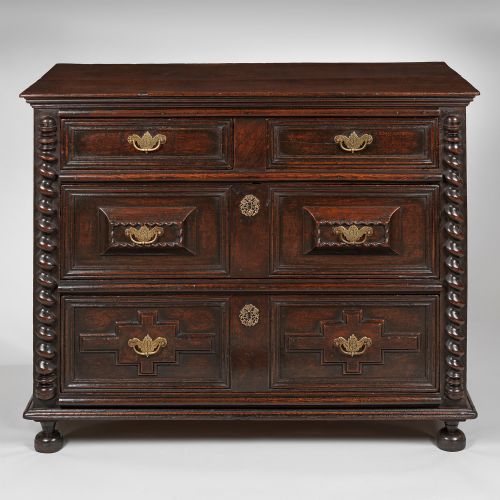
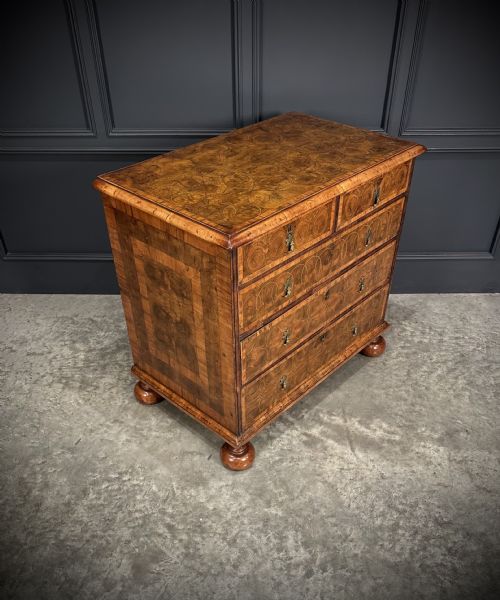
Restoration walnut furniture encompasses the heavy chests, cabinets, and seating associated with the seventeenth century and the William and Mary periods. These pieces often feature geometric paneling, oyster veneers, and structured carcases designed to display the natural grain of the wood. Chests of drawers and cabinets on stand dominate the selection, alongside occasional chairs and commodes.
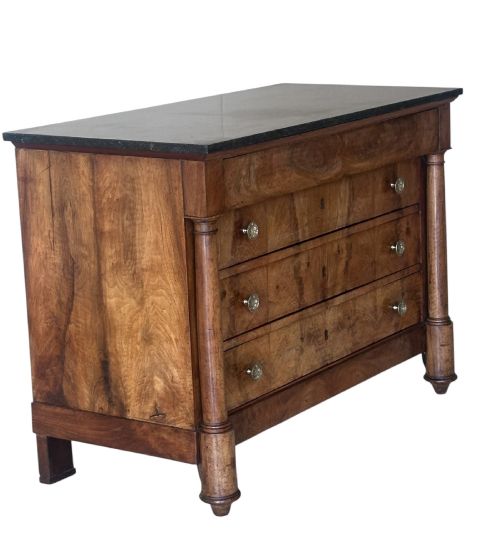
Buyers will encounter seventeenth-century originals alongside later nineteenth-century revivals and decorative interpretations. The forms remain anchored in dark woods, architectural mouldings, and intricate marquetry inlays that recall seventeenth-century baroque design. Regional variations include French commodes and Dutch credenzas alongside English oak and walnut constructions.
What varies in quality
Quality in restoration walnut furniture rests primarily upon the integrity of the timber surfaces and the precision of the veneer work. Pieces that retain their original oyster cutting, without extensive replacement sections or mismatched grain patterns, hold greater visual coherence. The sharpness of the marquetry inlay and the depth of the natural patina further distinguish superior examples from later copies.
Structural harmony also dictates the standing of a piece, particularly in how well the carcase holds its weight without sagging drawers or misaligned doors. The quality of secondary woods used in internal framing, alongside untouched brass hardware, separates utilitarian output from ambitious cabinet work.
Listings feature seventeenth-century and nineteenth-century pieces constructed from walnut, burr walnut, oak, and olive wood.
The Restoration Walnut Furniture Glossary
- Oyster veneer
- The practice of slicing small branches across the grain to produce circular or oval wooden discs that form patterned surfaces. This technique creates a distinctive repeating eye motif across drawer fronts.
- Marquetry
- The art of forming decorative patterns by fitting together small pieces of different coloured veneers. Arabesque and seaweed variations use intricate scrolling designs.
- Carcase
- The main structural body or shell of a piece of furniture, such as a chest of drawers or cabinet, before drawers and doors are fitted. It is typically built from sturdy timbers like oak.
- Commode
- A low chest of drawers or cabinet originating in France during the seventeenth and eighteenth centuries. These pieces often incorporate burr walnut and marble tops.
- Escutcheon
- A flat plate of brass surrounding a keyhole to protect the surrounding wood from wear. They are often pierced and chased with decorative designs.
Restoration Walnut Furniture: Frequently Asked Questions
How do I care for walnut furniture?
Keep walnut furniture away from direct sunlight and steady sources of artificial heat to prevent the wood and delicate veneers from drying out. Apply a traditional wax polish sparingly to nourish the grain and maintain the protective surface sheen.
Avoid using silicone-based sprays or harsh chemical cleaners, as these can strip the historical patina. Dust the piece regularly with a soft, dry cloth to prevent particulate accumulation in the carved details and veneer joints.
Are these pieces suitable for daily use?
Most restoration walnut furniture was built to serve practical domestic functions, making sturdy chests and chairs well-suited to contemporary living. Drawers and doors should operate smoothly without requiring excessive force during routine access.
Delicate surfaces such as oyster veneer and marquetry require a degree of mindfulness regarding moisture and heavy objects. Placing coasters and pads underneath items on tabletops preserves the antique finish from rings and scratches.
How do I spot a later revival piece?
Nineteenth-century revival pieces often display machine-cut internal elements and standardised screw fixings that differ from seventeenth-century hand-cut joinery. The timber choice and colour tone in later copies can also appear more uniform across the entire carcase.
Examine the backboards and interior drawer linings for tool marks and timber shrinkage that align with genuine age. Patina on an older piece develops naturally over centuries through handling and oxidation rather than artificial distressing.
What is a cabinet on stand?
A cabinet on stand is a two-part furniture form featuring a heavy enclosed storage cabinet resting upon a distinct supporting base with legs. This elevated design showcases decorative wood grains and marquetry at eye level while keeping dampness away from the floor.
The lower stand typically incorporates turned legs connected by stretchers to support the considerable weight of the upper compartment. These pieces served as prestigious storage for valuables in seventeenth-century interiors.