




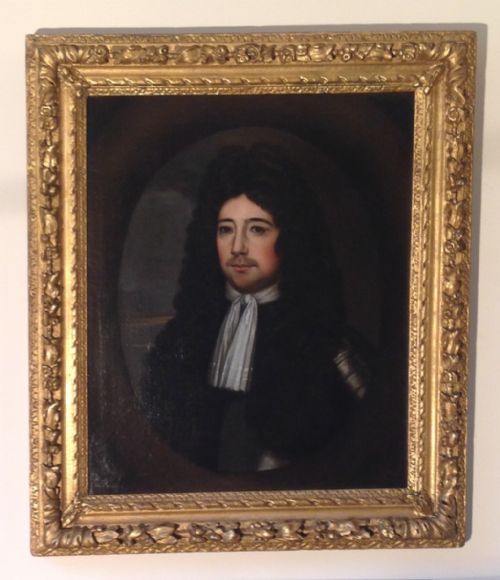


Restoration Gold Frame
A restoration gold frame holds centuries of portraiture in oil on canvas and stumpwork embroidery.
Restoration Gold Frame
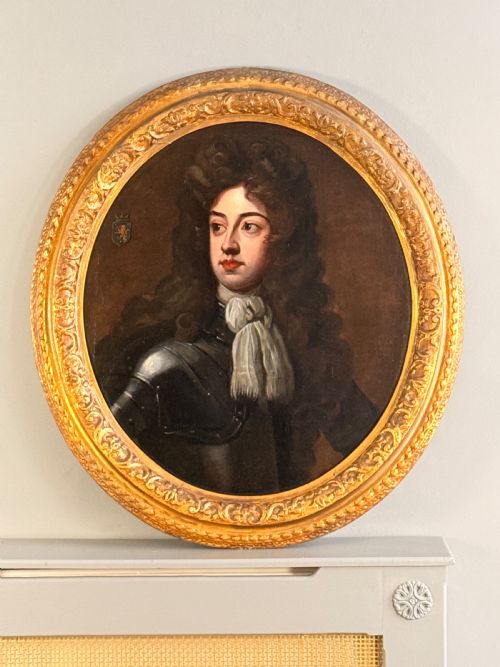
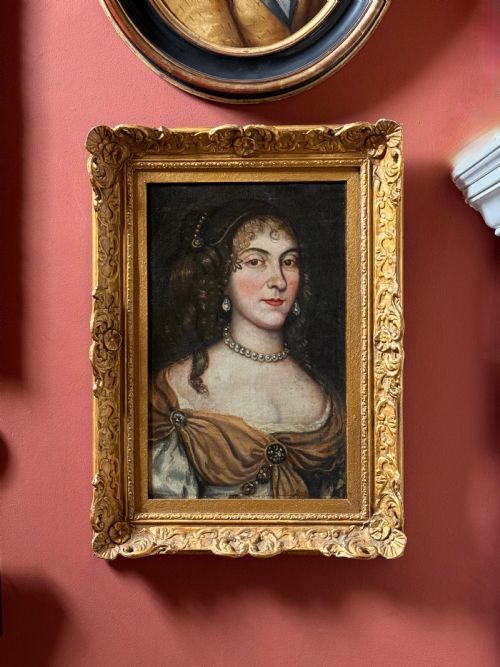
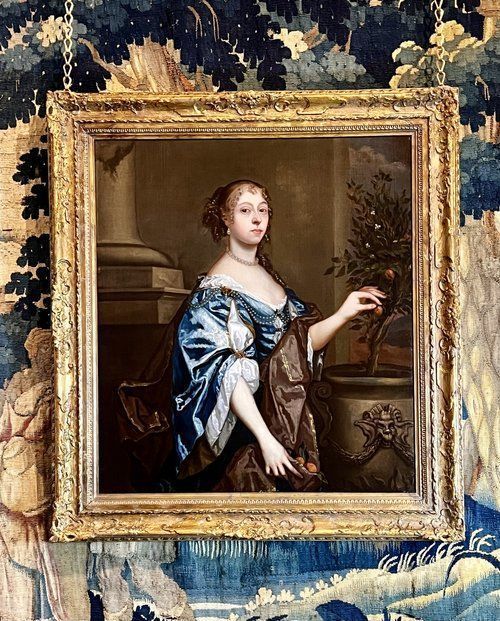
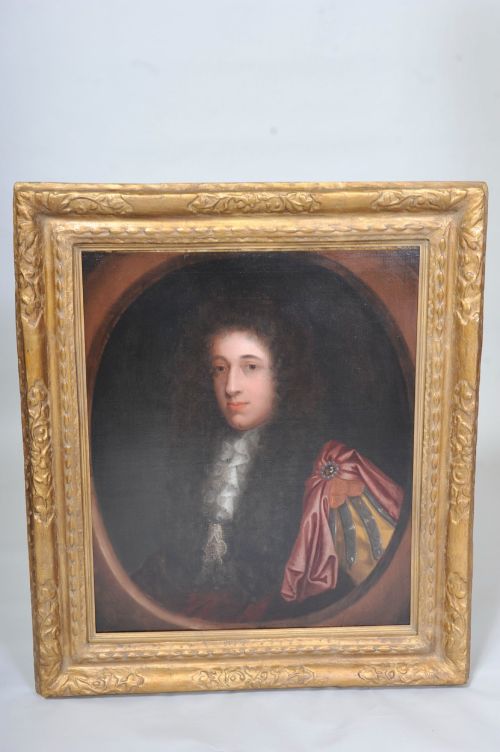
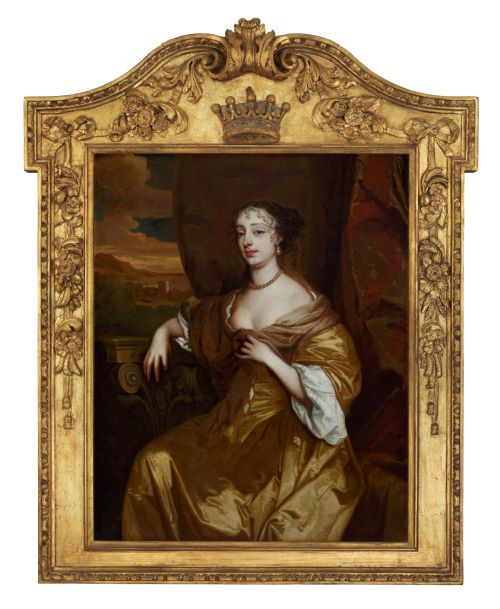
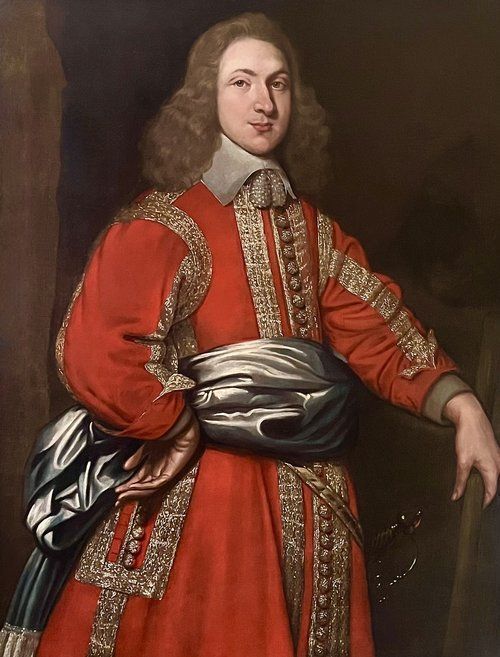
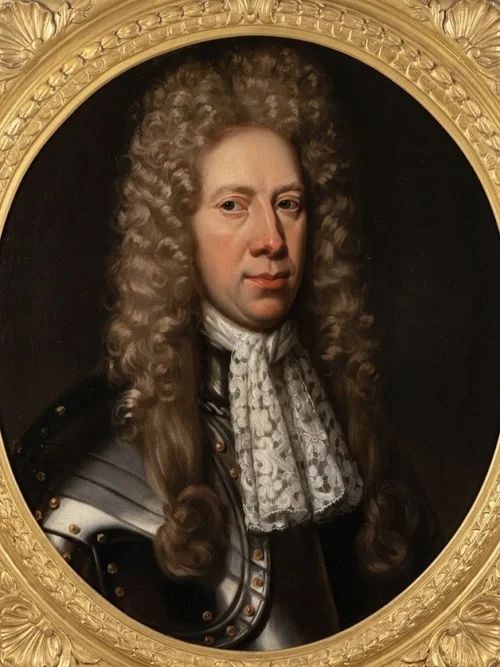
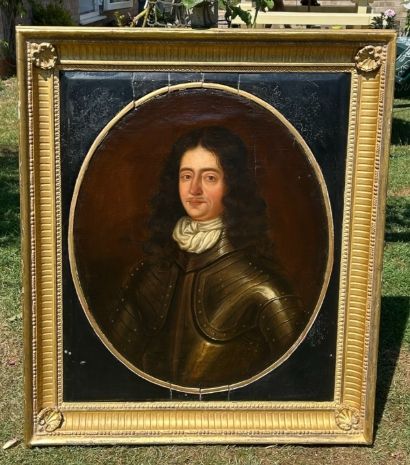
A restoration gold frame houses historic portrait paintings and framed textiles from the seventeenth century and later periods. These works capture English and Dutch subjects in oils on canvas, depicting nobles, military officers, and gentlefolk in elaborate attire.
The most common version met on this page is the seventeenth century oil painting, often associated with the Stuart era or English Baroque style. These portraits frequently present half-length or bust-length studies of identified sitters framed in giltwood.
Beyond standard canvas paintings, the selection includes specialised pieces such as stumpwork embroidery depicting figures like King Charles II. Such works combine textile art with the heavy gilded surrounds characteristic of the period.
How They Were Made
Makers constructed the primary support using woven canvas primed for oil paint, applying pigments to build up rich tones for skin, armour, and garments. Wood provided the sturdy foundation for both the stretchers and the carved frames.
Giltwood and gilded wood frames utilised thin layers of gold leaf applied over a prepared gesso base on carved timber mouldings. This technique created the bright metallic sheen surrounding the canvas or textile panel.
Restoration Gold Frame Retail Price Guide 2026
Typical asking prices for restoration gold frame among the pieces listed under this phrase on Sellingantiques today, from the lower quarter to the upper quarter. They describe what is for sale here now, not the wider market.
Listings incorporate oil paintings and stumpwork embroidery executed across the seventeenth and nineteenth centuries.
What Varies In Quality
The refinement of the carving on the gilded wood frame dictates much of the visual impact, distinguishing elaborate hand-tooled mouldings from simpler profiles. The integrity of the original gold leaf surface also plays a central role in the assessment.
John Greenhill·Sir Peter Lely·John Hayls·Pieter Borsseler·John Scougall·Jacob Huysmans·Mary Beale·Johann Kerseboom·Willem Wissing·Arnold van Boonen·John Michael Wright·Michael Dahl·Samuel van Hoogstraten
The Restoration Gold Frame Glossary
- Giltwood
- Wood that has been coated with gold leaf or gold paint. This finish creates the bright, reflective border characteristic of period frames.
- Stumpwork
- A raised embroidery style popular in the seventeenth century. It utilises padded stitches and wire foundations to create three-dimensional textile scenes.
- Baroque
- An artistic style spanning the seventeenth century marked by ornate detail and dramatic lighting. Portraits from this movement emphasise rich textures and grand scale.
- Oil on Canvas
- A painting medium using pigments suspended in drying oils applied to a woven fabric support. This combination allows for subtle blending and long-term durability.
- Provenance
- The documented history of ownership for an artwork. It establishes authenticity and traces the piece from its creation to the present day.
Restoration Gold Frame: Frequently Asked Questions
What periods do these gold frames belong to?
The listings span primarily the seventeenth century, incorporating Stuart and English Baroque aesthetics. Later nineteenth-century interpretations also appear alongside earlier works.
Craftsmen of the seventeenth century produced the foundational styles seen here, though framing pairings sometimes evolved over subsequent decades.
Are all the paintings portraits?
The vast majority of the works focus on human subjects, ranging from nobility and military officers to young gentlemen and ladies. These oil paintings capture specific individuals of the era.
A small selection includes framed textiles like stumpwork embroidery depicting historical figures rather than standard canvas portraits.
What materials make up the frames?
The frames utilise wood as the base material, shaped into ornate profiles and mouldings. Artisans then applied gold leaf or gilded finishes to achieve the characteristic metallic appearance.
This combination of carved wood and gold leaf provides the heavy, decorative border expected in historical portraiture.
How do I identify a studio piece?
Attributions to a circle or studio indicate the work was produced by artists operating under the influence or direct supervision of a master painter. These pieces share stylistic traits with well-documented figures of the period.
Signatures are uncommon on such historic canvases, meaning attribution relies on technique, provenance, and stylistic comparison.