



Restoration Era Walnut Furniture
Restoration era walnut furniture brings tactile seventeenth-century craftsmanship into your home through richly figured timbers and robust rectilinear forms.
Restoration Era Walnut Furniture
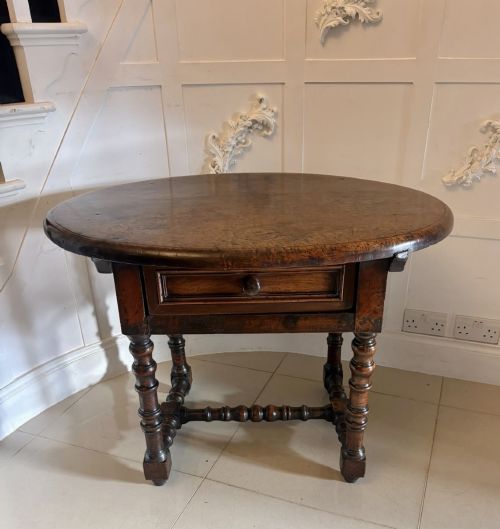
Restoration era walnut furniture encompasses sturdy seventeenth-century seating, tables, and storage pieces defined by architectural proportions and rich primary timbers. You encounter side tables, chests of drawers, and credenzas originating from English and Dutch workshops.
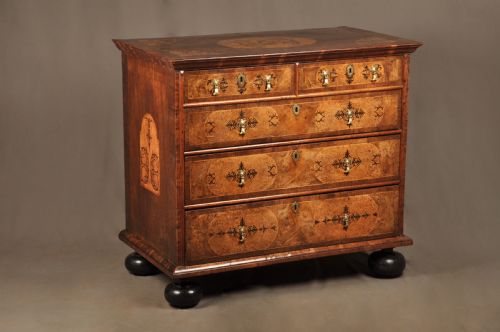
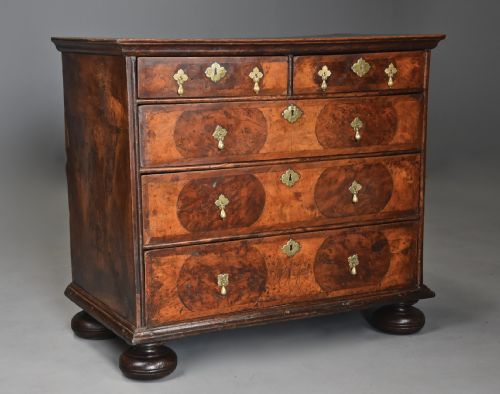
The pieces appearing on this page span the late seventeenth century, specifically crossing the Charles II and William and Mary periods. Chests of drawers dominate the selection, often featuring structured drawer arrangements and striking geometric facades.
How restoration era walnut furniture was made
Cabinetmakers utilised solid walnut and walnut veneers laid over secondary carcasing woods like oak and fruitwood. Surfaces frequently showcase complex marquetry inlay, botanical boxwood details, and contrasting ebonised wood mouldings.
Constructive integrity relied on heavy timber framing paired with early dovetail joinery for drawers. Metalwork additions typically involve cast brass drop handles and escutcheons secured to the drawer fronts.
Restoration Era Walnut Furniture Retail Price Guide 2026
Typical asking prices for restoration era walnut furniture among the pieces listed under this phrase on Sellingantiques today, from the lower quarter to the upper quarter. They describe what is for sale here now, not the wider market.
Listings feature pieces spanning the seventeenth and eighteenth centuries, predominantly utilising walnut alongside oak, fruitwood, and boxwood.
What varies in quality
Quality rests heavily on the crispness of the marquetry and the preservation of the primary walnut grain. Pieces retaining their original timber patination and untouched surface textures stand apart from heavily restored examples.
The structural complexity of the carcass also dictates standing, with chests on stands and intricate arabesque patterns demanding superior skill. Secondary woods and hardware consistency further indicate the original workshop standard.
The Restoration Era Walnut Furniture Glossary
- Marquetry inlay
- Decorative patterns formed by fitting contrasting veneers into a prepared ground. This technique creates elaborate floral and geometric schemes across drawer fronts.
- Oyster piece
- Circular or oval veneer slices cut transversely from small branches. These sections display concentric growth rings that form repeating patterns.
- Credenza
- A sideboard or cabinet used for storage and display. The Dutch examples introduce inlaid decorative motifs typical of continental preferences.
- Ebonised wood
- Timber treated with chemical solutions or dark stains to imitate ebony. Cabinetmakers applied this finish to mouldings and framing elements for sharp contrast.
Restoration Era Walnut Furniture: Frequently Asked Questions
How do I care for walnut furniture?
Keep these items away from direct sunlight and steady heat sources to prevent the walnut veneer from drying out or lifting. Feed the timber occasionally with appropriate wax to maintain the historical surface.
Avoid using modern liquid polishes or silicone sprays, as these substances damage old polishes. Dust the carved details and marquetry gently with a dry, soft cloth.
Where should I place a side table?
Side tables suit hallways, drawing rooms, or landings where their compact proportions and turned supports remain visible. Ensure the floor surface is level to protect ancient joints from undue twisting.
Keep them clear of damp exterior walls and heavy moisture. Their architectural lines pair effectively with both period interiors and minimalist modern spaces.
What defines a William and Mary chest?
These chests typically feature raised panel construction, geometric veneer patterns, and bun or inverted cup feet. The drawer fronts often utilise oyster cut veneers or detailed marquetry.
They represent a shift towards lighter, cleaner structural lines following the heavier Charles II style. Brass drop handles on shaped backplates are characteristic fittings.
Can I use a credenza daily?
Credenzas provide functional storage for dining rooms or living spaces while displaying rich continental inlay work. Distribute weight evenly across internal shelves to protect historical carcass timbers.
Avoid sliding heavy items across the top surface. Gentle handling preserves the delicate boxwood and fruitwood marquetry details over decades of domestic use.