



Repousse Wall Charger
A repousse wall charger brings tactile depth to a room, turning flat metal into relief portraiture and ornament through hammer work from the reverse.
Repousse Wall Charger
A repousse wall charger is a large decorative dish or plaque designed to hang on a wall or sit on a sideboard, bearing heavy surface relief hammered from behind. When you search for repousse wall charger, you encounter large circular metal plates spanning centuries, periods, and decorative traditions from the eighteenth century to the Edwardian era.
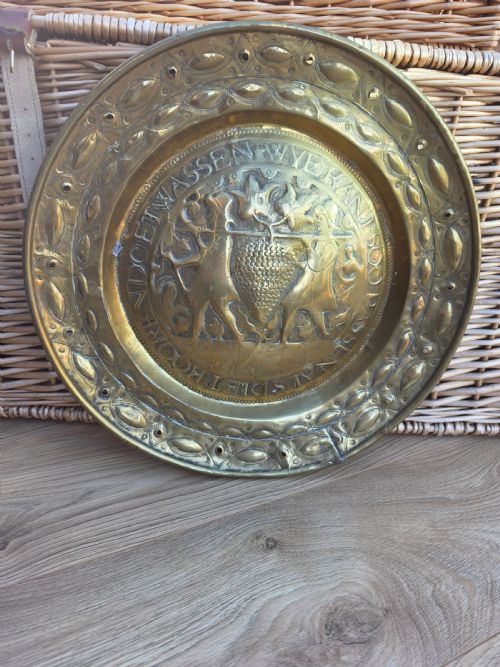
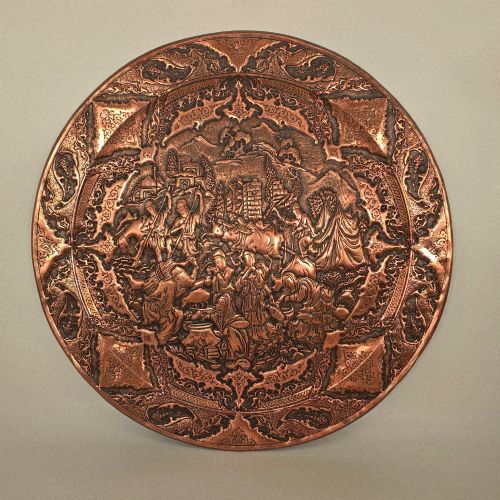
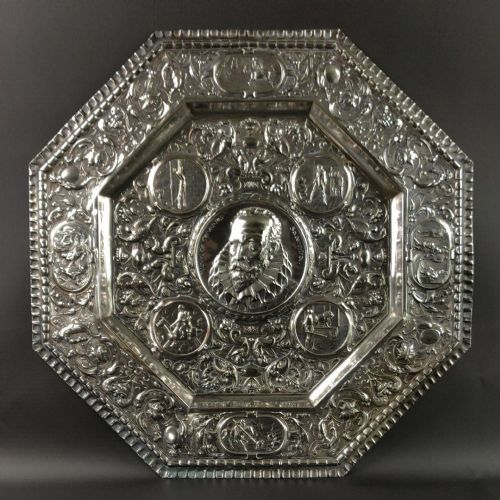
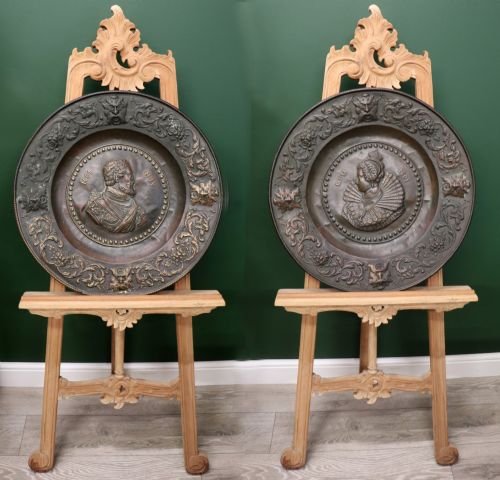
The pieces on this page appear in copper, brass, silver plate, bronze, pewter, and silvered metal, adopting styles that range from Arts and Crafts and Gothic Revival to Anglo-Indian Raj period work. You meet portraits of historical figures like Miguel de Cervantes and Henry IV alongside floral motifs, animal subjects, and classical battle scenes.
Originating from diverse workshops and regions including Britain, India, Persia, and continental Europe, these chargers serve primarily as visual focal points rather than functional tableware. Their forms encompass wall plaques, decorative platters, alms dishes, and shields that rely entirely on the play of light across raised metal.
Materials and hammering techniques
Metalworking for these chargers relies heavily on ductile metals like copper, brass, and silver plate, which accept deep blows from hammers and punches without cracking. Artisans work the metal primarily from the reverse side to push the main forms outward, returning to the front face to refine details with chisels and gravers.
Electrotype metal and silver gilt provide alternative surfaces for intricate figural compositions, allowing manufacturers like Elkington to capture minute relief from sculptural models. Piercing, engraving, and chasing often accompany the primary repousse work to sharpen outlines and add texture to backgrounds and borders.
Repousse Wall Charger Retail Price Guide 2026
Typical asking prices for repousse wall charger among the pieces listed under this phrase on Sellingantiques today, from the lower quarter to the upper quarter. They describe what is for sale here now, not the wider market.
Judging depth, detail, and provenance
Quality in a repousse wall charger rests on the depth of the relief and the crispness of the hand-worked detail rather than the mere weight of the metal. Superior pieces display finely articulated facial expressions, clothing folds, and heraldic elements that retain their sharpness across the entire surface.
The distinction between mass production and individual craftsmanship shows in the handling of the background, where hand-beaten textures and engraved accents separate exceptional Arts and Crafts or Raj period output from simpler commercial stampings.
Elkington & Co
The Repousse Wall Charger Glossary
- Repousse
- Metalworking technique where the design is hammered into relief from the reverse side. This method allows the artisan to build three-dimensional portraits and scenes directly into sheet metal.
- Chasing
- Working metal from the front by sinking the surface to refine and sharpen details previously hammered in repousse. The two techniques work together to produce finished wall plates.
- Electrotype
- A metal copy produced by electroplating copper or silver onto a mould to create exact replicas of intricate sculptures or plaques. Firms utilised this process in the nineteenth century for faithful reproductions.
- Alms dish
- A large metal basin traditionally used for collecting church offerings, often featuring embossed religious or heraldic decoration. Older examples appear in brass and copper.
- Grand Tour
- The nineteenth-century practice of collecting classical souvenirs in bronze and metal across Europe. These pieces often feature classical deities and mythological scenes.
Repousse Wall Charger: Frequently Asked Questions
How do I hang a heavy metal wall charger safely?
Most large chargers feature a rim or a dedicated hanging wire secured firmly to the reverse edge. Ensure your wall fixing connects directly to a stud or utilises a heavy-duty wall anchor.
Because pieces in copper, bronze, and brass carry considerable weight, avoid relying on standard picture hooks that lack adequate load ratings.
How should I clean copper and brass wall chargers?
Dust your charger gently with a soft, dry cloth to prevent grime accumulation in the recessed areas of the hammered relief. Avoid aggressive metal polishes that strip away historical patinas and soften fine chasing.
Leaving the natural oxidation intact preserves the depth and character that centuries of ageing impart to these decorative plates.
What is the difference between an alms dish and a wall charger?
Alms dishes originate from ecclesiastical contexts with central bosses or religious motifs intended for collection purposes. Wall chargers are secular decorative items created specifically for display on interior walls and sideboards.
Despite their different origins, both forms utilise similar metalworking techniques and appear frequently in brass and copper.
How do I identify Raj period Indian brass chargers?
Raj period Indian chargers often combine deep copper repousse work with pierced borders, intricate floral scrolling, and dense background texturing. They frequently employ heavygauge brass and copper to depict regional scenes or elaborate flora.
Comparison with contemporaneous British Arts and Crafts metalwork reveals distinct decorative vocabularies and regional punching tools.