




Repousse Metal Frame Mirror
A repousse metal frame mirror brings tactile hand-worked texture and warm reflection to a wall.
Repousse Metal Frame Mirror
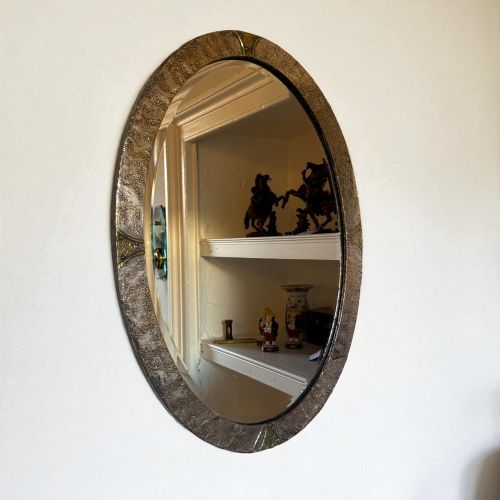
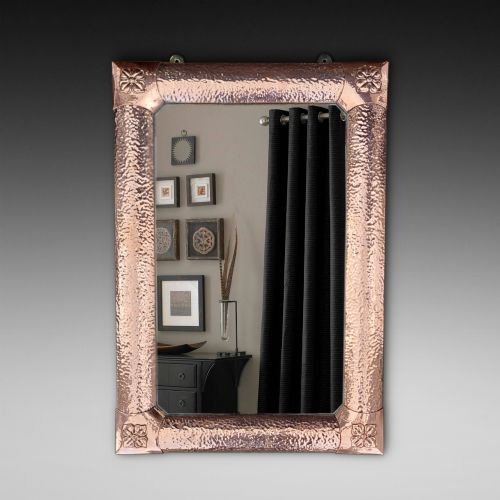
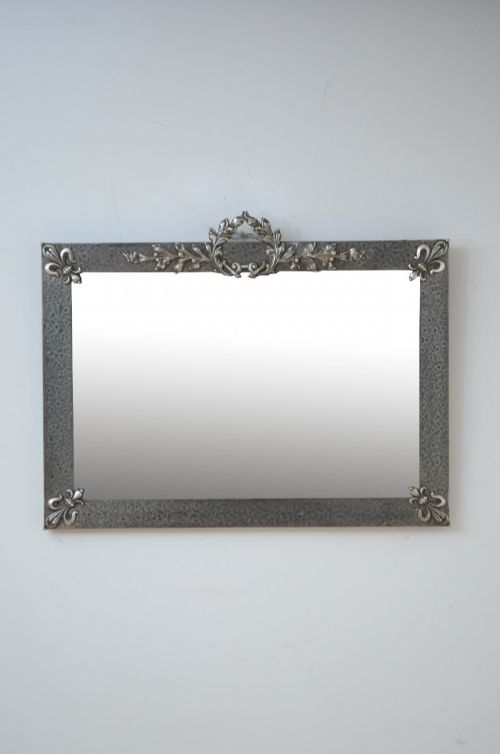
A repousse metal frame mirror is a decorative wall-hanging looking-glass set within a heavily worked metallic border. You will find these pieces largely dominated by Arts and Crafts copper and Victorian or Edwardian brass designs.
The form spans straightforward rectangular and oval wall mirrors alongside cushion-framed and Dutch style pieces. Most examples originate from the nineteenth and early twentieth centuries, especially around nineteen hundred.
Makers utilised various base metals to create relief work, ranging from beaten copper with stylised tree motifs to hand-embossed brass borders. The scale ranges from small intimate hanging pieces to larger wall mirrors.
How they were made
The makers shaped their metal frames by hammering, beating, and embossing sheets of copper, brass, and pewter from the reverse side to raise the pattern in relief. This repousse technique required considerable skill with punches and hammers to achieve crisp floral, abstract, or pictorial motifs.
Wooden backing boards and structures provided rigid support for the metal frontages and the internal mirror glass. Frames frequently incorporated soldered joints and folded edges to secure the glass securely within the heavy metal border.
Repousse Metal Frame Mirror Retail Price Guide 2026
Typical asking prices for repousse metal frame mirror among the pieces listed under this phrase on Sellingantiques today, from the lower quarter to the upper quarter. They describe what is for sale here now, not the wider market.
One copper frame even grew a stylised tree.
What varies in quality
The depth and definition of the hammered relief work set finer examples apart from simpler production. Skilled hand-tooling produces crisp contours and deliberate artistic expression, whereas lesser work appears flat and mechanical.
The choice of material and integrity of construction dictate the longevity and visual weight of the frame. Heavy gauge copper or brass maintains its structural integrity far better than thin sheet metal prone to bending.
Liberty And Company
The Repousse Metal Frame Mirror Glossary
- Repoussé
- A metalworking technique where the artisan hammers the metal from the reverse side to form a raised design on the front. This method creates tactile, three-dimensional decorative surfaces on frames.
- Arts and Crafts
- A design movement valuing handcraftsmanship, natural materials, and traditional techniques over mass production. Pieces from this aesthetic often feature stylised plant motifs and beaten copper.
- Cushion framed
- A convex, rounded frame profile that pushes the reflective glass slightly forward and catches the light from multiple angles. This style was particularly popular in Victorian brass mirrors.
- Dutch Baroque Revival
- A historicist style drawing on seventeenth-century Low Countries decorative traditions with ornate, scrolling metalwork borders. These mirrors often incorporate rich embossed patterns around the central plate.
Repousse Metal Frame Mirror: Frequently Asked Questions
How do I hang a heavy metal frame mirror securely?
These mirrors require sturdy wall fixings because the combination of a metal frame, wooden backing, and glass creates substantial weight. Utilise appropriate wall plugs and screws matched to your wall type rather than relying on simple picture wire.
Ensure the hanging brackets or cord attached to the wooden frame back are robust enough to support the load safely. Professional picture hangers provide the best security for heavier pieces.
How should I clean a repousse metal frame?
Dust the metal gently with a soft, dry cloth to remove surface particles without catching on raised relief edges. Avoid abrasive metal polishes that can strip the historic patina or damage the textured surface.
Keep glass cleaner away from the metal border entirely to prevent staining or chemical reactions. A soft brush helps clear accumulated dust from the deep recesses of the beaten design.
How can I tell an Arts and Crafts mirror apart from a Victorian one?
Arts and Crafts mirrors typically feature matte copper frames with stylised plant designs, naturalistic trees, or geometric hammered textures reflecting hand production. They embrace a simpler, honest aesthetic rooted in the ideals around nineteen hundred.
Victorian pieces more frequently utilise polished or embossed brass with cushion profiles and more elaborate historical revival ornamentation. The styling tends towards ornate decorative effect rather than exposed craft technique.
Did these mirrors originate in Britain?
While British workshops produced the majority of the Arts and Crafts and Victorian examples found here, the form also spans continental European traditions. Dutch style mirrors reflect historical import patterns and revival aesthetics popular across Europe.
Other regional interpretations, such as Peruvian colonial revival pieces with silver borders, show how the repousse technique spread globally. Each origin brings distinct metalworking characteristics to the finished frame.