
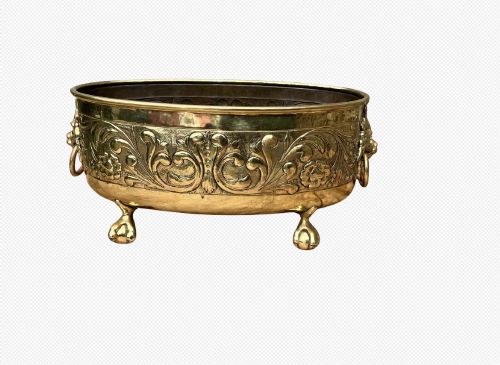
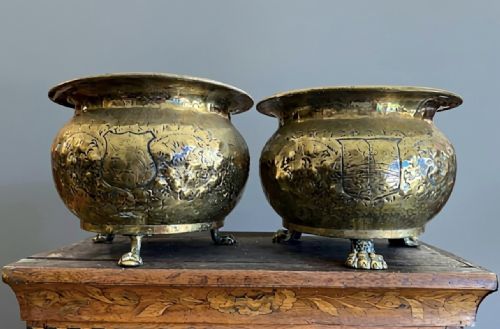


Repousse Brass Pot
These repousse brass pot examples bring tactile texture and warmth to a room, ranging from plant stands to log buckets.
Repousse Brass Pot
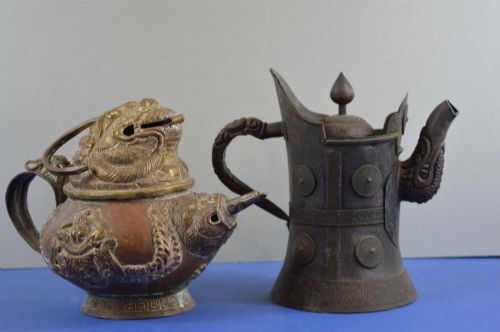
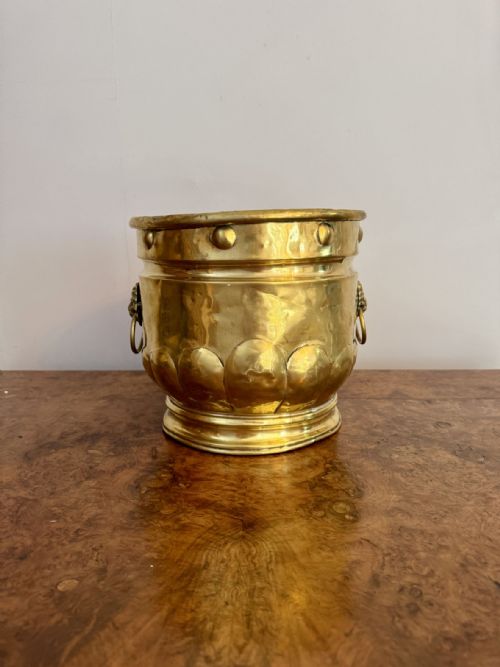
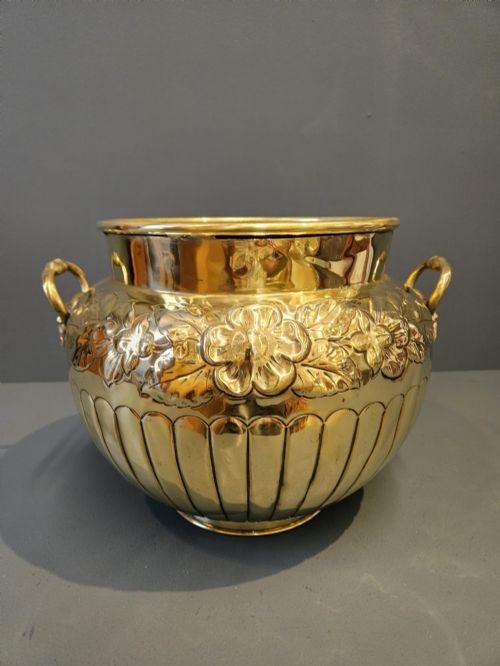
A repousse brass pot takes the form of jardinieres, planters, plant stands, and log buckets designed for domestic use. The pieces span periods from the eighteenth century through to the early twentieth century, taking stylistic cues from Victorian, Art Nouveau, and Gothic Revival traditions. Most items on this page function as plant containers or vessels, originating from workshops across Britain, Europe, and Asia.
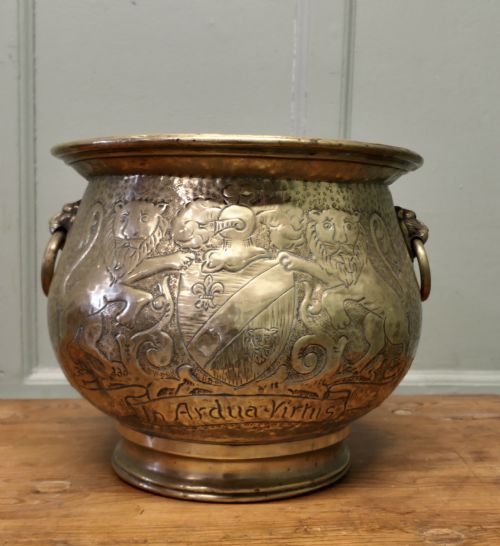
The domestic interior of the nineteenth century favoured heavy metal vessels to hold plants and fuel. Makers shaped brass, copper, and bronze into substantial forms incorporating lion masks, animal heads, and heraldic shields. Buyers encounter Dutch traditional designs alongside Tibetan ceremonial vessels and French decorative buckets.
How they were made
Artisans hammered brass and copper sheets from the reverse side to push out decorative relief patterns, a technique known as repoussé. This method created raised motifs, animals, and foliage that caught the ambient light in Victorian and Edwardian rooms. Workshops combined these hammered bodies with applied cast handles such as lions' masks or geometric mounts.
Makers utilised heavy gauge brass and copper, sometimes mounting planters on original metal stands or pairing them with iron liners. Surface finishes vary from bright polished metal to patinated bronze and copper treatments achieved through age and handling.
Several heavy pots stare back at you with cast lion masks and animal heads mounted firmly to their sides.
What varies in quality
The depth and crispness of the hammered repoussé work distinguish finer vessels from simpler production pieces. Superior examples display sharply defined motifs and careful attention to the relief work around handles and rims. Heavier gauge metal indicates substantial construction that maintains its structural integrity over centuries.
Integrity of form and originality of mounts dictate the standing of a vessel. Pieces retaining their original stands, handles, and liners command greater interest than those altered or stripped of their supporting elements.
J Sankey and Sons
The Repousse Brass Pot Glossary
- Repoussé
- Metalworking technique where the artisan hammers the design from the reverse side to form a raised pattern on the front. This process creates tactile surface relief on decorative vessels.
- Jardiniere
- An ornamental pot or stand designed to hold growing plants or flowers. These vessels often sit on floors or tables in nineteenth-century interiors.
- Gothic Revival
- An architectural and decorative style drawing inspiration from medieval forms. Pieces from this movement often incorporate pointed arches, tracery, and heraldic shields.
- Art Nouveau
- An international style of art and design characterised by organic, flowing lines and plant-inspired motifs. Items from this period appear around nineteen hundred.
- Log Bucket
- A deep metal container used for holding firewood beside a hearth. These heavy vessels often share forms with large planters.
Repousse Brass Pot: Frequently Asked Questions
What is a repousse brass pot used for?
These metal vessels primarily serve as plant holders, jardinieres, or log buckets within domestic spaces. Historically, they brought greenery indoors or kept hearth fuel contained near the fireplace.
Today, collectors use them to house potted plants, dry arrangements, or simply as decorative objects that add metallic warmth to a room.
How do I clean an antique brass pot?
Maintenance requires gentle dusting and occasional wiping with a soft, dry cloth to preserve the historic surface patination. Aggressive metal polishes strip away the aged layers that collectors value.
If cleaning is necessary, use a mild, non-abrasive soap solution and dry the metal thoroughly to prevent spotting.
How can I tell the period of a brass jardiniere?
Dating relies on examining the manufacturing marks, construction methods, and stylistic details such as Art Nouveau curves or Gothic Revival shields. Heavier cast mounts and hand-hammered relief work often point towards nineteenth-century production.
Comparing the form and materials against documented examples helps narrow down the decade of manufacture.
Are copper and brass planters waterproof?
Many antique metal vessels feature seams or applied bottoms that may not hold water directly over extended periods. Using a plastic liner inside the pot protects the historic metal from moisture damage and corrosion.
Checking the interior for a fitted metal or iron liner indicates how the vessel was originally intended to handle damp contents.