


Repousse Brass Cachepot
These repousse brass cachepot selections bring tactile, hammered metal texture and historical plant display directly into your interior.
Repousse Brass Cachepot
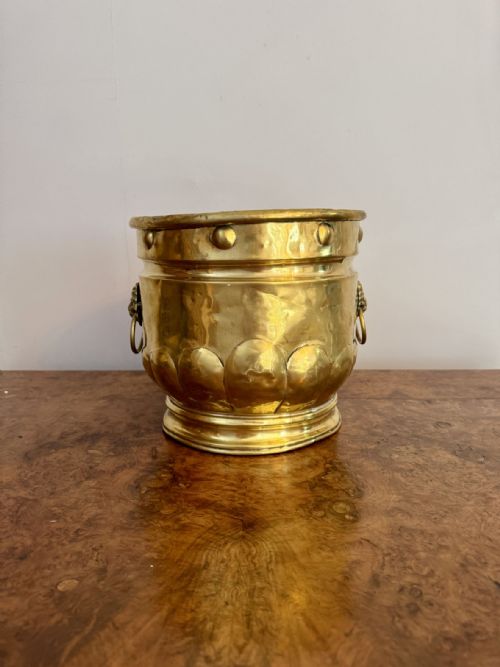
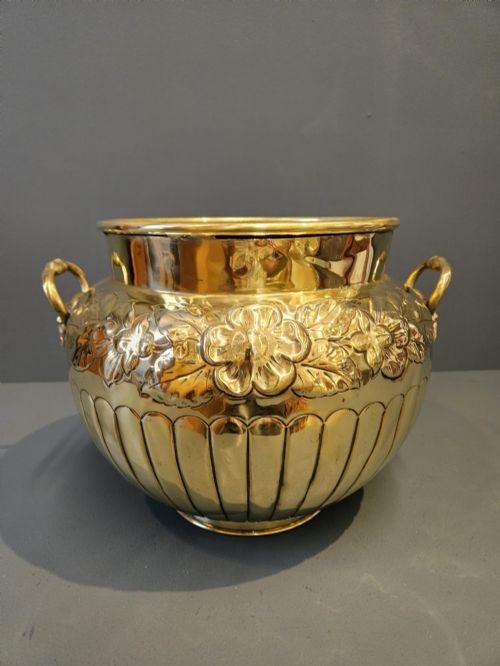
A repousse brass cachepot serves primarily as an ornamental plant holder or jardiniere designed to house potted greenery within domestic interiors. When searching this phrase, buyers encounter vessels primarily formed from brass, alongside copper and iron alternatives, spanning the eighteenth century through to the early twentieth century.
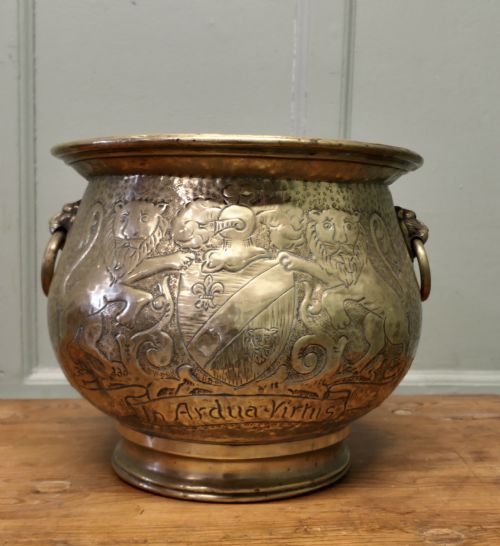
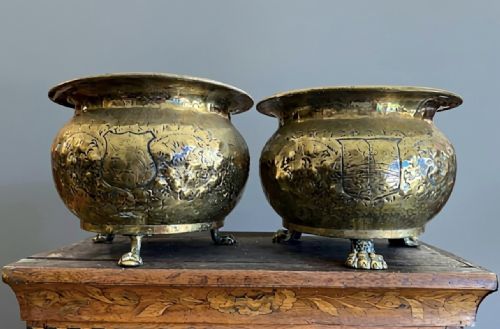
Victorian and nineteenth-century items dominate the selection, often displaying heavy ornamentation, shields, and raised motifs hammered directly into the metal body. Buyers will also find distinct pairs alongside single large centrepieces suited for substantial floor or tabletop placement.
Materials and construction
Makers shaped these cachepots predominantly from sheet brass and copper, hammering the metal from the reverse side to create raised, three-dimensional relief patterns known as repousse work. This technique requires considerable skill with punches and hammers to achieve crisp animal heads, floral motifs, and heraldic shields without splitting the ductile alloy.
Structural elements frequently incorporate cast iron or additional brass components, particularly for handles such as lion masks and for original stands accompanying Art Nouveau pieces. Surface finishes rely on the natural warmth and ageing characteristics of polished or patinated brass and copper rather than applied paints.
Design styles represented include Victorian, Art Nouveau, Gothic Revival, French Empire, and Dutch traditional forms.
Distinctions in quality
The calibre of a repousse brass cachepot rests upon the depth, clarity, and precision of the hammered relief work. Finer specimens display sharp definition in complex motifs like animal heads and heraldic shields, whereas lesser pieces show shallower, softer stamping with minimal hand-detailing.
Structural integrity and originality dictate the standing of a vessel, with complete sets featuring original stands or matched pairs commanding greater attention. The thickness of the brass sheet and the quality of applied handles, such as robustly cast lion masks, further separate standard production items from superior works.
J Sankey and Sons
The Repousse Brass Cachepot Glossary
- Repousse
- Metalworking technique where the design is hammered into relief from the reverse side. This creates tactile, raised ornamentation across the brass surface.
- Cachepot
- An ornamental flowerpot cover designed to hide a plain inner pot. It lacks drainage holes, protecting furniture from moisture.
- Jardiniere
- A large ornamental pot or stand for plants or flowers. These items often feature decorative handles and distinct historical stylistic motifs.
- Art Nouveau
- A stylistic movement from around nineteen hundred characterised by organic, flowing lines. Pieces from this era often embrace natural plant-like asymmetry.
Repousse Brass Cachepot: Frequently Asked Questions
How do I clean my brass cachepot?
Dust the surface regularly with a soft, dry cloth to prevent grime accumulation.
Avoid harsh chemical dips that strip away desirable historical patination and mellow ageing.
How do I date a brass cachepot?
Examine the construction methods, handle attachments, and overall stylistic markers such as Victorian Gothic revival or Art Nouveau curves.
Heavier hand-hammered repousse work and patination clues often indicate nineteenth-century or earlier origins.
Where should I place a large jardiniere?
Large statement pieces suit entryways, hallways, or spacious living areas filled with trailing green foliage.
Ensure the supporting table or floor stand comfortably accommodates the considerable weight of metal and wet soil.