



Renaissance Style Pottery
Renaissance style pottery pieces are striking revival ceramics that bring classical Italian colour and ornament into a room.
Renaissance Style Pottery
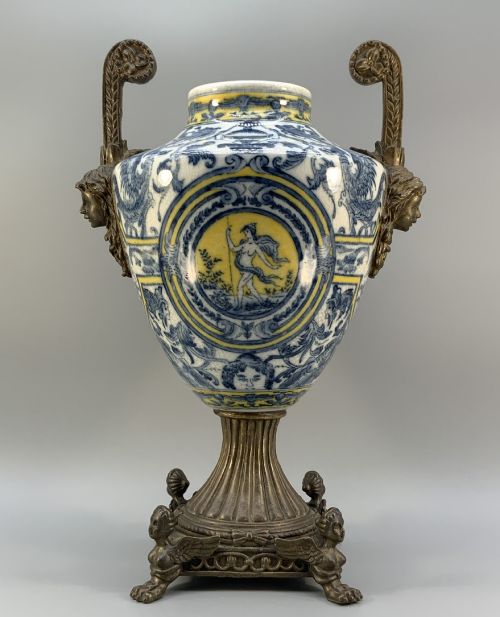
Renaissance style pottery encompasses revival ceramics inspired by historic Italian designs, principally produced during the nineteenth century. The examples met on this page include vases, large chargers, wall brackets, and centrepiece dishes.
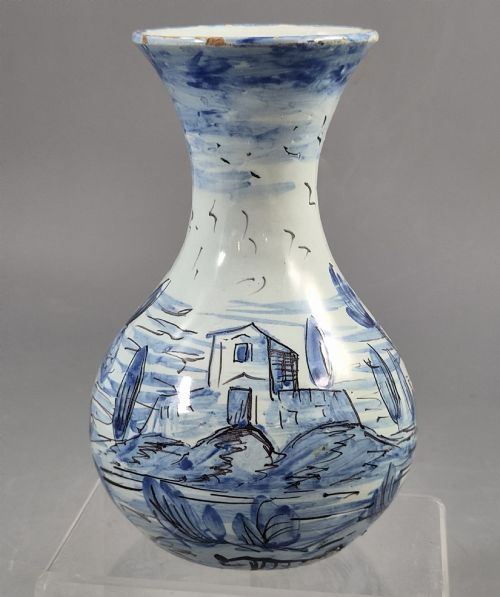
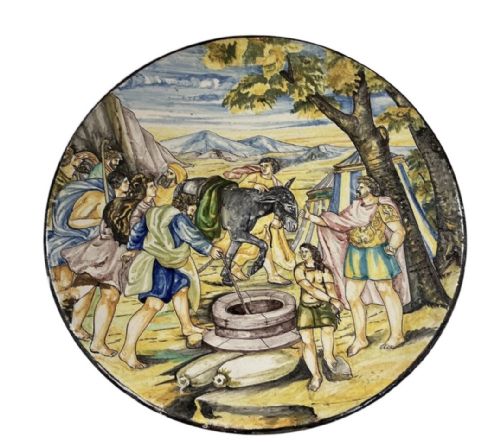
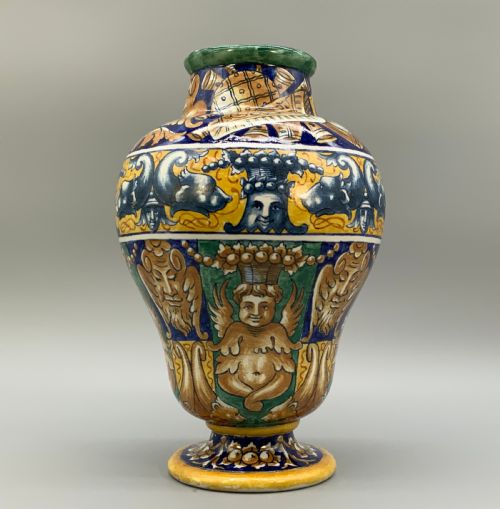
The aesthetic draws heavily on Italian Renaissance models, featuring elaborate hand-painted decoration across earthenware forms. Pieces range from blue and white cabinet vases to vibrant polychrome display chargers.
Italian and French factories dominate the origin of these items, with specific output associated with historic potteries such as Cantagalli and Gien. Makers frequently adopted sixteenth-century Urbino and Savona motifs to satisfy Victorian demand for historical revivalism.
How they were made
Potters shaped these objects from earthenware bodies, applying tin glazes to create a smooth, opaque white surface suitable for detailed painting. Artisans then hand-painted pigments directly onto the unfired glaze, capturing the rich palette associated with maiolica and faience traditions.
Selected vessels incorporate cast metal additions, pairing ceramic bodies with bronze mounts to enhance their decorative presence. Kiln firing fixed the pigments and glazes, resulting in durable decorative surfaces designed for interior display.
Renaissance Style Pottery Retail Price Guide 2026
Typical asking prices for renaissance style pottery among the pieces listed under this phrase on Sellingantiques today, from the lower quarter to the upper quarter. They describe what is for sale here now, not the wider market.
The listings on this site span the nineteenth century, featuring earthenware forms decorated with tin glazes and hand-painted pigments.
What varies in quality
Quality in renaissance style pottery rests on the precision of the hand-painted decoration and the fidelity of the historic revival style. Superior examples exhibit fluid brushwork, balanced polychrome or blue and white compositions, and careful attention to classical detail.
The integration of supplementary materials, such as bronze mounts, distinguishes standard decorative output from more ambitious cabinet pieces. Finer items demonstrate a deeper understanding of historic form and glaze consistency across chargers and vases.
Cantagalli·Minton·Gien
The Renaissance Style Pottery Glossary
- Maiolica
- Tin-glazed earthenware produced in Italy or in the Italian style, typically featuring colourful hand-painted ornamentation. This technique allows for intricate narrative scenes and decorative motifs.
- Faience
- Tin-glazed pottery originating in France or other non-Italian regions, sharing technical similarities with maiolica. French centres like Gien produced notable revival examples.
- Charger
- A large ornamental plate designed for display on a wall or dresser rather than for dining. These wide surfaces often carry the most complex painted designs.
- Earthenware
- Porous pottery fired at lower temperatures, serving as the standard body for tin-glazed wares. It requires a glaze coating to hold liquids.
- Bronze mount
- Decorative metalwork fitted to ceramic vessels, often taking the form of handles, bases, or rims. These additions elevate the status of the finished object.
Renaissance Style Pottery: Frequently Asked Questions
What is renaissance style pottery?
Renaissance style pottery refers to nineteenth-century ceramics that replicate or reinterpret sixteenth-century Italian maiolica and faience designs. These pieces emulate historical aesthetics through painted mythological or grotesque motifs on tin-glazed earthenware.
Potters across Europe produced these revival items to satisfy a strong Victorian appetite for historic ornamentation and Renaissance art. They serve primarily as decorative focal points rather than functional vessels.
How do I care for my pottery?
These ceramic pieces require gentle handling and should be kept away from direct sunlight to protect the pigments. Dust them dry with a soft cloth and avoid water immersion.
Metal mounts, where present, benefit from dry cleaning to prevent tarnishing the bronze. Display them on stable surfaces away from high-traffic areas.
Where were these pieces made?
The items originate mainly from European ceramic centres active during the nineteenth century, particularly in Italy and France. Notable factories and workshops in Florence and Gien produced significant quantities of these revival wares.
Italian makers often focused on traditional maiolica forms, while French makers developed sophisticated faience and tin-glazed earthenware dishes.
How do I identify a charger?
A charger is a large decorative plate intended for wall hanging or display on a centrepiece stand. They feature broad, painted surfaces that showcase elaborate historical scenes or floral borders.
Unlike dining plates, chargers prioritize visual impact and artistic execution over utility.