


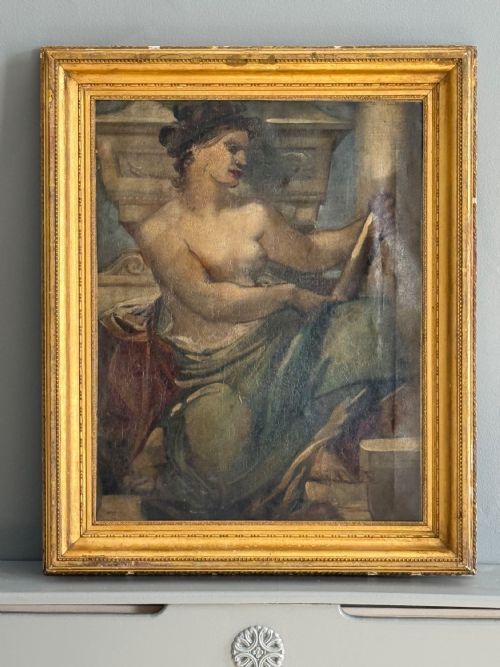




Renaissance Style Oil Canvas
These renaissance style oil canvas works capture historic composition and portraiture, offering collectors grand figurative subjects set in period frames.
Renaissance Style Oil Canvas
When you search for renaissance style oil canvas, you encounter figurative paintings, religious panels, and formal portraits that emulate sixteenth-century European art. These works range from direct period studies to later nineteenth-century revivals and mid-twentieth-century interpretations of Renaissance masters.
The subjects on this page typically depict religious scenes such as the Madonna and Child, or formal portraits of noble sitters like Elizabethan gentlemen and Venetian women. You will find these compositions executed on canvas and housed in carved giltwood frames.
How they were made
The primary technique relies on oil paint applied to woven canvas supports, sometimes supplemented by gold leaf on surrounding timber frames. Artists built up depth using layered oil pigments to achieve the rich tones characteristic of Renaissance and revival painting.
Framing forms an integral part of the physical object, with carved wood and giltwood enclosures designed to complement the classical weight of the central canvas.
Several canvases faithfully reimagine famous Italian Renaissance masterpieces, allowing domestic spaces to share a wall with the Louvre.
What varies in quality
The fidelity of the draughtsmanship and the expressive depth of the figures distinguish finer examples from simpler decorative copies. Hand-carved giltwood frames that retain their original gilding also elevate the overall execution.
Closer adherence to the handling of light and shadow seen in the original masterworks separates skilled school pieces from more rigid interpretations.
Bernardino Luini·Sir John Gilbert·Paolo Veronese·Raphael·Benvenuto Tisi·Joachim Bueckelaer·Alfred Holst Tourrier·Raffaello Sanzio Da Urbino·Hans Holbein·Cornelis Van Der Voort·Girolamo Dai Libri·John Bettes the Elder
The Renaissance Style Oil Canvas Glossary
- Renaissance Revival
- A nineteenth-century artistic movement that consciously imitated the styles, forms, and subjects of fifteenth and sixteenth-century Europe. This historicism influenced both independent painting and decorative arts.
- Giltwood
- Timber that has been coated with a thin layer of gold leaf or gold paint. It frequently frames historical oil paintings to enhance their visual weight.
- School
- A group of artists working in a similar style, region, or time, often under the direct influence of a master. Attribution to a school indicates a shared visual tradition rather than a confirmed individual hand.
- Oil on Canvas
- A painting medium where pigments suspended in drying oils are applied to a stretched cloth support. This combination provides flexibility and allows for nuanced blending of tones.
Renaissance Style Oil Canvas: Frequently Asked Questions
What is a renaissance style oil canvas?
These works are paintings executed in oil on canvas that either date from historical periods or deliberately replicate the aesthetic of sixteenth-century European art. They focus on religious narratives, mythology, and formal portraiture.
Collectors seek them for their classical compositions, rich palette, and the atmospheric presence they bring to an interior space.
How can I tell the age of the painting?
Dating relies on examining the canvas weave, the composition of the stretcher frames, the preparation layers beneath the paint, and the style of the giltwood frame. Historical clues often emerge from the handling of pigments and secondary materials.
Comparing the technique to documented works from the sixteenth through the nineteenth centuries helps establish whether a piece is a period original or a later revival.
Where should I hang these paintings?
These works suit traditional reception rooms, studies, or hallways where their rich tones and carved giltwood frames can anchor the wall space. They pair well with antique timber furniture and period architectural details.
Avoid placing them in direct sunlight or areas of high humidity to protect the oil paint and canvas support over time.
What does after a master mean?
This attribution indicates that the artist painted a deliberate copy or study of a known work by a historical master. These pieces were often created as training exercises or to satisfy collectors who admired specific famous compositions.
Such works carry their own historical interest, particularly when executed with skilled draughtsmanship in a nineteenth-century revival context.